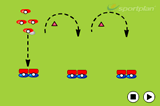
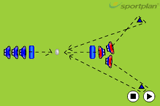
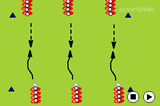
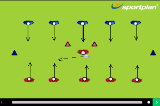
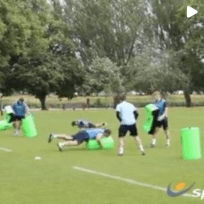
4 blue players must try and defend with shields two gates from the attacking red team.
The ball carrying player must meet the defending players and then go to ground and place the ball. Once this has been done the attacking side must form bind together and ruck the shields out of the way - to 'come through the gate'.
The final red player to come through collects the ball and runs anti-clockwise to the next gate and the next set of defenders to repeat the drill.
The two original defenders must now move to defend the other side of the grid.
If the players don't come through the gate give them a penalty (press-ups).
Change the number of attackers and defenders depending on how easy/ hard you want to make this drill.
Look for good rucking from the attacking side, making sure players only join from the back.

in more ways than one
 sportplan_netball


in more ways than one
sportplan_rugby

Tacklers are aiming lower, so carriers who dip late put heads at risk. Teach footwork, a strong early body height and leg drive to win the collision safely.

The hooker's brake foot moved from trial into full law in July 2026. Here is how to coach it so your front row stays stable, legal and safe.

Your players can pass beautifully in a warm-up grid. Then a defender closes, their lungs are burning, and the ball goes to ground. Here is how to build catch-pass skills that hold up when it matters.