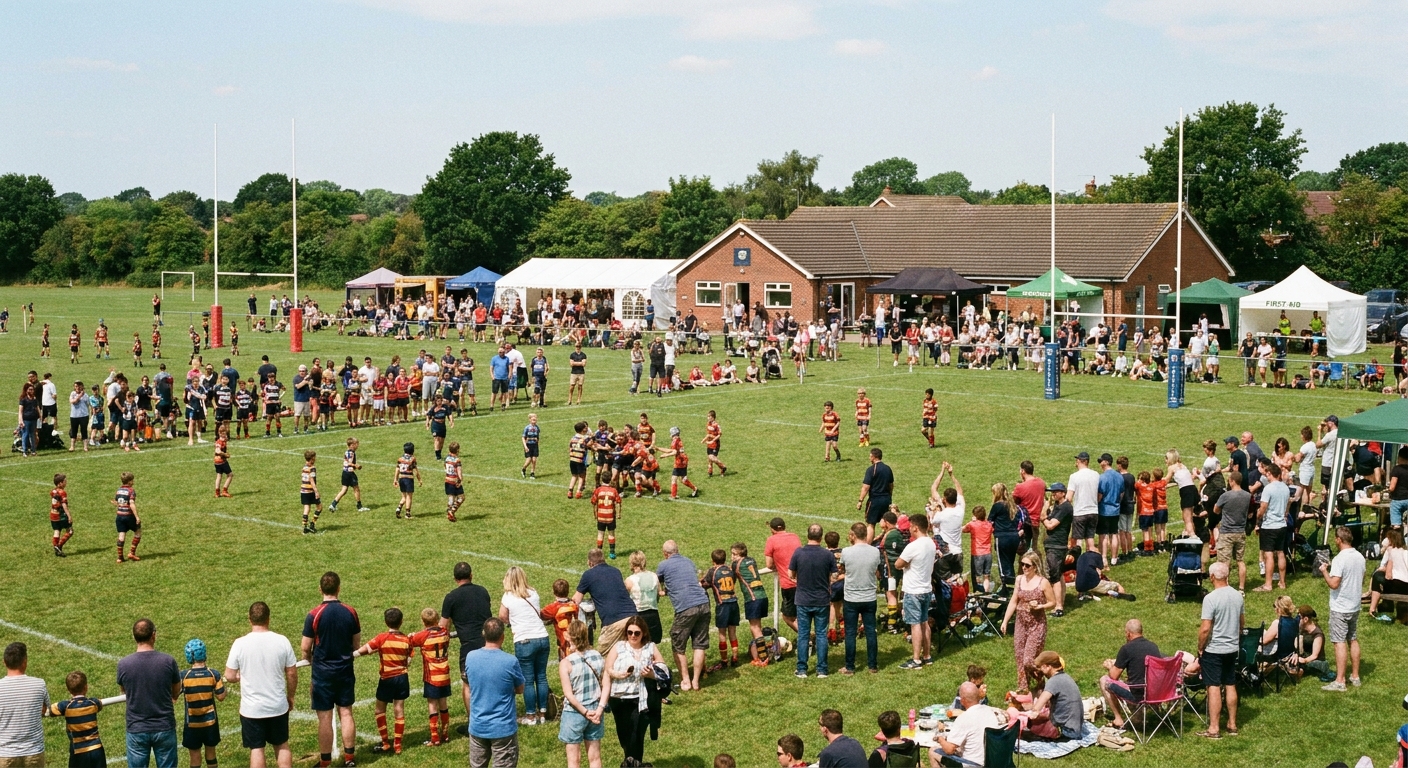
Rugby's Two Fixture Worlds
If you help run a rugby club, your season is really two calendars stacked on top of each other. The first is the familiar one: league and cup fixtures for the senior side and the older youth and colts teams, organised through your RFU Constituent Body or county - a published list of home and away matches, week in, week out, from autumn to spring. The second is the one that swallows your Sunday mornings: the minis and junior festivals and tournament days, where a club hosts or travels to an event with several age-grade teams playing short, rolling games across multiple pitches.
The two worlds demand different things. A senior league fixture is mostly about confirming the match, picking a matchday squad and sorting transport. A minis festival is a small logistics operation: you might be moving sixty or seventy children, their coaches and a car park full of parents to one venue, slotting four or five age grades into rolling pools, and keeping the whole thing on schedule for three hours. Manage both well and the club hums. Manage them badly and you spend every week firefighting.
The Grind Behind Every Fixture
Whatever the format, the underlying job is the same handful of steps repeated all season. It is worth naming them, because each is a place where a volunteer quietly loses an evening.
Confirming the fixture or festival entry. League games come fixed by the county, but you still confirm pitch availability, kit clashes and referees. Festivals work the other way: you enter your teams - which age grades, how many sides per grade - often weeks ahead, and a host club builds the day around the entries it receives. Get your entry in early and accurate, because a host planning pitches and pools cannot easily absorb a late extra team.
Collecting availability across the age grades. This is the single biggest time-sink in junior rugby. You are not asking one squad "who's in?" - you are asking six or seven age grades, each with its own coaches and its own parents' chat, and every answer lands in a different thread. Do it the night before and you are counting heads in a panic. Do it weeks ahead, in one place, and you know your numbers early enough to act on them.
Building squads - the numbers reality. Rugby is uniquely exposed to availability because of the numbers. A full minis side might be small, but an age grade that has tipped into contact needs enough suitably trained players, and any contested-scrum age grades need front-row-trained children specifically - you cannot field a team safely without them. Knowing on the Tuesday that you are two short, or have no recognised hooker available, gives you time to combine squads, ask another age grade or withdraw a team cleanly. Finding out on the morning does not.

Organising the Festival Day Itself
Hosting a festival is where rugby admin becomes genuine event management. Travelling to one is lighter, but you still need to know your meeting time, your pitch and your timings. Either way, the day stands or falls on a single timed plan that everyone can see. Here is the checklist the well-run host clubs work through.
Your tournament-day checklist
- Pitch allocation: map every age grade to a numbered pitch, marked out and cones down the day before. Decide which pitches host which grades so games are not waiting on a free space.
- Pool schedule and timings: publish a timed grid - who plays whom, on which pitch, at what time - with realistic gaps between rolling games. One delayed game should not collapse the whole morning.
- Referees: confirm enough qualified referees for the number of pitches running at once, and brief them on the festival's game format and any age-grade variations.
- First aid and safety: have qualified first aid on site for the whole event, a clear pitchside protocol and concussion awareness front of mind - if in doubt, sit them out, and follow RFU HEADCASE guidance for any head-injury concern.
- Parking, signage and base: a marshalled car park, signs to pitches and toilets, and a base or club tent that acts as the day's nerve centre and lost-child point.
- Catering and kit: tea, bacon rolls and water for players, plus spare kit, a pump, a ball bag per pitch and a first-aid kit per age grade.
- Meeting times and transport: a clear arrival time for each squad - staggered if grades play at different times - and travel arrangements sorted for any away festival.
None of this is complicated on its own. The difficulty is that it all has to be true at once, on a wet Sunday, with hundreds of people on site - and that any change to one part (a flooded pitch, a referee who cannot make it, a kick-off pushed back) instantly affects everyone else. Which brings us to the part that quietly decides whether the day works.
Getting Everyone in the Right Place at the Right Time
The hardest thing about a festival is not the rugby - it is communication. You can plan a perfect timed grid, but if half the U8 parents do not get the message that their pitch has moved, or the U10s turn up an hour early because nobody told them their staggered start, the plan falls apart anyway. With 60-plus children spread across age grades, each with their own coaches and parents, you need to reach exactly the right group, instantly, without spamming everyone else.

This is the exact problem a shared club system solves. Rather than juggling a fixture spreadsheet, a separate availability chase and seven parent group chats, it is worth putting the whole season in one place that the whole club can see. A shared club calendar and availability tool like Teamo holds every age-grade fixture and festival on one calendar, lets parents mark availability for the entire season up front so you know your numbers early, supports squad selection from those who are available, and pushes instant notifications - meeting times, pitch changes, a weather call - to exactly the right squad and parents rather than the whole club. In the interest of being straight with you, Teamo is made by Sportplan, the same team behind this site, so weigh that as you would any recommendation and trust your own trial of it.
One important caveat for rugby, though, so you are not misled: a tool like this is a shared calendar, availability and reminders system for your day-to-day running - it is not, and does not claim to be, a sync with the RFU's official systems. RFU GMS (the Game Management System) remains the RFU's official platform for affiliation and player and club registration, and many clubs use Pitchero for their website and league pages. Keep those running as your official record; a club calendar app simply complements them by taking the weekly availability, selection and communication grind off your volunteers' plates. Do not expect it to file your affiliation or registrations - that stays with RFU GMS.
Make Selection and Communication Routine
Festivals and fixtures get dramatically easier when the two jobs underneath them - working out who is available and telling everyone the plan - become routine rather than a weekly scramble. Once availability is collected season-long in one place, picking a squad is a five-minute job from the names already marked in, and our guide to rugby team selection and availability walks through doing that fairly across age grades. The other half is getting the message out cleanly, which is its own skill - our rugby club communication guide covers reaching the right people without drowning everyone in notifications.
And if you are weighing up which platform should hold all this alongside your official RFU GMS and website tools, our honest look at the Pitchero and RFU GMS alternatives for rugby clubs lays out what each system is genuinely for, so you can keep the official record where it belongs and run your day-to-day admin wherever suits your volunteers best.
Get the off-pitch machinery quiet and the weekends go back into coaching. When you are ready to plan what those squads actually do, browse the full Rugby drills library for age-appropriate practices to run on training nights and between festival games.
Frequently Asked Questions
How do rugby fixtures work?
Senior and older youth sides usually play in a league or cup run by your RFU Constituent Body or county, with a published fixture list of home and away matches across the season. Minis and junior age grades are different - rather than weekly league games they tend to play festivals and tournament days, where several clubs bring multiple age-grade teams to one venue for a morning of short, rolling games. So a typical club juggles two fixture worlds at once: a structured league or cup calendar for the senior and colts teams, and a programme of festivals and friendlies for everyone from Under 6s upward. Whatever the format, your job is the same - confirm the fixture, work out your numbers, pick a squad and get everyone to the right place at the right time.
How do I organise a rugby festival or tournament day?
Start weeks ahead. Confirm your entries (which age grades, how many teams in each), then collect availability across every squad so you know your numbers early - festivals live and die on whether you have enough players, especially front-row-trained ones for any contact age grades. On the day itself you need pitch allocation and a pool schedule so teams know where and when they play, referees and qualified first aid in place, plus the unglamorous essentials: parking, signage, catering, toilets, kit and a base tent. Build a single timed plan, share meeting times for each squad, and have one person co-ordinating pitches and timings so games keep rolling. Good communication is what turns 60-plus children, coaches and parents into an event that actually runs on schedule.
How do I collect availability across age grades?
Ask early and ask in one place. Chasing availability by text and group chat across six or seven age grades is where most volunteers lose their evenings, because every reply lands in a different thread and nobody has the full picture. Far better to publish the whole season's fixtures and festivals up front and let parents mark their child available or not for each one, so you can see your numbers per age grade weeks ahead rather than counting thumbs-up emojis the night before. Knowing early that an age grade is short lets you combine squads, borrow players or, if you must, withdraw a team in good time rather than on the morning.
How do I manage a multi-team rugby tournament?
Treat it as a logistics exercise, not just a rugby one. Map every team to a pitch and a pool, build a timed schedule with realistic gaps between games, and allocate referees and first aid before the day. Brief every coach and parent on their squad's meeting time and where to report, and put one co-ordinator in charge of pitch timings with a clear way to push out instant updates - a pitch change, a weather call, a delayed kick-off - to the right squads and parents at once. The clubs that make tournament days look effortless are simply the ones that planned the timings in advance and could communicate a change to everyone in seconds.

 sportplan_rugby