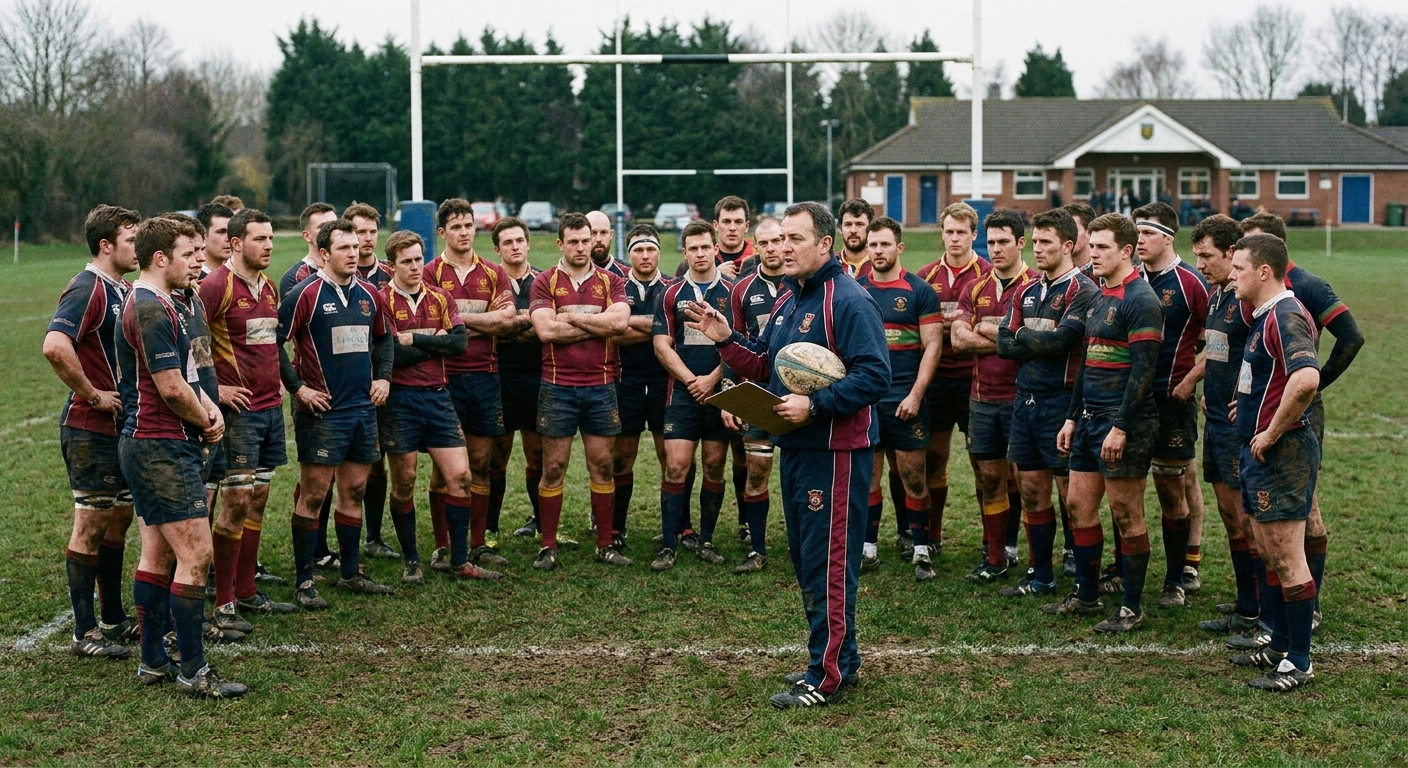
Selection in Rugby Is First a Numbers Game
At elite level, team selection is about picking your strongest fifteen. At a grassroots club running a full ladder of age grades, it is something else entirely. Before you can pick your best side, you have to answer a more basic question: can you put a safe, legal squad on the pitch at all? Rugby union needs 15 players a side plus a bench, and a club that runs minis, youth and senior teams is trying to field several whole squads on the same Saturday, from a pool of players who all have school, work, injuries and lives of their own.
That makes availability - not ability - the thing that decides most grassroots line-ups. A coach is rarely choosing between two outside-halves; far more often they are working out whether they have enough trained front-rowers to scrummage, and enough bodies to avoid playing fourteen against fifteen. This guide walks through that reality: gathering availability early, the maths of squad size, the non-negotiable of front-row cover, moving players between grades safely and fairly, and communicating selection so nobody feels blindsided.
Collect Availability Early - and in One Place
The single biggest source of selection stress is not knowing who you have until Friday night. The fix is structural: ask for availability well ahead of each fixture, ideally a block of games or a whole season at a time, and gather every answer in one list rather than scattered across texts, group-chat replies and "I think I mentioned to you last week".
Set a clear deadline - say, the Tuesday before a Saturday game - and ask for a simple yes, no or maybe. Chase the non-responders, because the players who never reply are exactly the ones who leave you a man short. The earlier you know the shape of your squad, the more options you have: time to call up a player from a younger grade safely, to arrange front-row cover, or to combine with another team if numbers are short. Leaving it late removes every one of those options.
A Simple Weekly Availability and Selection Workflow
- Open availability early: Request responses for the next block of fixtures - or the season - well in advance, not the week of the match.
- Set a deadline: Ask for yes / no / maybe by a fixed day (e.g. the Tuesday before a Saturday game), and chase anyone who has not replied.
- Check the front row first: Before anything else, confirm you have enough trained loosehead, hooker and tighthead cover, including a replacement.
- Count the bodies: Confirm you have 15 plus a bench. If short, identify safe call-ups from a younger grade or arrange to combine squads.
- Balance the squad: At minis and youth, plan rotation so every available player gets meaningful game time, not just the strongest.
- Publish to everyone together: Send the matchday squad and logistics to the whole group at the same time, in good time.
- Handle changes openly: When someone drops out, update the squad and notify everyone - do not let the change live only in your head.
The Numbers Reality: You Need a Big Squad
A senior matchday squad in rugby union is 15 starters plus up to eight replacements - up to 23 in total. But a training squad of exactly 23 will never field 23, because every week someone is injured, working, away or unwell. As a rule of thumb, most senior teams aim for a committed pool of 20 to 25 players to be confident of fielding a full side with a bench each Saturday, and a club that wants to run two senior XVs needs that depth several times over.
Age-grade rugby uses smaller-sided formats - minis play with far fewer per side, building up through the youth grades towards the full 15-a-side game - so the exact team size varies by age and you should always check the current RFU age-grade rules for your level. But the principle holds at every grade: you need meaningfully more players signed up than the team size, because availability never runs at 100%. A squad with no margin is a squad that spends every Friday in a panic.
Front-Row Cover: The Constraint Unique to Rugby
Here is the selection issue that no other sport has. You cannot safely play a normal game of rugby union without suitably trained front-row players. The scrum requires a loosehead prop, a hooker and a tighthead prop who have been specifically coached in the position, and the laws require trained front-row replacements to be available. If a club cannot field enough trained front-rowers - including cover for an injury or a sin-binning - the referee will order uncontested scrums, which fundamentally changes the match.
This is why front-row availability is the first box a rugby selector ticks, not the last. A back-line full of talent is no use if you have one hooker and no cover. Smart clubs treat front-row development as a long-term project across the grades: identifying and coaching props and hookers from the youth ranks up, so there is always depth. When you collect availability, the front row is the number you check before you count anyone else.
Moving Players Between Grades - Safely and Fairly
When numbers are short in one grade and deep in another, the obvious answer is to move a player up. Rugby allows this, but it is governed by RFU age-grade regulations and it is the area where safety must override squad convenience. Playing up a grade is permitted in defined circumstances, but it needs the proper approvals and an honest assessment of the player against the older group - their physical maturity and size, not just their talent.
Rugby is a contact sport, and a gifted but small thirteen-year-old put into an older, bigger pack is a safeguarding and injury risk, however good they are. Size and age banding exist for a reason. Never field an under-age player simply to make up the numbers, and always check the current RFU age-grade rules and your Constituent Body's guidance before moving anyone up. The same care applies to the volume of rugby a young player is exposed to - watch you are not playing the same willing teenager up a grade week after week on top of their own fixtures.
Concussion awareness sits over all of this. Across every age grade, follow the RFU's HEADCASE guidance and the simple rule: if in doubt, sit them out. A player with a suspected head injury is not available for selection, full stop - and the graduated return-to-play protocol applies before they can be picked again. Build that into your selection thinking, not around it.
Game Time for All Comes Before Winning
At minis and youth grades, the RFU is clear and so should every coach be: the priority is players developing and enjoying their rugby, which means meaningful game time for all and genuine squad rotation - not winning at the expense of the kids on the bench. Selection at these grades is therefore less about picking a strongest side and more about managing minutes so that every available player plays a real part and gets to try different positions.
That changes how you select. Rather than naming a fixed first choice fifteen, plan your rotation in advance: who starts, who comes on and when, and how you make sure the quieter, less dominant players are not quietly squeezed out of the contact and the ball. Rotating positions early also widens your pool - the more players who can cover more roles, including the front row, the easier every future selection becomes. Our guide to rugby positions is a useful reference when you are introducing players to new roles.
Communicating Selection Without the Drama
Most selection rows are not really about the call - they are about how it was communicated. The fix is to set expectations before the season, not after a disappointment. Tell players and parents up front how selection works at their grade: that minis and youth get rotated and everyone plays meaningful minutes, or, at senior level, what form and availability mean for the matchday 23.
Then be consistent. Publish the squad to everyone at the same time and in good time, so nobody hears their omission second-hand. Where you can, explain the why. And if a player or parent is unhappy, have that conversation privately and calmly rather than letting it play out in an open group chat. You will not get every call right, but honesty and consistency earn the benefit of the doubt when you get one wrong.
Taking the Admin Off the Coach
Everything above is easier when availability and selection are not a manual job you redo every week by hand. This is the practical bridge where a good club tool earns its place. Instead of chasing replies across texts and a 200-message group chat, players and parents set their availability for the season in one app; selectors then see at a glance who is free across every age grade, can confirm they have front-row cover and enough bodies before they name a side, and any change - a late drop-out, a call-up from a younger grade - notifies everyone automatically rather than living only in the coach's head.
One tool built for exactly this is Teamo, which handles squad availability and selection across the whole club. It is mobile-first, which matters because the overwhelming majority of players and parents respond on their phone, and an honest aside: Teamo is made by Sportplan, the same team behind this site, so weigh that as you would any recommendation from the people who build the thing. It does not replace your RFU GMS affiliation and registration record - that remains the official system - it simply takes the weekly availability and selection grind off the volunteer running the team.
The admin tool is only ever half the job, though. Once who-is-available runs itself, the evenings go back into coaching and organising. Our how to run a junior rugby team guide walks through the whole season, the fixtures and tournaments guide covers planning the calendar your availability sits against, and you can browse the full Rugby drills library for hundreds of practices sorted by skill and theme.
Frequently Asked Questions
How many players do you need for a rugby team?
A full senior rugby union team is 15 a side, with up to eight replacements on the bench, so a matchday squad can be 23. In reality you want a training squad noticeably larger than that - allowing for injuries, work, illness and players who cannot make every weekend - so most senior teams aim for 20 to 25 committed players to be sure of fielding 15 plus subs each Saturday. Age-grade rugby runs smaller-sided formats: minis often play with far fewer per side, and the numbers grow towards the full 15-a-side game through the youth grades, so check the RFU age-grade rules for the exact team size at each level.
How do I collect rugby availability?
Ask early and ask in one place. The most reliable approach is to collect availability for a block of fixtures - or the whole season - well in advance, rather than chasing replies the week of the game. Set a clear deadline a few days before each match, make players or parents respond with a simple yes, no or maybe, and keep it off the open group chat where replies get buried. A shared availability tool that pulls every response into one list - and chases the people who have not answered for you - saves a coach hours and removes the Friday-night panic of not knowing whether you have a front row.
Can a player play up an age grade in rugby?
Yes, but it is governed by RFU age-grade regulations and must be done carefully. Playing up a grade is permitted in defined circumstances, but it requires the right approvals and a genuine assessment of the player's size, physical maturity and ability relative to the older group - not just talent. Rugby is a contact sport, so safety and fair size matching come before squad numbers. Always check the current RFU age-grade rules and your Constituent Body's guidance before moving a player up, and never field an under-age player simply to make up numbers.
Why is front-row cover a selection issue?
Because you cannot safely play a normal game of rugby union without suitably trained and experienced front-row players. The scrum is the reason: loosehead prop, hooker and tighthead prop need specific training, and the laws require trained replacements to cover them. If a team cannot field enough trained front-rowers - including cover for an injury or a yellow card - the referee will order uncontested scrums, which changes the game. That is why front-row availability is the first thing a selector checks, not the last, and why clubs work hard to develop a deep pool of front-row players across the grades.
How do I communicate rugby selection fairly?
Tell players the basis for selection before the season, not after a disappointment. At minis and youth grades the priority is game time for all and squad rotation, so make clear that everyone gets meaningful minutes and positions are rotated. Publish the matchday squad to everyone at the same time and in good time, explain the why where you can, and speak privately to any player or parent who is unhappy rather than debating it in a group chat. Consistency and honesty matter more than getting every call right.

 sportplan_rugby