There's a familiar temptation in the first weeks of pre-season: the group is keen, the coaches are itching to see some intensity, and someone calls for a bit of live tackling to "blow the cobwebs off". It rarely ends well. Bodies that have not braced for a collision in three months are simply not ready for it, and the injury list starts filling up before the season has even started.
The smarter approach is to treat contact like any other physical quality: something you rebuild gradually. A graduated re-introduction protects your players, builds genuine confidence, and means that when full contact does return, technique holds up under pressure rather than falling apart.
Why Rushing Contact Backfires
Collision is a skill and a physical capacity rolled into one. Over a summer off, both fade. The neck and trunk strength that stabilises a tackle softens, the timing that puts a player in a strong body position drifts, and the simple habit of bracing for impact is lost. Ask an unprepared body to absorb a full-speed hit and something usually gives.
There is a confidence cost too. A player who takes a heavy, poorly-timed knock in the first week of pre-season can spend the rest of the summer flinching. Rebuild slowly and you protect the mind as much as the body.
A Staged Re-Introduction
Work through clear stages, and don't move on until the group looks comfortable and competent at the level they're on. Spend more time at the lower stages than you think you need.
Step One: Ground-based and grappling. Start with no falling from height and no big collisions. Wrestling from the knees, getting up off the floor, and simple grappling games rebuild trunk strength and the feel of another body's weight - all in a low-risk setting.
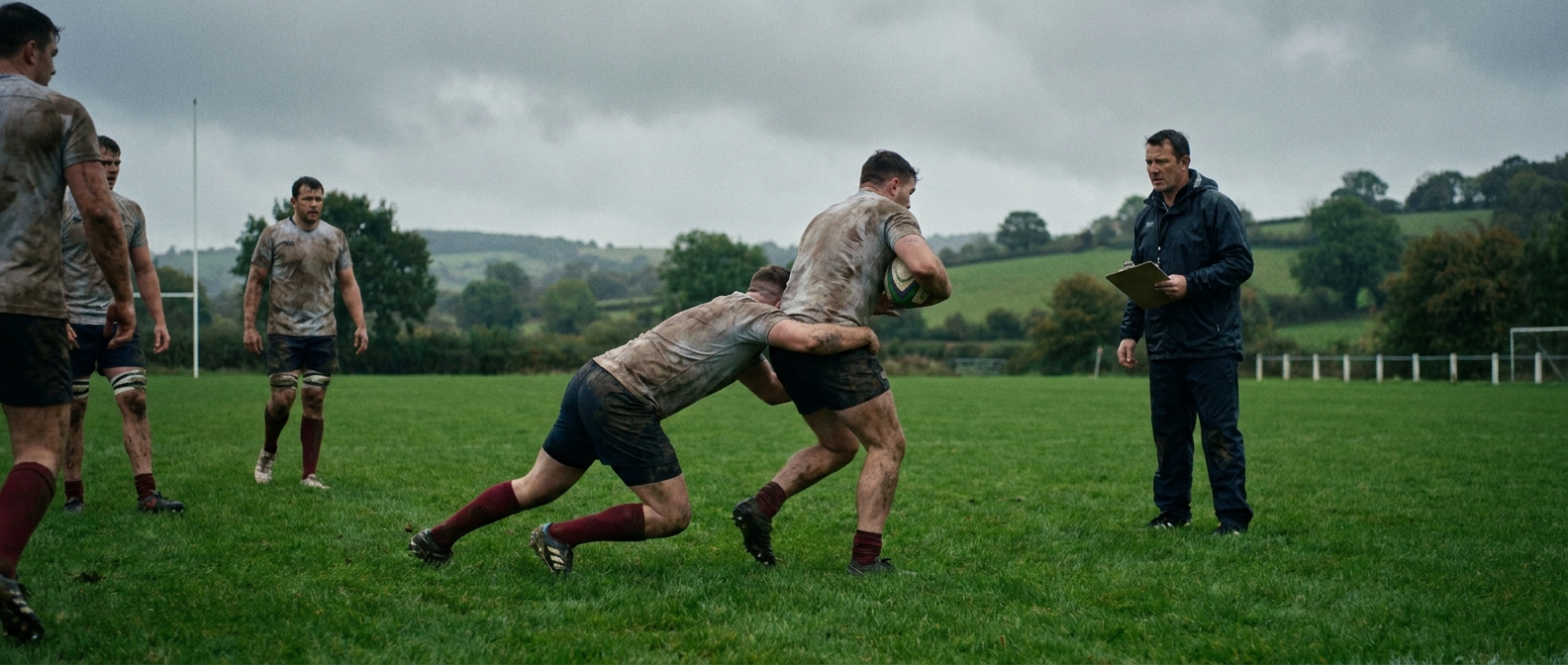
Step Two: Technique at walking pace. Rehearse the shape of the tackle slowly. Walking tackles and tackling from the knees let players groove body position, head placement and the leg-drive without speed adding risk.
Step Three: Tracking and controlled contact. Add movement. Players track a ball carrier and make contact at controlled pace, focusing on footwork, timing and a safe, dominant position before any real intensity is introduced.
Step Four: Build towards live. Only once the earlier stages are solid do you lift the speed towards match intensity, and even then in short, well-managed bouts rather than open free-for-alls.
Keep Head Contact Front of Mind
As speed returns, so does the risk of head contact - and that is where welfare and legality meet. Reinforce a low body height and "cheek to cheek" head placement from the very first walking rep, so the safe habit is baked in long before the pace picks up. A tackler who is taught to get low early rarely ends up making a high tackle when it counts.
Manage Volume, Not Just Intensity
It is not only how hard the contact is that matters, but how much of it there is. Keep total contact volume modest in the early weeks and build it gradually across pre-season. Full-contact minutes are a cost as well as a benefit, so spend them wisely - lots can be rehearsed at controlled speed, saving the biggest hits for when they are genuinely needed.
Key Coaching Points
- Rebuild collision tolerance in stages - never straight into live tackling
- Start ground-based: wrestling and grappling before any falling or big hits
- Groove technique at walking pace before adding speed
- Reinforce low body height and safe head placement from the very first rep
- Manage total contact volume, not just how hard each hit is
- Move up a stage only when the group looks comfortable and competent
Recommended Drills



Frequently Asked Questions
How long should a contact re-introduction take?
There's no fixed number, but rushing it is the real risk. Give the ground-based and walking-pace stages a good couple of weeks before you build towards live contact, and let the group's competence - not the calendar - decide when you move on.
Isn't all this caution a bit soft for senior players?
Quite the opposite - it's about availability. Experienced bodies still lose collision tolerance over the summer, and it's the senior players you most want fit and on the pitch in September. A staged build-up gets them there in one piece.
Can we build contact fitness without lots of full-blooded tackling?
Yes. Wrestling, grappling and short contact-conditioning circuits build the strength and resilience that contact demands with far less risk than repeated live tackling. Use them to develop the collision engine, then save your full-contact minutes for when they really count.

 sportplan_rugby