Safety First: The RFU Age-Grade Approach
Before a single drill, the most important thing any minis or junior rugby coach can understand is that safety comes first - ahead of skill, ahead of winning, ahead of everything. Rugby union is a contact sport, but children do not start by tackling. The RFU age-grade framework deliberately staggers the introduction of contact over several years: the youngest players (Under-7s and Under-8s) play entirely non-contact tag rugby, the tackle arrives from Under-9s, and rucking, mauls and contested scrums and lineouts are phased in gradually through the older age groups. The whole model is built to develop fun, confident, skilful players long before contact ever enters their game.
That order matters for how you coach. With the youngest children you lead with fun and evasion - running into space, dodging, passing and supporting - not with collisions. Contact, when it comes, is introduced patiently and progressively, never rushed and never drilled into tired children. Fatigue is exactly when technique slips and injuries happen, so a tired squad is a cue to switch to a fun game, not to push a contact session harder.
Two non-negotiables run through everything below. First, concussion awareness: every coach should know the RFU HEADCASE programme and live by its simple rule - "if in doubt, sit them out". A child with any suspected head injury comes off and does not return that day, full stop. Second, match the activity to the age grade: never run a contact or tackle activity with an age group that has not yet reached it in the RFU framework. If you coach minis, the drills you need are tag, warm-up and agility games - and that is exactly where this collection begins.
Section 1: Fun Warm-Up & Evasion Games
Every minis session should open with a high-energy, ball-in-hand game that gets every child moving, warm and smiling. These warm-ups raise the heart rate safely, sharpen footwork and evasion, and - crucially - mean nobody is standing in a queue. Start here.



Section 2: Tag Rugby Games (Non-Contact)
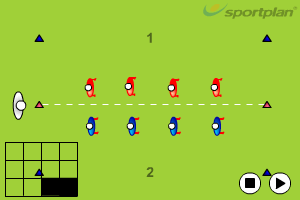
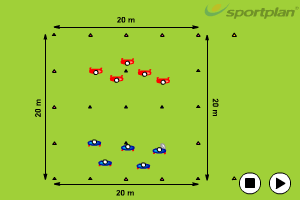
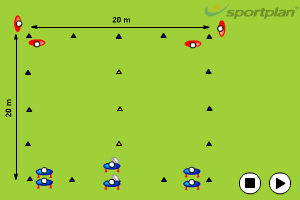
Tag rugby is the heart of minis coaching and the foundation of the whole RFU pathway. With no contact, no kicking and no scrummaging, these small-sided games let young players concentrate on the things that matter most early on: running into space, evading a defender, and passing to keep the ball alive. Build your session around games like these.
Section 3: Passing & Catching
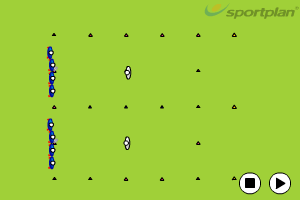
Once young players can run and evade, passing and catching are the skills that let them keep the ball alive as a team. Keep the groups small, the repetitions high and the success rate generous - confident hands come from lots of easy, fun touches, not from pressure. These practices suit juniors who have the basics of movement and are ready to give and take a pass under a little challenge.

Section 4: Agility, Support Running & 2v1 / 3v2
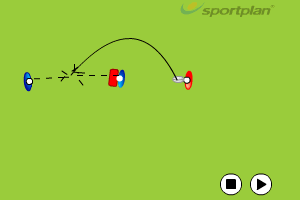
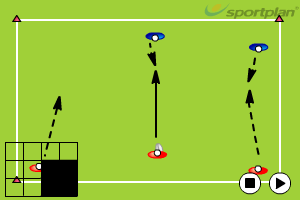
Rugby is a running game, and good footwork plus the habit of supporting the ball-carrier are what turn individual skills into team play. These agility and overload practices keep everything low-contact while sharpening the change of direction, the evasive step and the support line that every junior needs. The overloads (2v1, 3v2) are deliberately stacked in attack's favour so children succeed and stay engaged.

Section 5: Decision-Making Mini-Games
The final step is asking young players to read a situation and choose - pass or run, this side or that. These small overload games put the earlier skills into a game-like context where the child has to think, not just execute. Keep them short, celebrate good decisions over perfect technique, and finish your session here on a high.

Running a Safe, High-Energy Minis Session
The drills above are the raw material; how you assemble them into an hour decides whether your minis go home tired, smiling and a little better than last week. The structure below is a reliable template for a safe, high-energy session - lead with fun, keep every child active, and never finish on a hard physical push.
A 60-Minute Minis Session Template
- Welcome & head count (5 min): Greet every child by name, do a quick kit and belt check, and confirm nobody is carrying a knock or feeling unwell before they start.
- Fun warm-up game (10 min): Open with Bull Dog or Catch Me If You Can - heart rates up, everyone moving, ball in hand, no queues.
- Skill block 1 - movement (10 min): Agility and evasion (1v1 Evasion, Colour Cones) so footwork is sharp before they handle the ball under pressure.
- Water break (3 min): Young children dehydrate quickly - build breaks in, do not wait for someone to ask.
- Skill block 2 - handling (12 min): Passing and catching in small groups (2 v 1, Attack the Catch) with high reps and a generous success rate.
- Small-sided game (15 min): A tag game (4 vs 1, 5 vs 5, Attack the Space) where the skills come together and the children just play.
- Cool-down & well done (5 min): A calm finish, praise for good decisions and effort, and a clear, friendly word to every parent at pick-up.
Two reminders worth repeating because they matter most. Keep activity high and queues short - the best minis sessions have a ball for nearly every child and almost no standing around. And watch your players: any child who looks tired, upset or who has taken a knock to the head comes out. Tiredness is when technique and concentration fade, so if energy drops, switch to a fun game rather than pushing on. And on heads, the rule never changes - if in doubt, sit them out, and follow the RFU HEADCASE guidance on return to play.
Where to Go Next
These 15 drills will carry a minis or junior section through a full season of fun, safe, progressive sessions. As your players grow into the older age grades and roles start to specialise, our guide to rugby positions explained helps you and the children understand where each player fits and what their job is. To turn any of the drills above into a full, structured practice, drop them into our free rugby session plan template, which gives you a ready-made framework for warm-up, skills and game.
And when you want more - hundreds of rugby practices sorted by skill, age and theme, from tag and handling right through to the contact and set-piece work for older groups - browse the full Rugby drills library. Just remember the golden rule as you choose: match every drill to your players' age grade, lead with fun, and keep safety first.
Frequently Asked Questions
What age can children start rugby?
Children can join an RFU minis section from around age 6 (Under-7s), and many clubs run fun, ball-familiarisation sessions for even younger children. The crucial point is that these early years are entirely non-contact tag rugby. The RFU age-grade framework introduces the skills and the contact elements gradually, year by year, so a six-year-old is playing tag and learning to run, pass and evade - never tackling. Always check your club is following the RFU age-grade rules for the relevant school year.
Is junior rugby safe, and when does contact start?
Junior rugby is designed to be safe through the RFU age-grade framework, which staggers the introduction of contact over several years rather than all at once. The youngest players (Under-7s and Under-8s) play non-contact tag rugby. The tackle is introduced from Under-9s, with rucking, mauls and contested scrums and lineouts phased in gradually through the following age groups. Coaches must hold the appropriate RFU coaching and first-aid qualifications, follow concussion guidance (the RFU HEADCASE programme and the simple rule, 'if in doubt, sit them out'), and match every activity to the children's age grade. Done properly, the progressive model means children build skills and confidence before contact ever enters the game.
How long should a minis rugby session be?
For minis (roughly Under-7s to Under-9s), keep the session to around 60 minutes and break it into short, varied blocks - a fun warm-up game, two or three skill activities and a small-sided game to finish. Young children have short attention spans and tire quickly, so frequent water breaks and high activity (every child with a ball, minimal queuing) keep energy and concentration up. Never drill contact into tired children; fatigue is when technique slips and injuries happen, so end on something fun rather than a hard physical push.
What is tag rugby?
Tag rugby is the non-contact form of the game used for the youngest age groups and in schools. Each player wears a belt with two velcro tags; instead of tackling, a defender pulls off a tag to stop the ball-carrier, who must then pass within a few steps. There is no contact, no kicking and no scrummaging, so the focus is entirely on running into space, evasion, passing and support play. It is the foundation of the RFU age-grade pathway and the safest, most enjoyable way to bring young children into rugby.

 sportplan_rugby