Before the First Whistle Comes the Paperwork
Plenty of rugby clubs begin with the same spark: a handful of people, a spare pitch, and the feeling that the town could support a side. The rugby is the easy part. What turns a kickabout into a recognised club is the groundwork - affiliating with the RFU, putting safeguarding in place, sorting insurance and a constitution, and finding somewhere proper to play. Get that foundation right and the club has somewhere solid to grow from. Skip it, and you store up problems that surface at the worst possible moment.
This guide is a practical, ordered checklist for starting a rugby union club or a new section of an existing club in England. It is written for the volunteers who take this on in their evenings, so it keeps things plain and puts the genuinely non-negotiable items - safeguarding and player welfare above all - where they belong: front and centre.
Start With People and a Plan
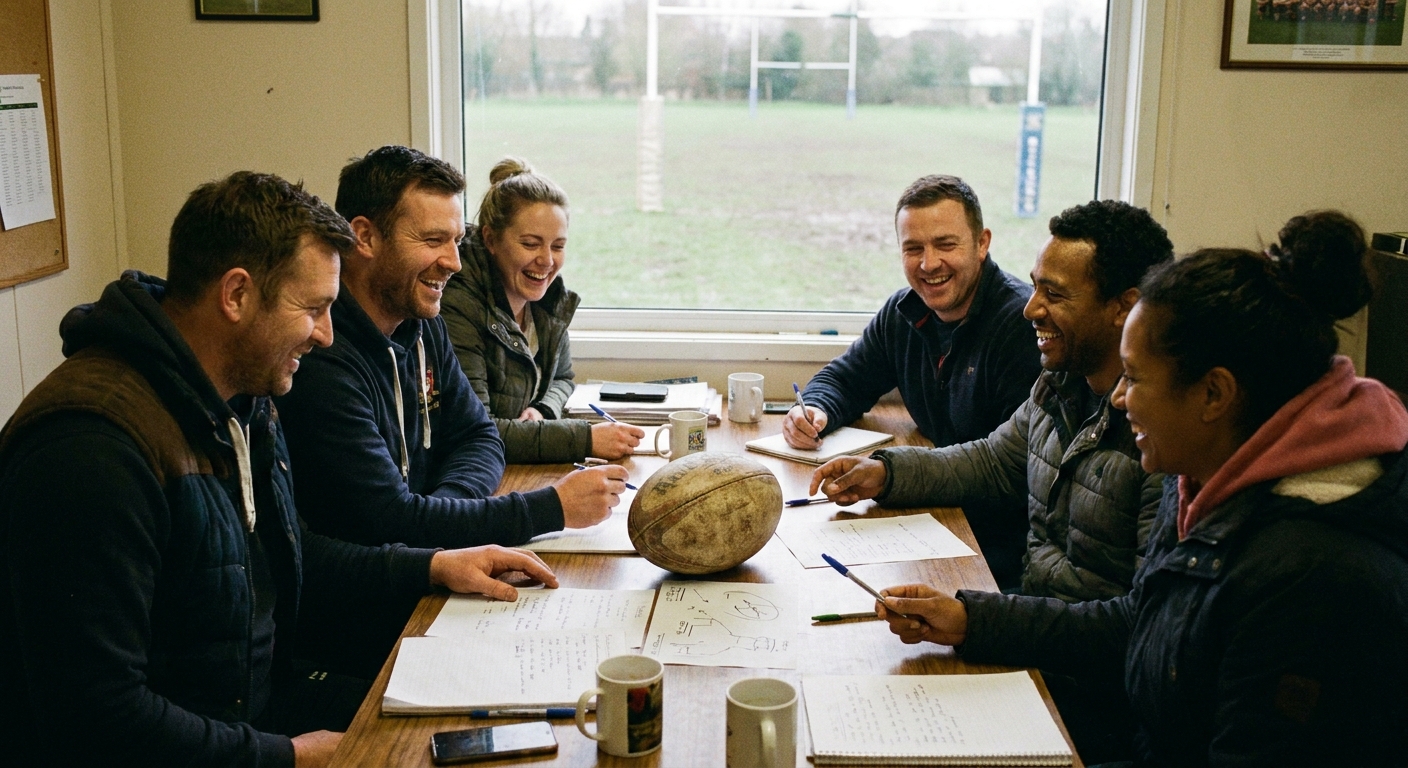
Before any form is filled in, you need a small founding group - ideally three or four committed people who can share the load. One person trying to do everything is how new clubs fail. Agree what you are setting out to build: a senior men's side, a women's team, a junior (age-grade) section, or a full club with all of them in time. Be honest about your catchment, your likely volunteers and your access to a pitch, because those three things shape everything that follows.
Talk early to your Constituent Body (your county union, often called your CB) and to your local RFU rugby development staff. They have helped dozens of clubs through this and can tell you what your area actually needs, point you at local grants, and steer you through affiliation. There is no prize for working it out alone.
Get the Governance Right: Committee, Constitution, Bank Account
A club is a legal and financial entity, not just a team, so it needs proper structure from day one. Form a committee with at least the core officer roles - a Chair, a Secretary and a Treasurer - and adopt a written constitution setting out how the club is run, how decisions are made and how money is handled. The RFU and your CB can supply a model constitution you can adapt rather than drafting from scratch. Many clubs constitute as an unincorporated association to begin with and look at a CASC (Community Amateur Sports Club) registration or incorporation later as they grow.
Open a dedicated club bank account with at least two signatories - never run club money through a personal account. This protects your volunteers, keeps the books clean and is usually a condition of grants and affiliation. With a committee, a constitution and an account in place, you have a club the RFU and a CB can recognise.
Affiliate With the RFU and Get Onto RFU GMS
Affiliation is what connects your club to the rugby pyramid. You affiliate to the RFU through your Constituent Body, which is your route into leagues, competitions, player registration, RFU support and insurance guidance. As part of this you will be set up on RFU GMS - the RFU's Game Management System, the official platform for managing club details, registering players and recording the people in club roles. Treat GMS as your system of record: it is where affiliation and registration officially live.
Affiliation carries a fee (to the RFU and usually to your CB), so build that into your first-year budget. Once affiliated and registered on GMS, you can enter your teams into the appropriate league or development structure for your area and standard. Your CB will guide you on which competition is right for a brand-new side - starting in a friendly or development league for a season is often wiser than jumping straight into a competitive ladder.
Safeguarding: The Part You Cannot Get Wrong
If your club runs any age-grade rugby - and most new clubs do - safeguarding is not a box to tick at the end. It is a precondition for putting children on a pitch, and it has to be done properly. The RFU sets clear requirements, and your job is to meet them in full before, not after, your first junior session.
The Safeguarding Mini-Checklist
- Appoint a club Safeguarding Officer (CSO): a named, RFU-trained person responsible for safeguarding across the club. They must complete the RFU's safeguarding training for the role and be the point of contact for any concern.
- DBS checks for everyone in regulated activity: coaches, managers, first-aiders and any adult regularly working with under-18s need an enhanced DBS check processed through the RFU's system - in place before they start, and renewed on the RFU's cycle.
- Adopt the RFU safeguarding policy: use the RFU's policy and procedures rather than writing your own, and make sure every volunteer knows how to raise and report a concern.
- Codes of conduct: agree and share codes of conduct for coaches, players, parents and spectators, so expectations on behaviour and touchline conduct are clear from the start.
- Age-grade rules: run junior rugby under the RFU's age-grade regulations - the right format, squad sizes and progressive, age-appropriate contact for each stage. Children do not play the adult game in miniature.
- Concussion awareness (HEADCASE): make sure coaches understand the RFU's HEADCASE concussion guidance and the simple rule that underpins it - "if in doubt, sit them out." Recognising and managing a head injury correctly is part of every coach's job, not just the medic's.
- First aid and emergencies: have a trained first-aider, an accessible first-aid kit and a simple emergency action plan for your pitch at every session and match.
None of this is bureaucracy for its own sake - it is what keeps children safe and your volunteers protected. A club that takes safeguarding seriously from day one earns the trust of parents, and that trust is what fills a junior section. If you are building that section, our guide to running a junior rugby team walks through the season-by-season detail.
Insurance, Pitch and a Place to Play
Public liability insurance is essential, and affiliated clubs are covered by, or can access, insurance arrangements through the RFU framework - confirm exactly what your affiliation includes and where you need to top it up, particularly if you run a clubhouse or hire your own ground. Do not take to a pitch without knowing your cover is in place.
On facilities, a new club rarely owns a ground straight away, and it does not need to. Many start on a council pitch, a school field or a shared facility, with changing space borrowed or hired. What you must check is that the playing surface is safe and the right size, that you have access to goal posts (or post protectors) and line markings, and that there is somewhere for players to change and for first aid. A clubhouse - the social heart of many established clubs - is a goal to work towards, not a starting requirement. Begin with a safe, available pitch and build from there.
Kit, Equipment and Getting Ready to Train
You can start training with very little: a set of rugby balls, a stack of cones, some tackle bags or pads as you introduce contact, bibs to split sides, and a first-aid kit. Match kit and branded gear can come later, often funded by subs or a local sponsor. Borrow and improvise in year one; invest as membership grows.
With players on the pitch, you will want sessions ready to go. For minis and juniors, lean on low-contact, age-appropriate practices - tag rugby and movement games build the core skills safely before any contact is introduced. Here are a couple to get a new junior section moving:


Browse the full Rugby drills library for hundreds more practices sorted by skill and age group, and use a session plan template to give every training night a clear shape.
Recruit Players, Coaches and Volunteers
A club is its people. Recruit on three fronts at once: players (run an open taster session and spread the word through local schools, social media and community groups); coaches (the RFU runs coaching courses at every level - get your volunteers qualified and insist on the safeguarding and first-aid basics); and the volunteers who keep everything else running - a fixtures secretary, a treasurer, a kit manager, the people who put up the posts and make the teas. Spread the load early, because the clubs that burn out their founders rarely see a third season.
Where a Club App Helps - and Where It Does Not
Once players start arriving, the admin multiplies fast: registration forms, emergency contacts, medical and consent details, subs, availability for matches and a flood of WhatsApp messages. This is where a club app earns its place - and where it is important to be clear about what it does and does not replace.
For day-to-day club admin, Teamo handles online member registration that captures emergency-contact and consent details properly and stores them in line with GDPR, alongside child-safe communication with guardian visibility, Direct Debit subs, availability and a branded club app - and it is mobile-first, which matters when around 90% of members manage everything from a phone. In the interests of being straight with you, Teamo comes from the Sportplan team - the people behind this site - and it carries a safeguarding pedigree worth noting: it was nominated best safeguarding app by the Head of Safeguarding at England Athletics. That recognition was for England Athletics specifically, not the RFU, and it is the kind of welfare-first design a new club benefits from. If you want to see how it captures registration and consent for a whole club, you can take a look at Teamo. One thing it does not do: your RFU GMS registration and affiliation are separate and still required - GMS remains your official record with the RFU, and a club app complements it rather than replacing it. Keep both running and do not confuse the two.
Aim for Accreditation as You Grow
Once the basics are bedded in, set your sights on the RFU's club accreditation scheme. Accreditation is a recognised quality standard that shows your club meets good-practice benchmarks across governance, safeguarding, coaching and player welfare. It is not required to play, but working towards it gives a young club a clear development roadmap, reassures parents and sponsors, and can open doors to support and funding. Treat it as the goal that turns a functioning club into a well-run one.
Keep the Money and the Communication Simple
Two things quietly sink new clubs: money that is never collected and messages that never land. Set fair, predictable subs and match fees from the outset - our guide to rugby subs and match fees covers how to pitch them and collect them without endless chasing. And put a single, reliable communication channel in place so fixtures, training changes and safeguarding notices reach everyone; the club communication guide shows how to keep it clear and child-safe. Sort these two early and the volunteer evenings go back into rugby, where they belong.
Frequently Asked Questions
How do I start a rugby club?
Start with a small founding group and a simple plan, then work through the essentials in order: form a committee and adopt a constitution, open a club bank account, affiliate with the RFU through your Constituent Body (county union) and get set up on RFU GMS, take out public liability insurance, secure a pitch and somewhere to change, appoint a qualified club Safeguarding Officer and put safeguarding in place, then recruit players, coaches and volunteers. Affiliation and registration are done through the RFU and your CB - an app does not replace them. Allow a few months to get everything in place before your first competitive season.
Do you need a DBS to coach rugby?
If you coach, manage or supervise children in age-grade rugby you are in regulated activity and the RFU requires an enhanced DBS check (a Disclosure and Barring Service check) processed through the RFU's system, renewed on the RFU's cycle. Your club Safeguarding Officer manages this and should not let anyone start in a role with children until their check is in place. Adult-only coaching does not require a DBS, but most clubs run age-grade sections, so in practice the great majority of volunteers will need one.
What is RFU affiliation and accreditation?
Affiliation is the formal membership that connects your club to the RFU through your Constituent Body (your county union). It lets you register players, enter leagues and competitions, access RFU support and insurance guidance, and use RFU GMS, the RFU's Game Management System for club and player records. Accreditation is a separate, optional quality standard: the RFU's club accreditation scheme recognises clubs that meet good-practice benchmarks across governance, safeguarding, coaching and player welfare. Affiliation is the baseline to play; accreditation is a goal to work towards.
How much does it cost to set up a rugby club?
It varies hugely with your circumstances, so treat any figure as a rough guide rather than a quote. If you can use a council or school pitch and borrow kit to begin with, the unavoidable costs are modest: RFU and CB affiliation fees, public liability insurance, DBS checks, a set of balls, cones and a basic first-aid kit, and posts or post protectors if the venue does not provide them. Costs rise sharply if you need to hire or maintain your own pitch, run a clubhouse, or buy match kit. Many new clubs keep year one lean, fund it through subs and small grants, and add facilities as membership grows.

 sportplan_rugby