Rugby: alignment

July 2026

July is the month most clubs dust off the running shoes and head for the hills. It feels productive - lads coming back sweaty and sore, the group bonding through shared suffering. But months of steady-state running rarely show up where it matters: in the last ten minutes of a tight match, when the legs are gone and a defender still needs tracking.

The modern thinking on pre-season is simple. Rugby is a game of repeated high-intensity efforts, collisions and rapid decisions under fatigue. Your conditioning should look like that too. Get the ball into the work as early as you safely can, and build volume gradually rather than front-loading everyone into the ground in week one.

Why Traditional Fitness Falls Short

Rugby is not a steady-state sport. It is a series of short, sharp bursts - a sprint to the breakdown, a collision, a scramble to reset - separated by incomplete recovery. Training your players to jog for forty minutes teaches their bodies to be efficient at jogging. It does very little for the energy system the game actually taxes.

Worse, long slow running done in isolation carries a real cost: it eats into the time you have for skills, and it can leave players flat and heavy-legged rather than sharp. Fitness earned away from the ball tends to stay away from the ball.

Build It Around the Game

The most transferable conditioning happens inside rugby-shaped activity. Small-sided games, handling grids run at pace, and repeat-effort shuttles with a skill on the end all raise the heart rate while rehearsing the movements and decisions of a match. Players get fit and better at rugby at the same time.

Step One: Establish a base. Early pre-season, use games and continuous handling to lift general work capacity. Keep intensity moderate and volume gentle - you are waking bodies up, not testing them.

Step Two: Add repeated high-intensity efforts. Introduce shuttle and interval work with clear work-to-rest ratios. Think 15-30 seconds of maximal effort against short recovery, repeated in blocks. Put a pass, a catch or a decision at the end so fitness and skill develop together.

Step Three: Layer in fatigue. Once the base is there, run your skills sessions when players are tired. Handling under fatigue is where matches are won and lost, so rehearse it deliberately rather than hoping it holds up.

Step Four: Sharpen and taper. In the final weeks before your opener, cut volume and lift intensity. Short, sharp, game-realistic work keeps players fresh and fast rather than flat.

Manage the Load, Not Just the Effort

The point of building gradually is not softness - it is availability. Players who are buried under a huge week-one load pick up soft-tissue injuries and spend the season on the physio bench. Track how hard sessions feel, watch for the group getting heavy-legged, and progress the tough stuff week on week rather than all at once.

Small tweaks make a big difference. Vary the work so it is not all running in straight lines. Give genuine recovery between the hard days. And remember that a fit squad that is fully available in September beats a heroically fit squad that is half-injured.

Don't Forget the Collision Engine

Running fitness alone will not prepare a player for the specific fatigue of repeated contact. Wrestling, bag work and short contact-conditioning circuits build the strength and resilience the tackle and breakdown demand. Weave a little of this into the fitness block so that when full contact returns, bodies are ready for it - but build it up carefully, never full-tilt in the first sessions.

Key Coaching Points

  • Match your conditioning to the game: short, sharp, repeated efforts, not endless steady running
  • Get a ball into the work early so fitness and skills grow together
  • Build volume gradually across pre-season rather than front-loading week one
  • Deliberately train handling and decisions under fatigue
  • Track load and protect recovery to keep players available all season
  • Include contact-conditioning so bodies are ready when full contact returns

Recommended Drills

VIEW ALL FITNESS DRILLS

Frequently Asked Questions

Should we scrap long runs from pre-season altogether?

Not entirely. A little low-intensity aerobic work early on helps build a base and aids recovery. The mistake is making it the centrepiece. Once the base is laid, the bulk of your conditioning should look and feel like rugby - repeated efforts, changes of direction and a ball in the mix.

How early should we introduce ball work in pre-season?

From day one. There is no need to earn the right to touch a ball by grinding through fitness first. Handling grids and small-sided games raise the heart rate just as effectively as running while keeping skills sharp and morale high.

How do I know if I'm loading players too hard?

Watch and listen. Persistent heavy legs, dropping session quality, niggling soft-tissue complaints and low mood are all signs the load is climbing too fast. Ask players how hard sessions felt, progress the demanding work week on week, and always protect a proper recovery day.

alignment DRILLS
View All

Realignment & Depth - 5 v 4

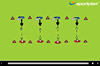
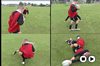
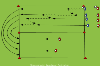
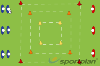
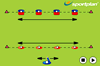
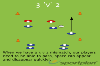
The realignment and depth hands drill is a quick drill to focus the players in sharpening their alignment and depth before a session. You can spend as long or as short on this drill as you need. The aim of the drill is to develop the speed at which players realign themselves, to support their early hand-catch, quick and accurate transfer of the ball to a support player. Set a 5 cones 1.5 meter apart in straight line. This will mark where the players will start the drill from Set 4 cones at a diagonal in line with the starting cones from one edge. This will be the cones that the defending players need to retreat to before coming up to pressure the attacking players. The first attacking player needs to step back 1 meter and will receive the ball from the first defending player who has also stepped back 1 meter to his designated cone Divide the group into 4 attacking player and 5 defending players, there should be a free attacking player The ball starts with the defending player On the coaches call, all defending players need to work back to their designated cone and then come forward in a straight line to their opposite attacking player The attacking players set their own depth to ensure they have time to catch and pass effectively On the coaches call, the first defending player will move back to their cone, once they get to the cone they pass the ball to the first attacking player, and then the first defending player tries to put pressure on the first attacking player The attacking players try to get the ball to the 5th player without being ‘touched’ by a defending player

Decision making

Realignment & Depth - 5 v 4 Ba...

The realignment and depth hands drill is a quick drill to focus the players in sharpening their alignment and depth before a session. You can spend as long or as short on this drill as you need. The aim of the drill is to develop the speed at which players realign themselves, to support their early hand-catch, quick and accurate transfer of the ball to a support player.Set a 5 cones 1.5 meter apart in straight line. This will mark where the players will start the drill fromSet 4 cones at a diagonal in line with the starting cones from one edge. This will be the cones that the defending players need to retreat to before coming up to pressure the attacking players.The first attacking player needs to step back 1 meter and will receive the ball from the first defending player who has also stepped back 1 meter to his designated coneDivide the group into 4 attacking player and 5 defending players, there should be a free attacking playerThe ball starts with the defending playerOn the coaches call, all defending players need to work back to their designated cone and then come forward in a straight line to their opposite attacking playerThe attacking players set their own depth to ensure they have time to catch and pass effectivelyOn the coaches call, the first defending player will move back to their cone, once they get to the cone they pass the ball to the first attacking player, and then the first defending player tries to put pressure on the first attacking playerThe attacking players try to get the ball to the 5th player without being ‘touched’ by a defending player

General

Unfortunately there were no results for your search! Please try again
alignment ANSWERS
View All

What is the current thinking regarding kickoff receiving alignment?

What is the current thinking regarding kickoff receiving alignment?

Gary Kent Coach, United States of America

how do you teach players to ralign to take a pass running?

how do you teach players to ralign to take a pass running from deep

Frank Hewett-Smith Coach, England

HOW CAN I IMPROVE PLAYERS ABILITY TO PERFORM THE LATERAL?

HOW CAN I IMPROVE PLAYERS ABILITY TO PERFORM THE LATERAL PASS ?

dean Coach, England

Does anyone have a really good drill to encourage backs to stay steep?

Does anyone have a really good drill to encourage backs to hold their steepness when attacking - my team of dreams are Under 11's

Archived User Coach

DEFENSE

My team are new and are very slow on reforming the defensive line,any ideas on how to speed it up?

Archived User Coach

please can you help with any drills to help with realignment?

please can you help with any drills to help with realignment (of backs) to attack? Thanks

Archived User Coach

develop the ability of your players to realign, to?

develop the ability of your players to realign, to take pass running from depth

Archived User Coach

establish principles of counter attack from a turnover?

establish principles of counter attack from a turnover all in contact

Archived User Coach

My number 10 has a habit of running across on first?

My number 10 has a habit of running across on first phase ball thus our backs lack any go foward ball most times. Any ideas how we can remedy this habit will be a great help.

Archived User Coach

How do I get my players to quickly react on turnovers?

How do I get my players to quickly react on turnovers? Because when they are attacking, lose the ball in contact-situations and then chance from attacking to defending takes too long!

Willem Nas Coach, Netherlands

Man marking and alignment

Hi All. could anyone advise me of a drill/game that would help with my backs defensive alignment and attacking alignment from a ruck. At the moment all of my backs lose their shape and get drawn into the ruck or follow the ball leaving a overlap. Cheers Iain

Iain Hughes Coach, England

Kickoff Alignment

I am looking for a set up for receiving a kickoff in rugby. We are using the expoloded scrum method and marking their forwards on the kickoff now. But if the forwards move or are split we end up looking like the Keystone Cops trying to match. What is a prefered set up?

Matt Coach, United States of America

Looking for drills to improve my U10's defending skills?

We have recently formed a new under 10s team. Out of the team , roughly half have played before, and the other half are new to the game. We played Sunday and were well beaten , although the side we played has a very good reputation for being a good side. I do see promise though in our team, it's just the organisational side that needs attention. Example, keeping our players from bunching, realigning in defence, etc. after doing the coaching course, I am we'll aware of trying not to pigeonhole players into positions, but I think they need this to help them organise themselves easier. Are there any drills to help with the above? Cheers, Chris.

christopher jenkins Coach, Wales

I need a drills that demonstrates 2v1 alignment options...

I need to have a drill that demonstrate 2v1 alignment options and 2v2 go foward/change direction options.

Dennis Wright Coach, England

What do alignment and go forward options mean...

in a 2v2 or 2v1 options

Dennis Wright Coach, England

Drills for Level 2! 2v1support and 2v2 go forward/change direction?

Hi, I hope someone can help!For my level 2 I need to do 2 40 min lesson plans for:- 2 v 1 alignment options- support- 2 v 2 go forward/ change of directionI'm really struggling for ideas and not sure what to do! I would massively appreciate any help you can give me!ThanksCara

Archived User Coach

Kickoff Alignment - Sportplan

I am looking for a set up for receiving a kickoff in rugby. We are using the expoloded scrum method and marking their forwards on the kickoff now. But if the forwards move or are split we end up looking like the Keystone Cops trying to match. What is a prefered set up?

Matt Coach, United States of America

What is the current thinking r...

What is the current thinking regarding kickoff receiving alignment?

Gary Kent Coach, United States of America

U10s organisation in defence. ...

I have started an under 10s team up, and I would say about 8 from the 13 children I have , did not play rugby until about 6 months ago. Of these players, there seems to be a lot of potential, as we are scoring tries against teams, that very rarely concede tries.the problem I got with them, is that we are very poor at organising our selves in defense when the opposition has the ball, which does result in us conceding quite a few tries. We have some very good tacklers in the team. Can anyone offer some ideas on how I can get them to organise themselves? Thanks . Chris.

christopher jenkins Coach, Wales

Drills for Level 2! 2v1support...

Hi, I hope someone can help!For my level 2 I need to do 2 40 min lesson plans for:- 2 v 1 alignment options- support- 2 v 2 go forward/ change of directionI'm really struggling for ideas and not sure what to do! I would massively appreciate any help you can give me!ThanksCara

Archived User Coach

JOIN SPORTPLAN FOR FREE

  • search our library of 1100+ rugby drills

  • create your own professional coaching plans
  • or access our tried and tested plans

Sportplan App

Give it a try - it's better in the app
YOUR SESSION IS STARTING SOON... Join the growing community of rugby coaches plus 1100+ drills and pro tools to make coaching easy.
LET'S DO IT