Why Line Speed Is the Foundation of Modern Defence
Every great defensive team in rugby shares one characteristic: they close space quickly and as a unit. Line speed is not simply about individual players running forward fast - it is about the entire defensive line advancing together at the right moment, in the right shape, to take time away from the attacking team. When a defence pushes up with genuine pace and connectivity, the ball carrier has fewer options, passing lanes shrink, and the attack is forced into reactive rather than proactive decision-making.
The 2025-26 international season has shown this principle at every level. Teams that consistently pressure the gain line with aggressive line speed concede fewer tries, force more turnovers, and create scoring opportunities directly from defensive actions. For coaches at grassroots and club level, line speed is the great equaliser - a well-drilled defensive line can neutralise a more talented attacking team simply by denying them the space to play.
The Connected Defensive Line
The most common mistake in amateur rugby defence is players advancing at different speeds. When one defender rushes up ahead of the line, a gap opens on either side that a good attacking team will exploit instantly. The concept of a "connected" line means every defender is aware of the players either side of them and adjusts their speed to stay in alignment.
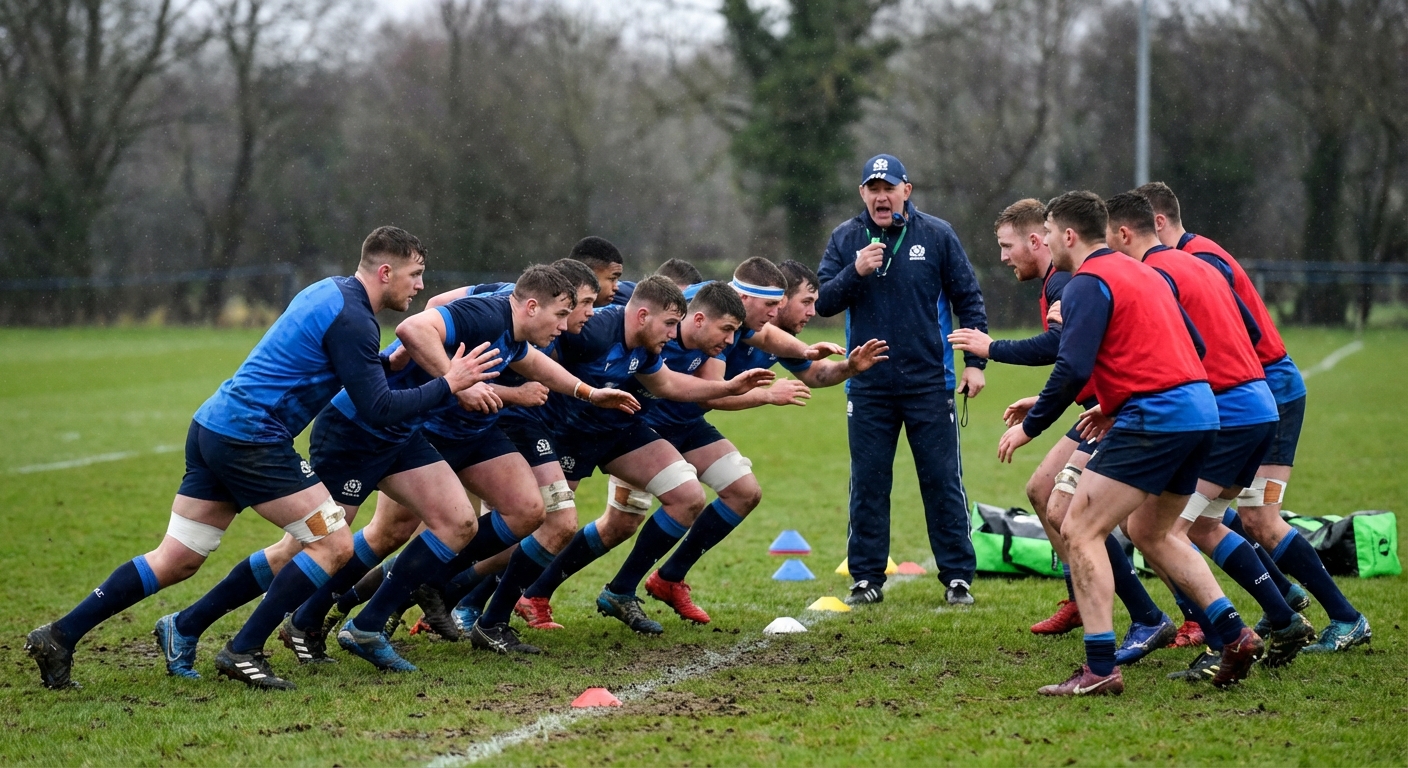
Teach your players to use peripheral vision constantly. Each defender should be able to see the shoulder of the player inside and outside them without turning their head. If they cannot see that shoulder, they are either too far ahead or too far behind the line. This simple visual cue keeps the line connected without requiring constant verbal communication.
The Advance Trigger
Line speed must be triggered at the right moment. Advance too early and the attacking scrum-half can exploit the space behind your line with a box kick or a pass to a runner hitting a hole. Advance too late and the ball carrier receives the pass with time and space to scan for opportunities. The trigger is the moment the ball leaves the passer's hands. At that instant, the entire line should step forward together with urgency.
Some coaches prefer to use the "set" call from the inside defender as the trigger, allowing the line to advance on a verbal cue. This can be effective but requires the caller to have excellent timing. Whichever trigger you choose, consistency is everything - every player must react to the same stimulus at the same moment.

Drift Defence vs Rush Defence: Different Line Speeds
Not all defensive systems use the same line speed, and coaches must understand the difference between drift and rush defence to train their players effectively.
Drift Defence
In a drift defence, the line advances at a moderate pace while sliding laterally toward the touchline. Each defender takes the attacker outside them, pushing the ball toward the sideline where space runs out. Line speed in a drift is controlled and measured - the goal is not to blitz the ball carrier but to close passing lanes gradually while funnelling the attack wide. This system is excellent against teams with strong midfield runners because it avoids committing defenders one-on-one in the centre.
Rush Defence
A rush defence is characterised by aggressive, fast line speed designed to pressure the ball carrier into rushed decisions. Defenders target the player inside the ball carrier, jamming in to cut off passing options. This system is high-risk, high-reward: when it works, it forces turnovers and creates chaos. When it fails - usually because one defender misses their assignment - it can leave massive overlaps on the outside.
Most teams at club level benefit from a hybrid approach: drift defence as the default with rush triggers on specific plays or areas of the field. For example, rushing off a scrum near your try line to pressure the first receiver, then reverting to drift in open play.

Communication: The Glue That Holds the Line Together
A defensive line that does not communicate is a defensive line that will break down. Communication in defence must be constant, specific, and loud. Generic shouting adds nothing - players need clear information about what is happening and what they need to do.
Establish a defensive communication framework with specific calls. "Up" means the line advances together. "Hold" means maintain current position. "I've got inside" or "I've got outside" clarifies responsibility. Numbers can be used to identify which attacker each defender is responsible for. The inside defender (typically the 10 or 12) is often the defensive captain, making the primary calls, but every player must contribute.
Train communication at every training session, not just in defensive drills. Make it a habit. Players who are quiet in training will be quiet in matches, and quiet defenders make mistakes.

Dealing with Offloads and Playmakers
Good line speed creates pressure, but smart attacking teams respond with offloads, short passes around the tackle, and playmakers who can beat the rush with a well-timed pass or step. Your defensive system must account for these threats.
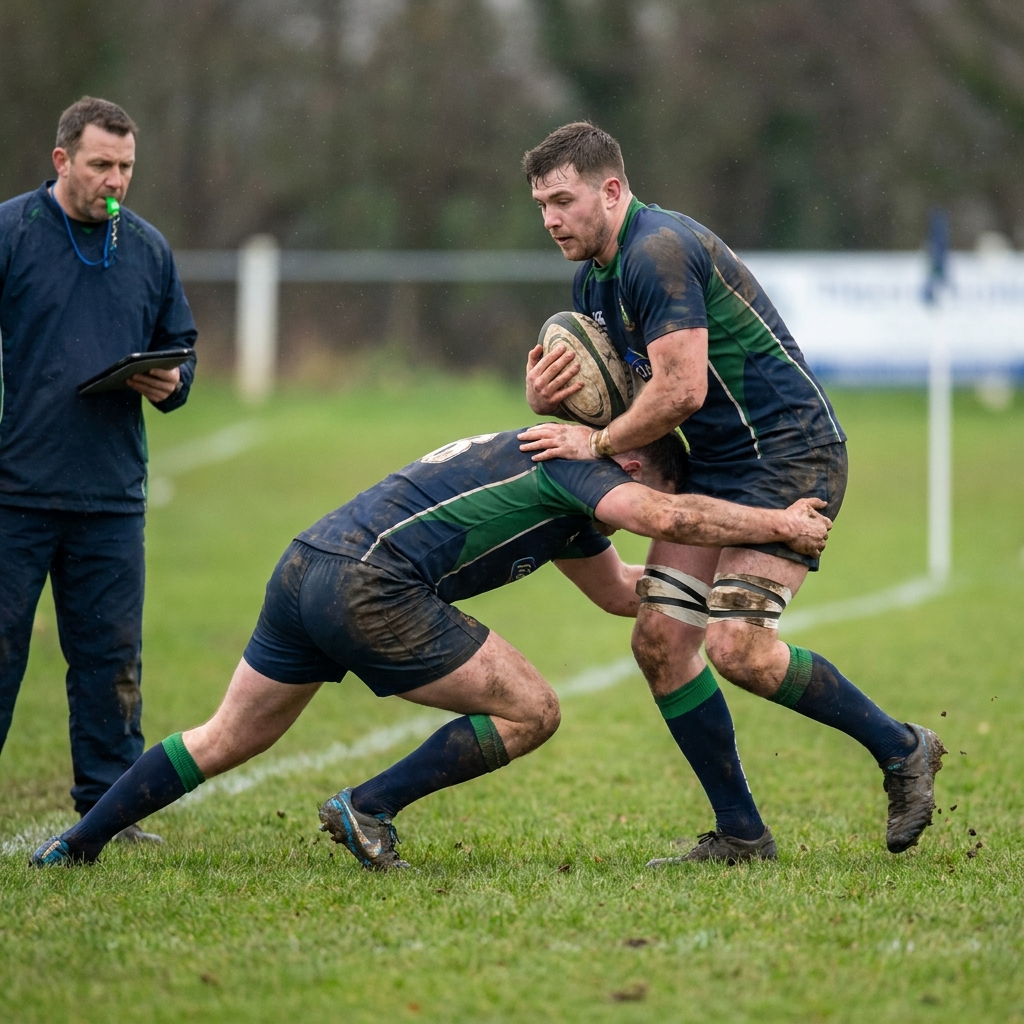
Against offloaders, the tackler's job changes slightly. Instead of simply bringing the ball carrier to ground, the tackler must also control the ball carrier's arms and ability to pass. This means wrapping high enough to pin one arm while driving through with the legs. The "chop and wrap" technique - one defender going low on the legs while a second wraps high - is the most effective way to neutralise offloading threats.
Against playmakers who step or pass late, the key is the "second line" of defence. While the front-line defenders push up, the back three and any spare forwards must hold depth to cover kicks, line breaks, and any attackers who find space behind the rushing line. This second line is often neglected in training but is critical to a complete defensive system.
Sample Session Plan: Defensive Line Speed (60 Minutes)
Session Structure
- Warm-Up (10 min): Mirror drill in pairs - one player leads with lateral footwork, the partner mirrors while maintaining arm's-length distance. Progress to groups of four moving in a line, maintaining alignment while advancing and retreating on a whistle.
- Technique Block (15 min): Line of four defenders vs a coach holding a ball. On the coach's cue, the line advances together. Coach points left or right to simulate passing direction - line adjusts while maintaining shape. Focus on peripheral vision and staying connected. Add a verbal trigger call from the inside defender.
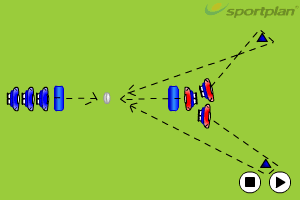
- Development Block (15 min): 4v3 defensive channel work. Attackers have a one-player overlap. Defence must use line speed and drift to shut down the extra man and force the ball into touch. Rotate attackers and defenders. Emphasise communication and trust in the system.
- Game Scenario (15 min): Full-width defence vs attack. Attack gets 5 phases to score. Defence earns points for: connected line advancement (1 point), dominant tackle behind gain line (2 points), turnover (3 points). Attack scores 5 points for a try. Track scores to build competitive intensity.
- Cool-Down (5 min): Light jog, stretching, and team review. Ask defenders: when did you feel connected? When did the line break? What communication helped most?
Common Mistakes to Avoid
Individual rushing: One defender sprinting ahead of the line creates a hole, not pressure. Line speed must be collective. If one player advances faster, the attackers will simply pass around them into the gap.
Flat-footed waiting: Defenders who stand flat-footed at the gain line and wait for the ball to come to them give the attack all the time in the world. The advance must begin as the ball is passed - every millisecond of delay gives the attacker more options.
Stopping before contact: Some defenders rush up but then decelerate just before the tackle. This gives the ball carrier time to step, pass, or offload. Maintain forward momentum through the tackle. The aim is to hit the attacker while they are still catching the ball or making their first decision.
Ignoring the backfield: A rush defence with no sweeper or backfield cover is vulnerable to kicks behind the line and long passes to the outside. Always ensure at least one player (usually the fullback) holds depth to cover the space behind the advancing line.
Frequently Asked Questions
How do I improve my team's defensive line speed if they are naturally slow?
Line speed is more about timing and anticipation than raw pace. Focus on the trigger - the moment the ball leaves the passer's hands. Drill the advance from that exact trigger point repeatedly until it becomes instinctive. Use short, sharp acceleration drills (5-10 metre sprints from a standing start) to build the explosive first few steps. Most importantly, ensure players are in a low, ready position before the trigger so they can move immediately rather than needing to reset their body position first.
Should I use drift or rush defence at grassroots level?
For most grassroots teams, drift defence is the better starting point. It is more forgiving of individual errors because the line maintains its shape even if one defender is slightly out of position. Rush defence requires a very high level of coordination and trust between defenders - if one player misses their assignment, the whole system breaks down. Start with drift, build confidence and communication skills, then introduce rush defence as a situational weapon once your players are comfortable with the basics.
How do we maintain line speed when we are tired in the last 20 minutes?
Fatigue is the enemy of defensive line speed because tired players make individual decisions rather than collective ones. Build defensive fitness by practising defensive sets at the end of training when players are already fatigued. Simplify communication when tired - reduce calls to essentials only. Use the bench strategically to keep fresh legs on the field. Most importantly, build a defensive culture where pride in the line takes over when physical energy drops. Teams with a strong defensive identity push up together even when exhausted because they trust each other.
What is the best way to recover when the defensive line gets broken?
Scramble defence is essential. When the line is broken, the nearest defenders must immediately turn and chase the ball carrier from behind, angling their run to push them toward the touchline. Other defenders should fan out to cover the width of the field rather than clustering around the break point. The fullback becomes critical as the last line. Train scramble defence separately - create 3v2 or 4v3 scenarios where the defence starts behind the attack and must recover. Communication becomes even more vital in scramble situations: who is taking the ball carrier, who is covering the pass.

 sportplan_rugby