Why Offloading Changes the Game
In modern rugby, defensive systems are highly organised. Teams drill their line speed, their drift patterns, and their scramble defence until the structure is almost impossible to breach with simple phase play. The offload disrupts all of that. When a ball carrier can deliver the ball out of contact to a support runner, the defence has no time to reset. Gaps appear. Numbers mismatches emerge. Tries follow.
Analysis from the 2025 Six Nations showed that tries scored directly from offloads or within two phases of an offload were up 18% compared to three years ago. The best teams are not just tolerating offloads - they are actively coaching them as a core attacking weapon. For club and grassroots coaches, the message is clear: if your players cannot offload under pressure, you are leaving points on the field.
When to Offload vs When to Go to Ground
The first coaching point is decision-making. Not every contact situation is an offloading opportunity, and a poorly timed offload can gift possession to the opposition. Players need a clear framework for making this decision in a split second.
The key factors are: support depth and positioning, the quality of the tackle, and body position at the point of contact. If the ball carrier can see a support runner in space, if the tackler has not fully wrapped both arms, and if the carrier still has freedom of movement in the upper body, the offload is on. If any of those three conditions are missing, the smart play is to go to ground, present the ball cleanly, and let your ruck support do their job.
Body Position at Contact
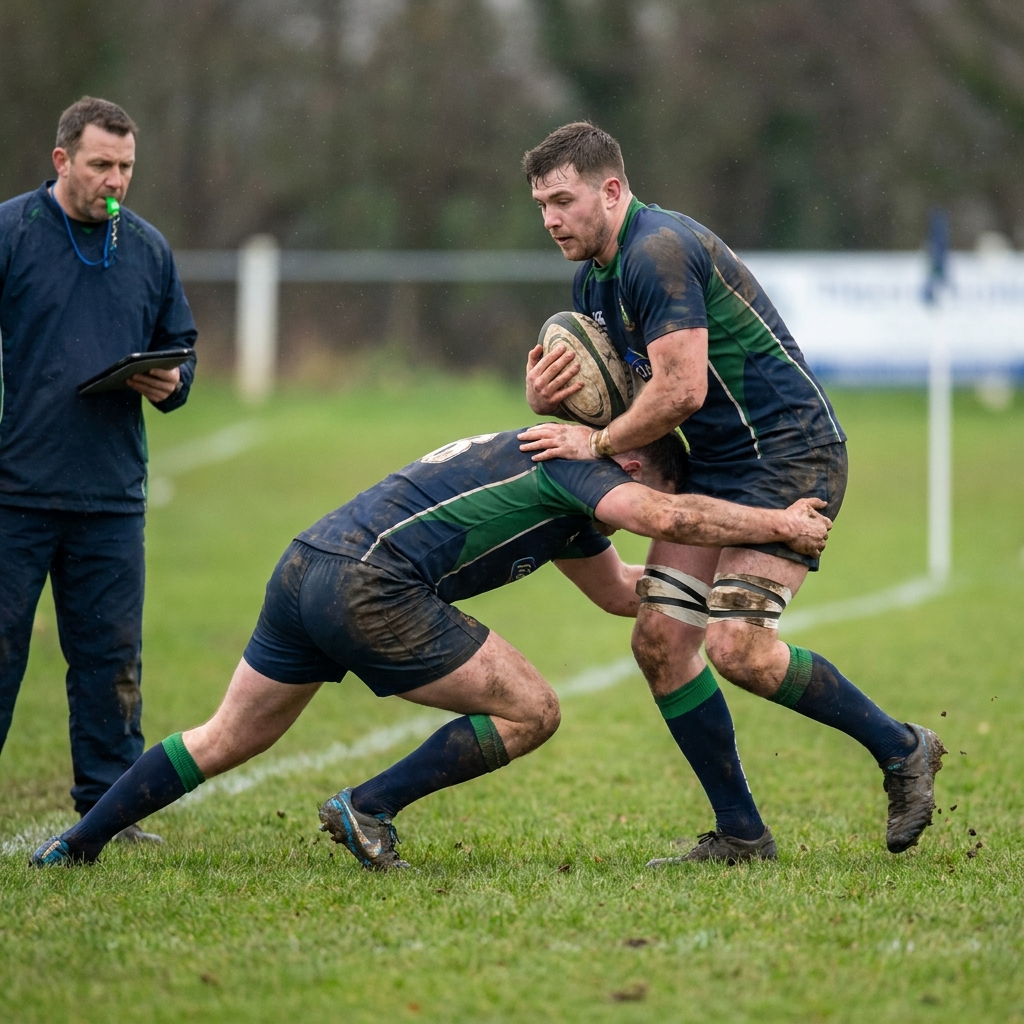
The foundation of a good offload is body position before and during the collision. Coaches should train ball carriers to adopt a slightly sideways body angle as they enter contact, keeping the ball on the far side from the tackler. This gives them a natural passing lane to support runners without needing to fight against the tackler's grip. The carrier's core must be strong and stable - a weak core at contact means the tackler controls the situation.
Arms must stay free. Too many players tuck the ball into their body as a protective instinct. While this is correct when going to ground, it kills the offload opportunity. Train your players to carry the ball in two hands as long as possible, switching to one hand on the side away from the tackler at the moment of contact.
The Offload Technique
There are three main types of offload that coaches should develop in their players. Each has a different application depending on the contact situation.
1. The Pop Pass Offload
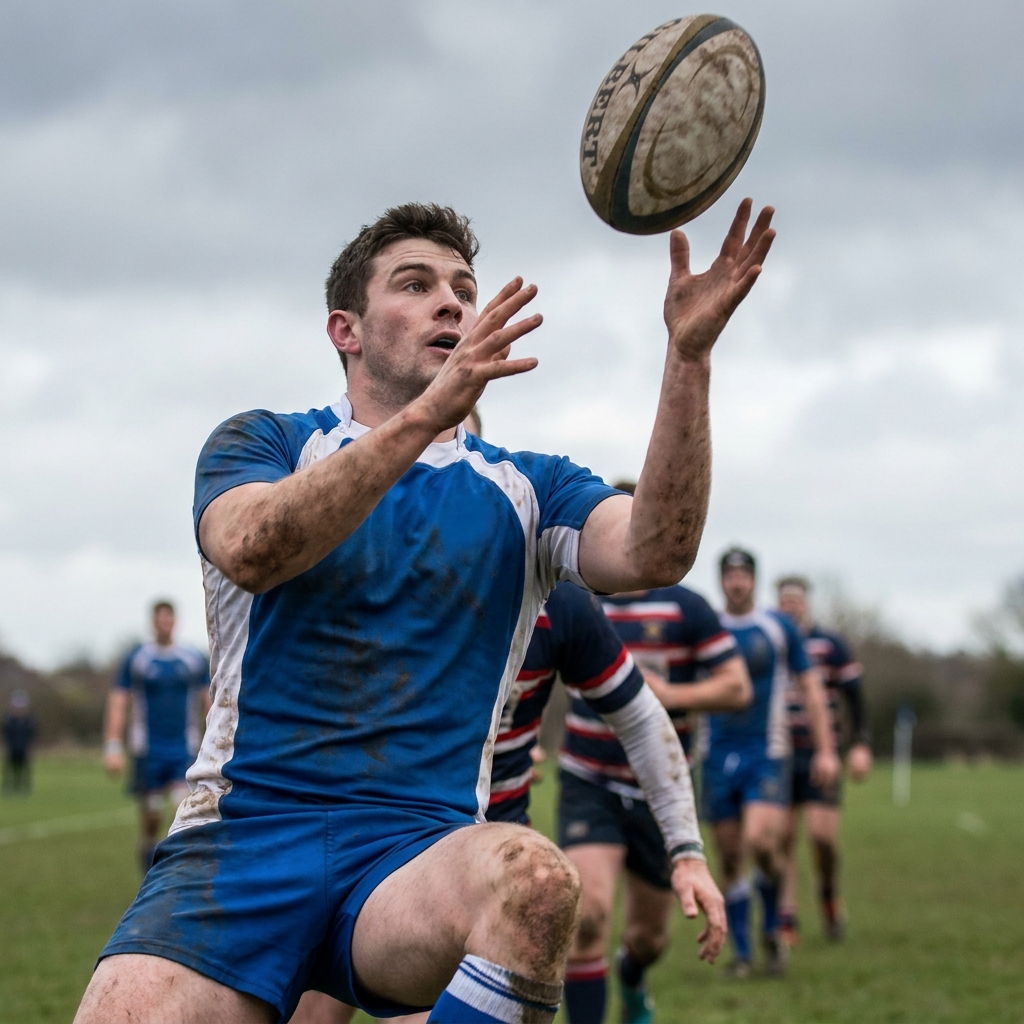
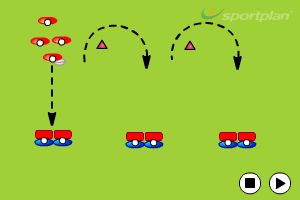
This is the simplest and most reliable offload. The carrier absorbs the tackle, stays on their feet momentarily, and delivers a short pop pass to a support runner hitting the line at pace. The key coaching points are: keep the ball in two hands, use the wrists rather than swinging the arms, and deliver the ball into the receiver's hands rather than making them reach. The pop should be soft and accurate - this is not a long pass.
2. The One-Handed Offload
When the tackler wraps one arm, the carrier may only have one hand free. The one-handed offload requires strong grip and wrist control. The ball sits on the palm and fingertips, and the pass is delivered with a flick of the wrist. This is a higher-risk option but devastating when executed well, particularly for powerful forwards who attract multiple tacklers.
3. The Back-of-Hand / Behind-the-Back Offload
Reserved for more advanced players, this offload is used when the carrier is turned away from their support. The ball is presented behind the body or flicked with the back of the hand. It requires excellent awareness of where support runners are without being able to see them. Communication from the support runner is essential here.
Training Progressions: From Unopposed to Full Contact
Offloading must be trained progressively. Throwing players into full-contact offloading scenarios before they have the technique is a recipe for turnovers and frustration. Here is a four-stage progression that works at any level.
Stage 1: Technique in Isolation
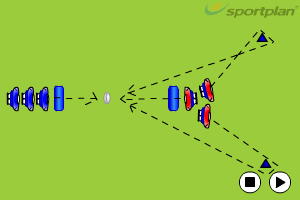
Players work in pairs. The carrier holds the ball in two hands while a partner grips them around the waist from the side (simulating a tackle). The carrier practises delivering pop passes to a third player running a support line. Focus purely on hand position, ball presentation, and accuracy. No movement, no intensity - just repetition.
Stage 2: Walking Speed with Passive Defence
Now add movement. The carrier walks into a passive tackle bag holder who wraps gently. The carrier must absorb the contact, stay on feet for one second, and deliver the offload. Support runners time their lines. Increase to jogging pace when technique is consistent.
Stage 3: Game Speed with Semi-Active Defence
The tackle becomes real but at 70% intensity. The tackler is instructed to wrap but not drive. The carrier now has to make a genuine decision - offload or go to ground. Support runners must communicate their availability. Introduce a second defender to add scanning complexity.
Stage 4: Full Contact Scenarios
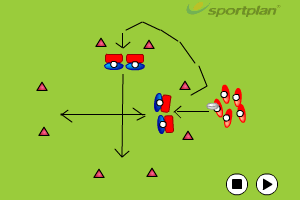
Run 3v2 or 4v3 overload scenarios where the ball carrier enters contact with a real tackle and must decide in the moment whether to offload or secure. Reward good decisions regardless of outcome - a well-executed go-to-ground is better than a forced offload that results in a turnover.
Support Running: The Other Half of the Equation
An offload is only as good as the support runner receiving it. Too often coaches focus on the ball carrier's technique while neglecting the support lines that make offloads possible. Your players need to understand depth, angle, and timing.
The ideal support runner arrives slightly behind and to the side of the ball carrier, running at pace. They should be calling for the ball early so the carrier knows they are there. The depth should be close enough to receive a soft pop pass - typically 1-2 metres - but not so close that the same tackler can adjust and make a second tackle.
Train your forwards to work in pods of three where the second and third runners are always scanning for the offload opportunity. When the ball carrier enters contact, support runners should not automatically commit to the ruck. The first instinct should be: is the offload coming? Only when they see the carrier going to ground should they switch to ruck support mode.

Sample Session Plan: Offloading in Contact (60 Minutes)
Session Structure
- Warm-Up (10 min): Dynamic movement patterns with ball-handling. Pairs passing while jogging, progress to passing through light contact (bump shoulders while delivering passes). Core activation exercises with ball.
- Technique Block (15 min): Stage 1 and 2 progressions. Pop pass from static wrestle position (5 min). Walking speed offloads with passive tackle bag (10 min). Focus on two-handed carry, wrist delivery, and accuracy.
- Development Block (15 min): Stage 3 progression. 2v1 offload channels at game speed with semi-active tackling. Carrier must decide: offload or go to ground. Rotate roles every 3 minutes. Coach positioning and timing of support runners.
- Game Scenario (15 min): 4v3 overload attack scenarios. Defence starts passive, increases intensity each round. Reward successful offloads with bonus points. Also reward good decisions to go to ground when offload is not on.
- Cool-Down (5 min): Light jog and static stretching. Group review: what worked, what decisions were good, what needs more practice.
Common Mistakes to Avoid
Forcing the offload: The biggest error is attempting the offload when the conditions are not right. If the tackler has a strong wrap on both arms, the carrier must go to ground. A turnover from a forced offload is far worse than a controlled ruck.
Telegraphing the pass: Some players look directly at their support runner before delivering the offload. This alerts the defence. Train peripheral vision and trust - the carrier should know where support is through pre-contact scanning and verbal communication.
Support runners arriving too flat: If the support runner is level with the ball carrier rather than slightly behind, the offload becomes a forward pass. Always coach depth on the support line.
Neglecting the ruck option: Teams that become obsessed with offloading can lose structure. The offload should complement your ruck game, not replace it. The threat of the offload makes your ruck ball faster because defenders hesitate to commit.
Frequently Asked Questions
At what age should I start coaching offloads?
You can introduce the concept from Under-12s using soft pop passes from walking-speed contact with tackle shields. The key is building comfort with ball presentation in contact before adding intensity. Full contact offloading progressions are more appropriate from Under-14s upward when players have developed sufficient strength and tackling technique. Always prioritise safety and ensure players can execute a solid go-to-ground before adding the offload option.
How do I stop my players forcing offloads and causing turnovers?
Build decision-making into every training drill. Use a simple traffic light system: green means offload is on (support visible, arms free, good body position), amber means assess quickly, red means go to ground immediately. Reward good decisions in training regardless of outcome. If a player correctly identifies that the offload is not on and goes to ground cleanly, praise that decision publicly. Never criticise a player for not offloading when the conditions were wrong.
Should backs and forwards train offloading differently?
The principles are the same but the application differs. Forwards typically offload from closer contact situations - in the tight, around the fringes, in pod play. Their offloads tend to be short pop passes. Backs more often offload in wider channels where they may have more space and time. Backs should also practise the longer offload pass. Train both groups on technique together, then split into positional scenarios that reflect how they will use the skill in matches.
How many offloads per game should a team be attempting?
There is no magic number, but elite teams typically complete 8-15 successful offloads per match. The completion rate matters more than the volume - if your team is attempting 20 offloads but only completing 8, you have a decision-making problem. Aim for a completion rate above 70%. Track offloads in matches and review the video with players to reinforce what good and bad decisions look like in real game situations.

 sportplan_rugby