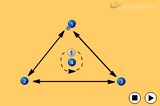
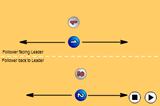
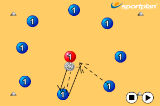
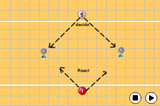
Divide your players into 2 teams.
The attackers (blue) have to try and keep the ball, passing from the left side of the playing area and taking it through the defender's territory into the 'restricted area'. Attackers must complete 10 passes before being allowed to enter the restricted zone - if they manage to do this they score a point.
To prevent the attackers from scoring though the defenders have to use the 3 stages of defending to gain possession of the ball.
Set up this drill without giving any coaching points. After they have been playing for a few minutes stop the game and then ask both teams for feedback.
What was the most effective way to gain possession of the ball? When did they use each stage of defending? Why is it important for the whole team to defend? What worked well?
Notes:
Asking your players to evaluate themselves is a great form of introspection - getting players to think hard about their own game and performance.
Encourage players to be vocal and communicate with each other. Loud defenders are very intimidating and can cause hesitation and uncertainty in their opponents.
Defenders should dictate where they want their opponents to go. Frustrate the attacker.

in more ways than one
 sportplan_netball


in more ways than one
sportplan_netball
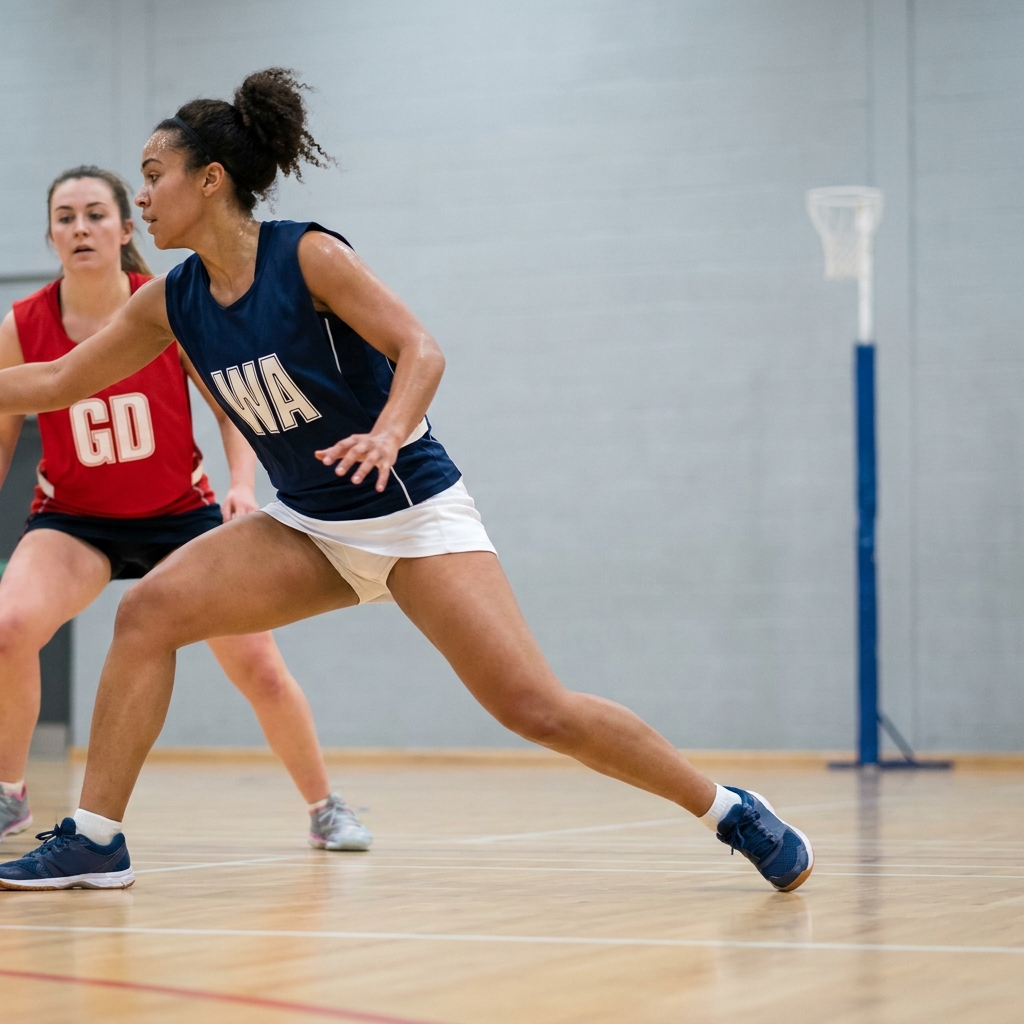
Tight markers win when attackers run in straight lines. Teach your players to dodge, change pace and time their drive so they get free when the ball is ready.
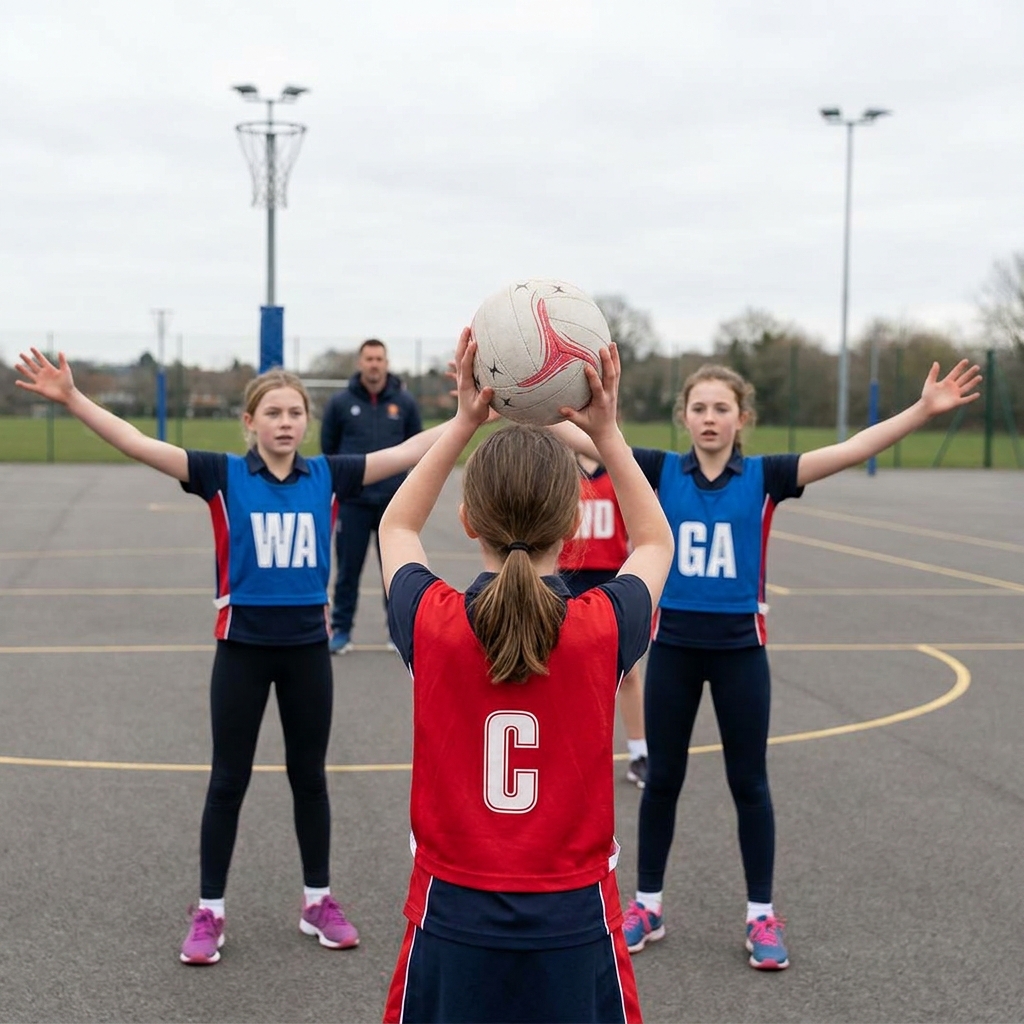
When everyone chases the ball, nobody is free. Teach your team to spread out, offer two options and clear space so the ball moves cleanly down court.
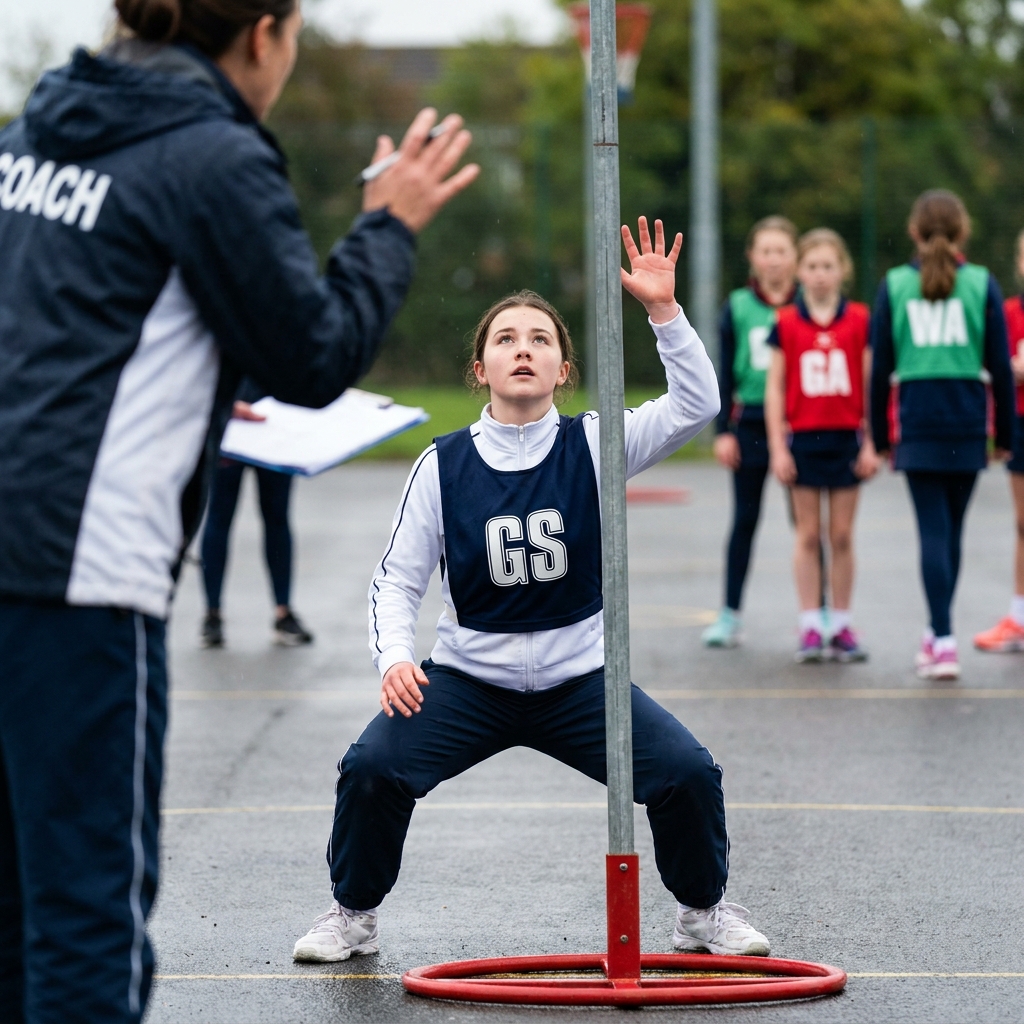
A shooter who can hold a strong position under the post is worth more than one who runs all over the circle. Here is how to coach body shape, a legal hold and a well-timed release, and how feeders make the most of it.