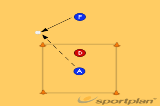
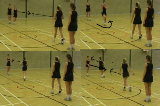
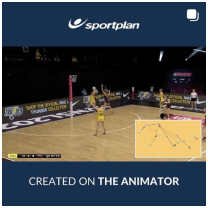
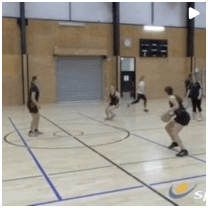
Create a square, approximately 3m x 3m as shown by the by the blue cones in the diagram.
Two feeders will stand either side of the square, with an attacker and defender in the middle.
The attack can choose which feeder they wish to offload the ball to.
The practice is continuous - with the attacker working towards a set number of passes or time.
The attacker should consider which feeder is the best option for them to pass to - based on where the defender is and their positioning.
You can challenge the attacker to complete a set number of passes consecutively without a mistake or a touch from the defender - for example 5 consecutive passes before they can switch out of the square.
To challenge the defence you could set a condition that they may only switch out if they interrupt the practice - either a tip or interception.
in more ways than one
 sportplan_netball

in more ways than one
sportplan_netball
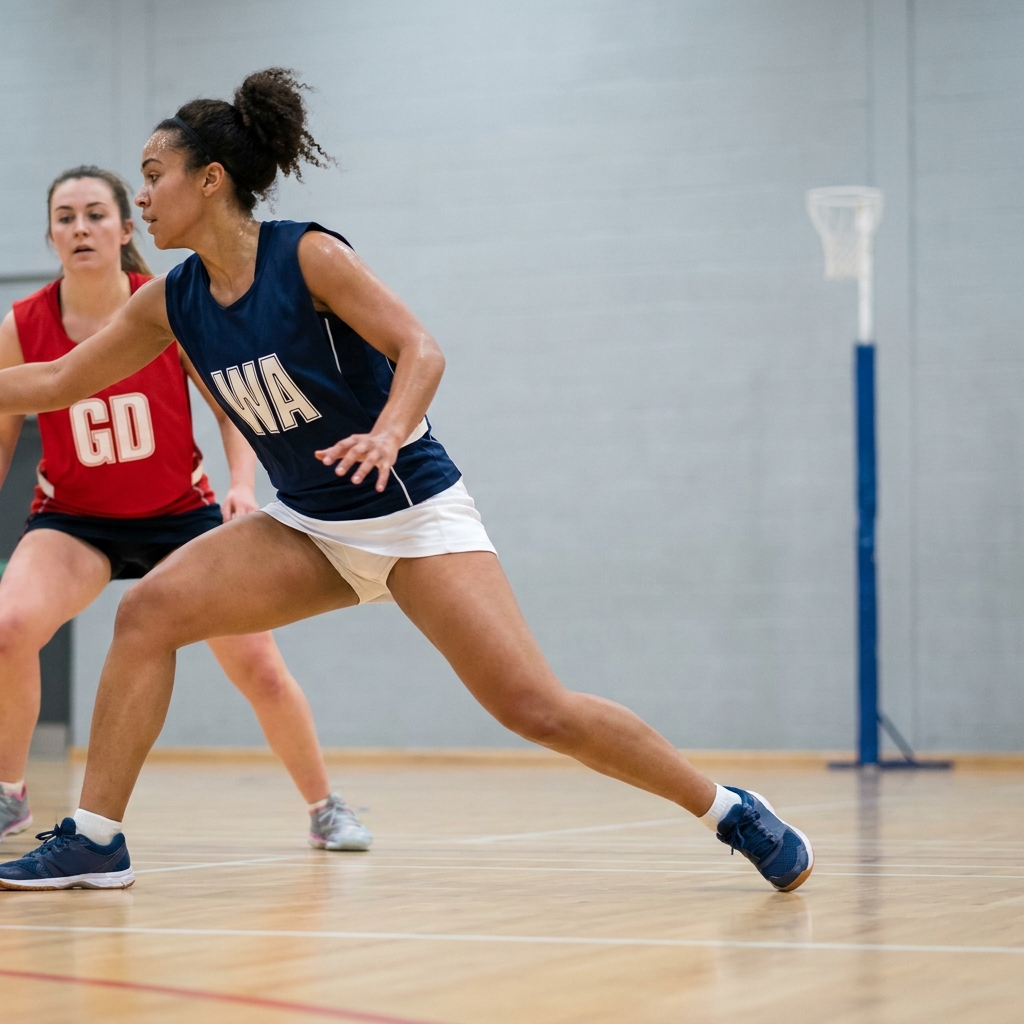
Tight markers win when attackers run in straight lines. Teach your players to dodge, change pace and time their drive so they get free when the ball is ready.
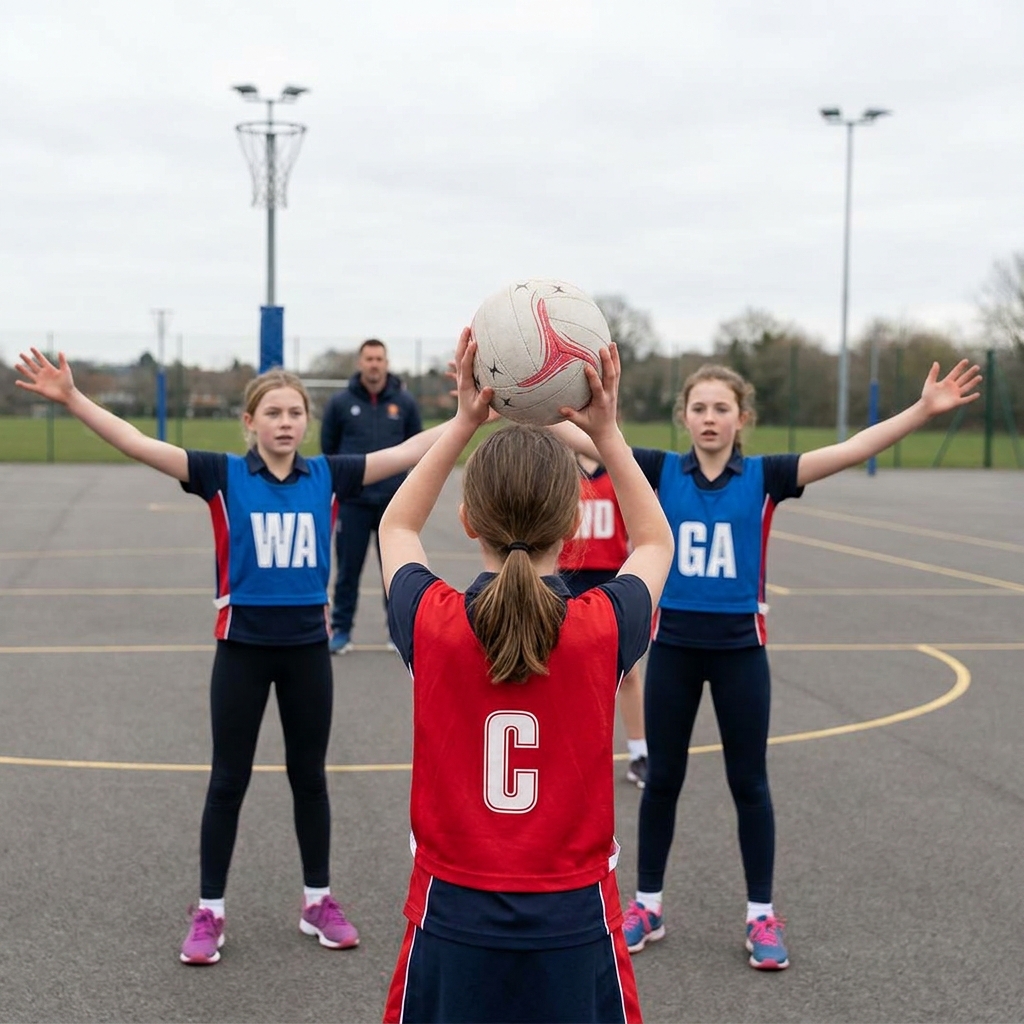
When everyone chases the ball, nobody is free. Teach your team to spread out, offer two options and clear space so the ball moves cleanly down court.
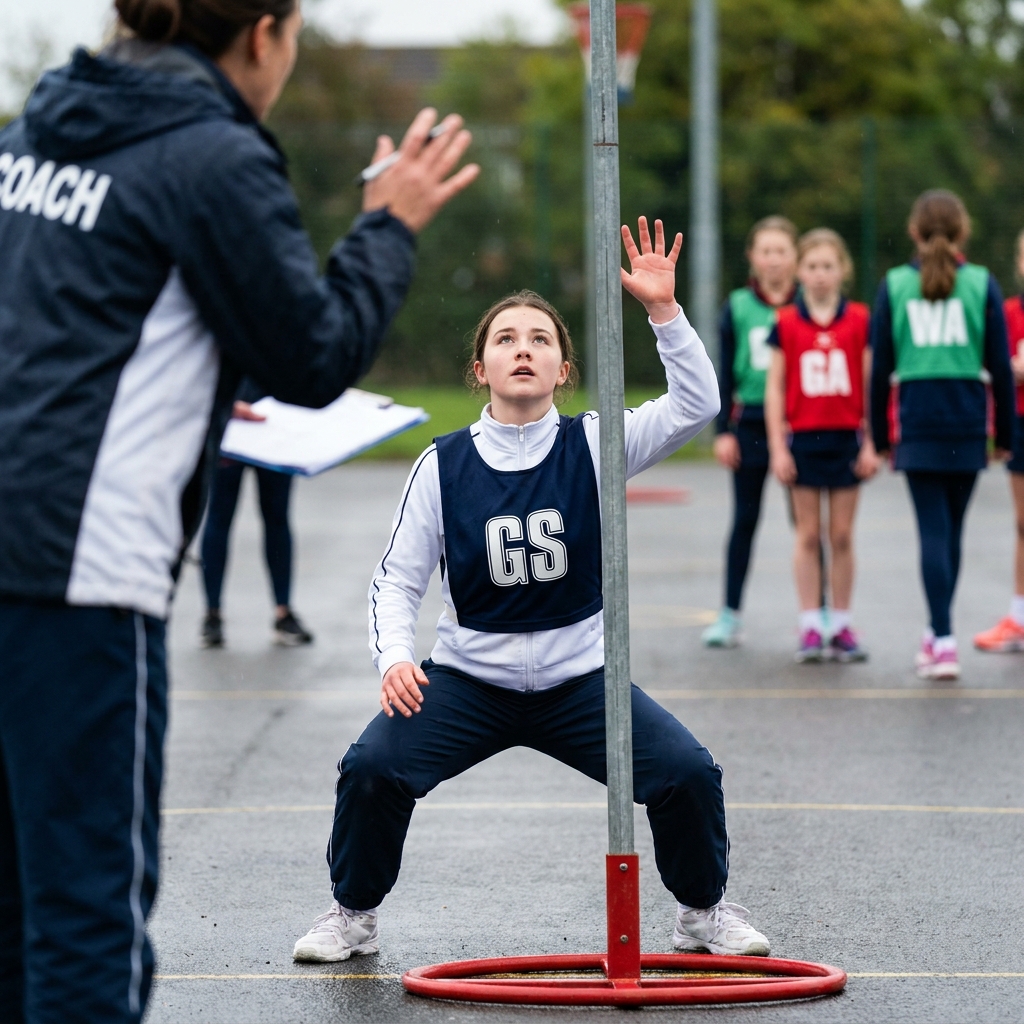
A shooter who can hold a strong position under the post is worth more than one who runs all over the circle. Here is how to coach body shape, a legal hold and a well-timed release, and how feeders make the most of it.