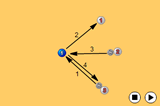
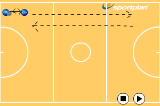
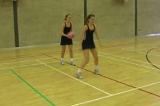
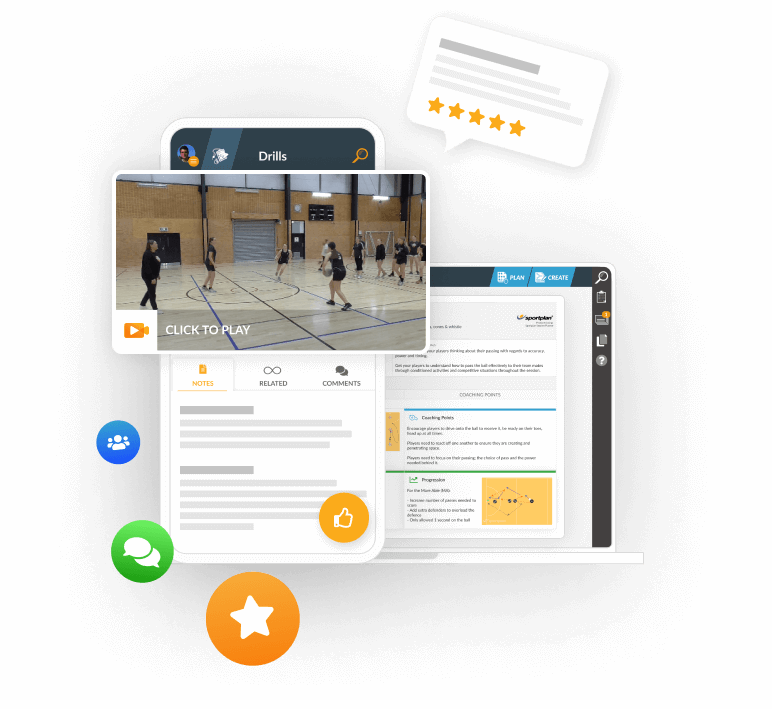
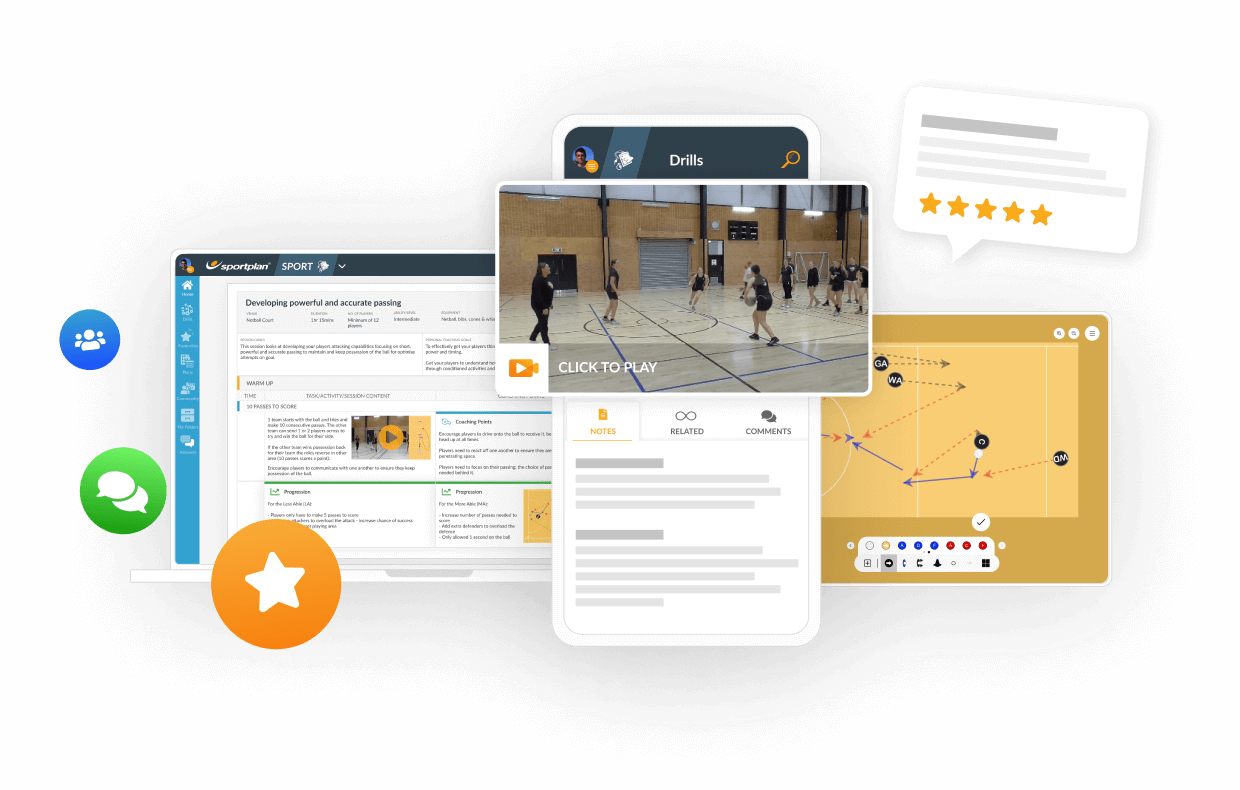
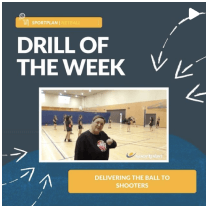
- Have your team get into 4s with at least 2 different colour cones
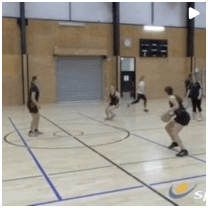
- One player will be the worker (GREEN) - set up a cone either side of the worker (approximately 2m away)
- One player will stand directly opposite the worker (ORANGE) and will pass the ball back and forth with the worker (GREEN)
- The other two players (BLUE) will have at least 2 different colour cones each and will stand either side of the static player
- In turn each BLUE player will hold up a coloured cone, the worker will have to call out each colour
- If it is correct each player will take a step outwards, put the cones back behind their back and pick another cone
- Repeat until BLUE player have reached the outer cone (Red)
- BLUE players should put the cones behind their back each time so the worker cannot see
- When BLUE present a cone it must be shown clearly
- The worker should maintain a neutral head position, focused straight ahead on the static player - they should use their peripheral vision to see the cones
- This will help your players focus on both their player and the ball and therefore enhance their chance of an interception. It will also allow your players to analyse more of the court quickly and always keep track of the ball
in more ways than one
 sportplan_netball
in more ways than one
sportplan_netball
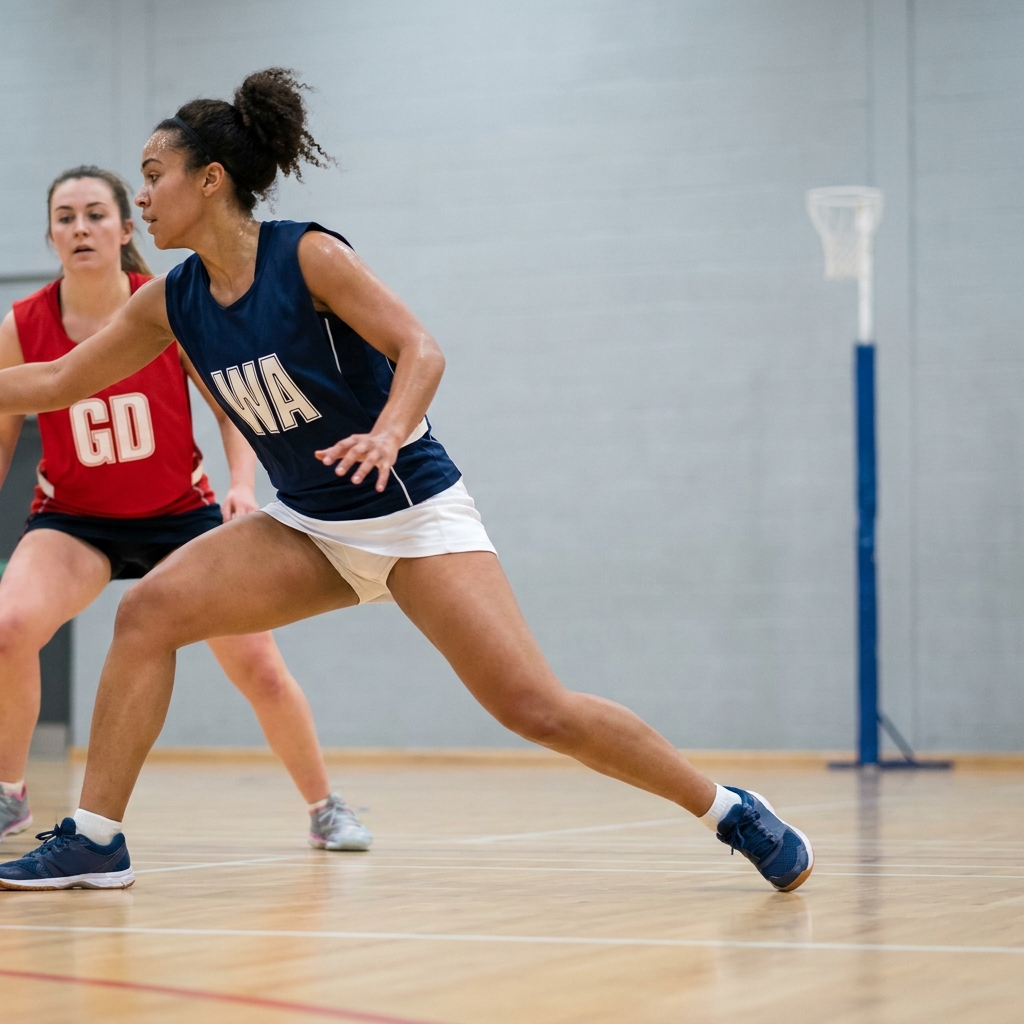
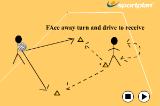
Tight markers win when attackers run in straight lines. Teach your players to dodge, change pace and time their drive so they get free when the ball is ready.
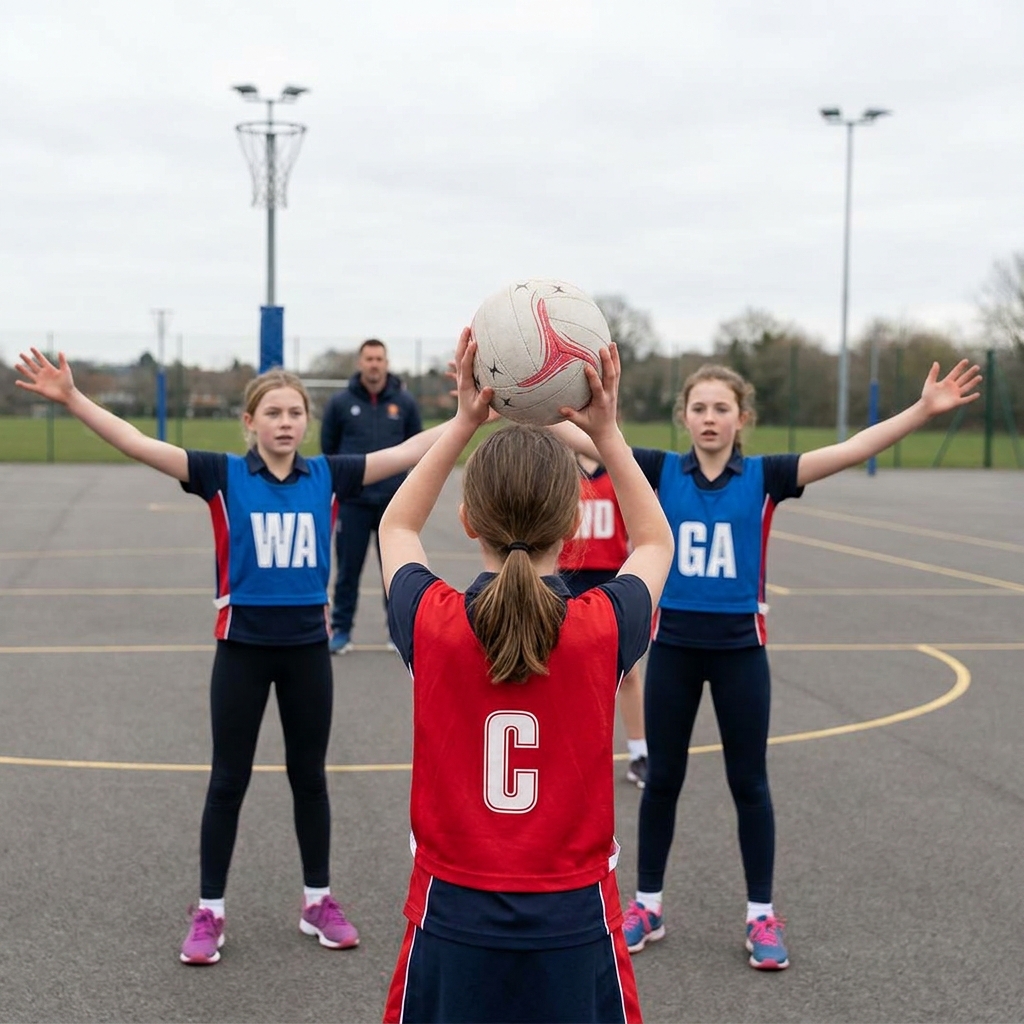
When everyone chases the ball, nobody is free. Teach your team to spread out, offer two options and clear space so the ball moves cleanly down court.
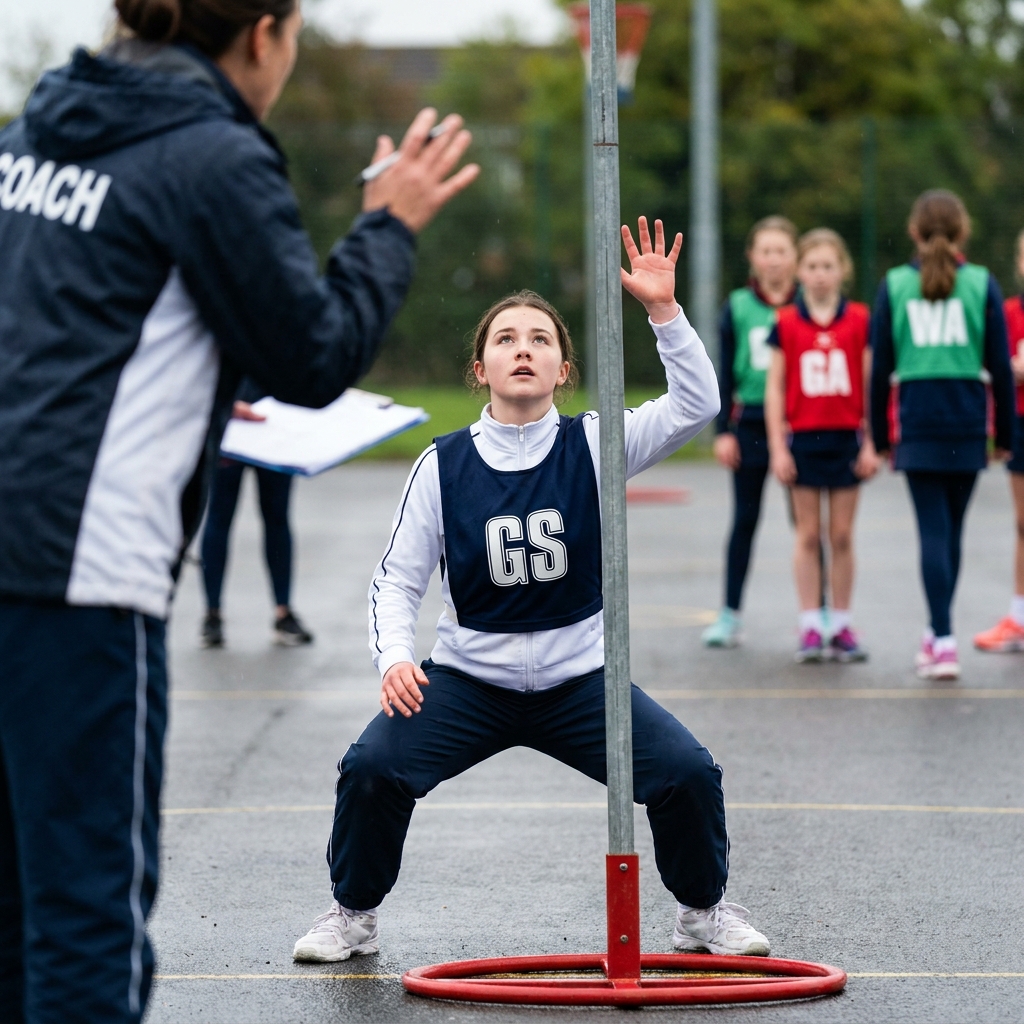
A shooter who can hold a strong position under the post is worth more than one who runs all over the circle. Here is how to coach body shape, a legal hold and a well-timed release, and how feeders make the most of it.