Rugby: playing positions

June 2026

If you watch the data, restart kicks happen more often than any other set-piece in a modern rugby match. A Six Nations game produces around twelve to sixteen restarts, more than the average lineout count and far more than scrums. Yet most teams - especially below elite level - still treat them as an afterthought. That is the gap top coaches are now closing.

The phrase "restart is the third set-piece" has become a coaching slogan in 2026 for good reason. The team that wins the restart battle controls field position, momentum and the opening sixty seconds of every passage of play. Conceding a try and then conceding the restart immediately afterwards is one of the most common ways to lose a match.

Why Restarts Are Suddenly Critical

Two things have changed. First, kickers have become more accurate. Restarts now land precisely on the 10-metre line and in the 15-metre channel, contested by tall, athletic chasers who jump for the ball. The days of a 22-metre dollop into the middle of the pitch are gone.

Second, the reward for retention has grown. With modern attacking shapes, a team that retains its own restart is straight into structured phase play in the opposition half. A team that loses the restart is defending in their own 22 with a disorganised line. The swing between those two outcomes is enormous.

Building a Reception Pod

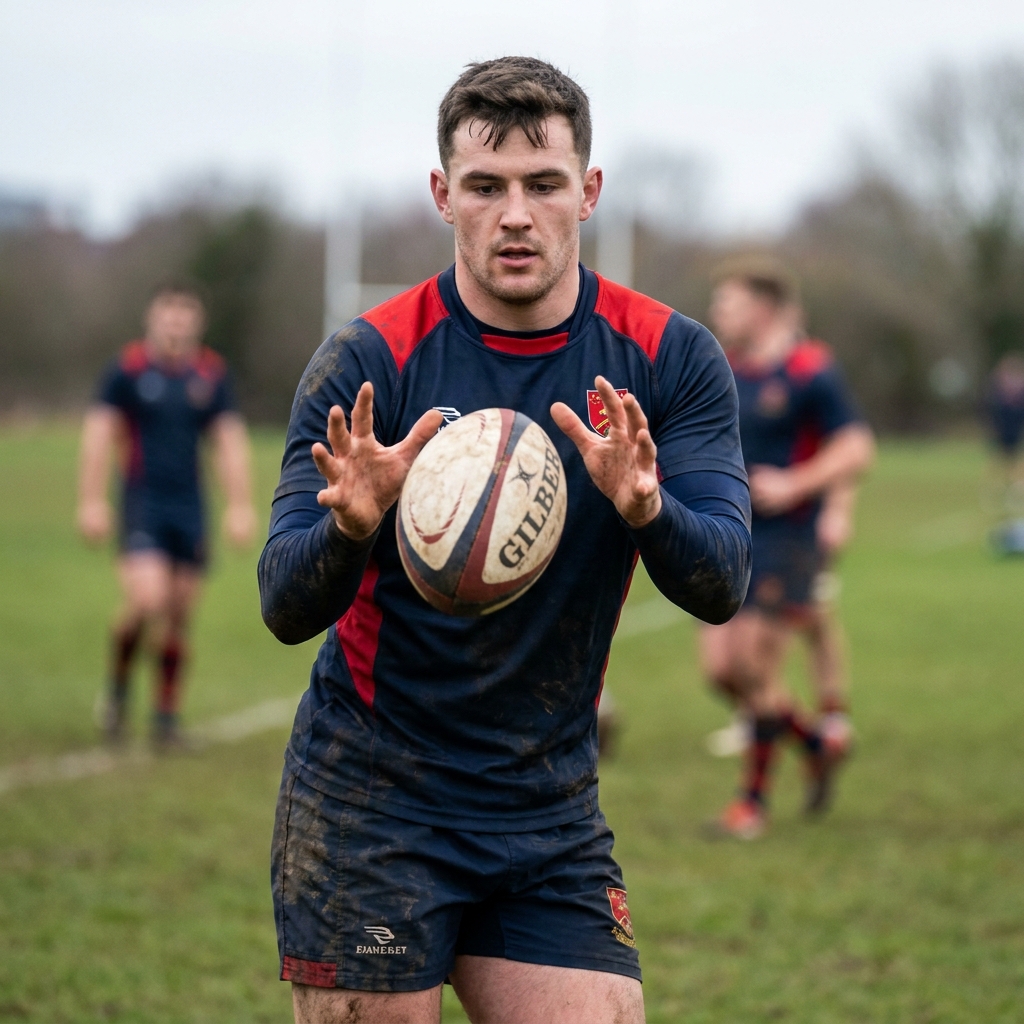
Top teams now train a dedicated restart reception pod, exactly as they train a lineout pod. The pod typically has four roles, and every player must know which role they have before the kick is taken.

The catcher: Usually a lock or back-rower, chosen for height and timing. They call early - "mine" or the channel number - and commit to the catch.

The lifter: A prop or hooker who arrives at the catcher's side, hands ready, to give a lift on the contested ball. Lifting is legal at restarts and dramatically improves your win rate against good chasers.

The protector: A second forward who stands between the catcher and the chase, taking the contact if it comes and forming the first ruck cleanly.

The exit option: A back, usually the fly-half or full-back, in position to receive the next pass and either kick to touch or launch a counter.

How to Coach Restart Reception

Restart skills are perishable. Train them every week, even if only for ten minutes. Build the session in three blocks.

Block 1 - Catching under contest (5 minutes): One coach kicks high balls from the halfway line. Your designated catchers work in pairs - one catches, one acts as a chaser jumping to contest. Rotate every two reps. The focus is timing the jump, not winning every ball.

Block 2 - Receiving as a unit (10 minutes): Full pod of four sets up. Coach kicks restarts. Pod must catch, secure, ruck and recycle clean ball to a back. Add an opposition chase line of three after five reps.

Block 3 - Restart-to-exit scenarios (10 minutes): 12v12 or 10v10 game starting from a restart. After receiving, the team in possession has one rule: get out of their own half within three phases. This trains the link between reception and territorial exit.

Attacking Restarts - The Other Half

Receiving is half the picture. The other half is recovering your own restart. Modern restart kicks are aimed at one of three landing zones: short on the 10 (5-7 metres beyond the kick mark), mid-deep at the 15-metre line, or long into the far corner. Each option requires a different chase pattern.

The short restart is the highest-percentage recovery option but the hardest to execute accurately. Reserve it for moments when you genuinely need the ball back - after conceding a try, with time running out, or to disrupt a stronger opponent. Drill the kicker until they can land a restart in a one-metre window on demand.

Key Coaching Points

  • Restarts are the most frequent set-piece - train them weekly
  • Build a named reception pod with four clear roles: catcher, lifter, protector, exit
  • Lifting is legal at restarts - use it
  • The exit kick after a clean catch is as important as the catch itself
  • Reserve the short restart for moments when winning it really matters

Recommended Drills

VIEW ALL KICKING DRILLS

playing positions DRILLS
View All
Unfortunately there were no results for your search! Please try again
playing positions ANSWERS
View All

Does any body have any thoughts /plan on player rotaion between A,B,C teams. U9's

Does any body have a plan on how and why Squad rotation works when you are running 3 teams, A,B,C to ensure that the best players from the lower teams get to move up and down through the other teams. It is not expected that the C team players will rotate to the a team but we want to try and capture the better players from B and C and rotate them up to the team above.

Archived User Coach

I am familiar with field positioning, play, and stategies?

I am familiar with field positioning, play, and stategies for the fowards but can anyone give me advice on how to pick a good flyhalf and scrum half. Also how to train them on making the best decisions on the pitch, for example when to pass out wide, how to relieve defensive pressure, when to kick, etc...? My backs are still new to rugby. Some have less than a year's experience and others are brand new to the sport.

William Barrett Coach, United States of America

Player Empowerment

We have open this thread to continue the discussion on Player Empowerment started in the Coaches Hot Tip in this month's newsletter. If you missed it, here it is again. There is no doubt that if you want your team to be successful, you need the players to make decisions on the pitch for themselves. We know that if a team is used to getting the answers to problems on the field from the coach, it will mean that they will hesitate and look to the touchline before commiting to an action and that, of course, will be far too late! The coach can still influence things but once the game has started it is a fairly minimal influence, during the game it must be the players who react to situations as they happen and make decisions immediatley. Therefore, it is essential to have leaders in the team who feel confident about making decisons in the heat of the battle. They need to know that even a wrong call is better than no call. They should feel that their coach will support them in making a call and, if it was not necesarily the best decision, will help them make a better one next time without being too critical. Ideally, the leaders and decision makers will be at key positions in the team where they can communicate with other players as well as influencing play themselves. Key positions are Numbers%3A 2; 4/5; 8; 9; 10 and 15. This is often referred to as "The Spine or Backbone" of the team. This is not to say that a good captain and leader can't be in another position but if they are, for instance an 11 or 14, they will need good co leaders in the key positions to communicate their decisions during a game. To develop this spine to operate as leaders, the coach should involve these players in discussions about how the team are playing - making them feel some ownership and responsibility for the teams performance. They could also be involved in unit practises, for instance the 2 and 8 could Normal 0 false false false MicrosoftInternetExplorer4 occasionaly lead part of a line out practice, once the coach has agreed with them what the practice needs to achieve. The coach is not giving the players complete control but rather, allowing them to be involved in the process of team development. Obviously, the age and ability of your team can affect how far along this path you can go but, even with players as young as Under 8's, I have found that delegating some responsibility is a really effective way to build a cohesive and well functioning team! Let me know your thoughts on this type player empowerment. Good luck Simon

Archived User Coach

I coach Under 11's I have two players that do all the right things in training but when the game starts they will not pass. They do score tries but I think we could score more if they passed. What can I do? Gary SWales

Ask a question and have it answered by Coaches from around the world and Sportplan's team of Experts.

Gary Grant Coach, Wales

Introducing U9's to positional play?

I would like some help/drills to help me introduce U9's to positions ie%3A start playing in set positions during a game ie forwards/backs. Up til now they have not had set positions & its been everyone follow the ball. I need to get them to understand & keep to positions during a game.

Archived User Coach

Under 8's drills%3A how to get players to stay in position?

Under 8's drills%3A how to get players to stay in position (in their channels) defensively to avoid them chasing the ball all over pitch! thanks, David

Archived User Coach

Scoring tries - habit?

Why is it important to get players to score the try when completing a handling/running drill?

Archived User Coach

Please explain to me the concept of open side and blind?

Please explain to me the concept of open side and blind side and the function of the flankers playing in these positions.

Archived User Coach

First time coaching U9 and U10s - anyone got any backline coaching tips?

Hi im a first time coach and is still getting the hang of how the technical details of the game works the back line is my department and whould like any help i can get to know what drills to do and anything helpfull in the backline im currently coaching for the under 9 and 10

Archived User Coach

First time coaching the U13s next season - any tips greatly appreciated!

I have just started helping our head coach with under12's team. He wants to retire and has put me forward to be head coach next season. I am a little worried on how i should aproach training with the boys, going to a full 15 a side team on a full pitch. Any ideas would be greatly appreciated.

Archived User Coach

Is there a U7s rugby union coaching plan for week by week

Is there a week by week coaching plan for the U7s? It’s my first time coaching and need some advice and plans. Where do I start? What do I do every week to get them ready for the season Asked using Sportplan on Mobile

Liz Coach, Australia

Positional rotation at U9 leve...

Positional rotation at U9 level... I originally posted this as answer to a question about squad rotation, but thought I might get a better response if I posted it as a question in its own right... I have an 8 year old at the age level you are talking about - he isn't the best player at the club by any means, but has his good moments. He loves watching the game, he has a good understanding of the way it is played (to the extent that he has often shouted at the telly over recent weeks at some of our illustrious stars when they're out of position) and he has good handling skills - to be honest he's just not brave enough in the tackle yet, but I know it'll come so I'm not making a big thing of it. However, he and a couple of others are constantly stuck on the wing, and are getting fed up with the fact that they don't get the opportunity to get involved much. The coaches seem to have their "big names" and as you say seem more interested in the short term aims of winning each game rather than trying to keep the lads interested and challenged each week. I know my son's aware that I think they should move them all around, although I have made a point of not criticising the coaches at all - I think he heard me talking about it to someone else. The coaches have talked about moving players to different positions, but haven't done it, and aren't really receptive when they are asked about it. There are two coaches, and the one that seems to have the "casting vote" is pretty autocratic and doesn't seem to accept criticism or suggestions. My son has mentioned about moving to another club, where he may or may not get more of a chance to shine, but I am not sure this is the right move as it may teach him to give up rather than sticking with something. Any thoughts please?

Archived User Coach

Forward positions at kickoffs ...

Hi there, I was wondering thoughts on forward positions at the kickoff. Do you have the catchers deep so the are coming forward to meet the ball or have one deep and one short? For the pods do you have a "quick" pod made up of all three loosies and a lock and a "slow" pod made up of the front row and the lock or do you split them in two pods made up of a prop, a lock and two loosies and the other pod of a prop, a lock, the hooker and a loosie? Who would you tell to be the ball carrier, body movers and bridger? All thoughts welcome. CheersDave

Archived User Coach

PLAYERS STRUGGLE TO KEEPTHEIR ...

PLAYERS STRUGGLE TO KEEPTHEIR POSITIONS ON PITCH. My young team of 11 to 13 year olds struggle to hold position on the pitch, with a stand off ending up on the wing, the winger ending up at scrum half etc! How can I help them to keep their positions?

Archived User Coach

Position discipline! - Sportpl...

I am a coach with an under 10 rugby side. Last season the team found it hard to stay in their positions (acting like a swarm of bees). Can anyone suggest how i can get them to stay in positions, particulary our backs.

Lindsay james Coach, England

First time coaching the U13s n...

I have just started helping our head coach with under12's team. He wants to retire and has put me forward to be head coach next season. I am a little worried on how i should aproach training with the boys, going to a full 15 a side team on a full pitch. Any ideas would be greatly appreciated.

Archived User Coach

Under 8's drills%3A how to get...

Under 8's drills%3A how to get players to stay in position (in their channels) defensively to avoid them chasing the ball all over pitch! thanks, David

Archived User Coach

Blindside position - I'm new t...

This is my first year playing on a rugby team for my school, grade 9, im much smaller than everyone else but i run fast and can be strong. my position is the blind side wing, and i dont understand what im supposed to do. it seems like i just jog and stay far away, but i dont know what im supposed to do if someone from the opposite team comes near me and noone else is one them, am i supposed to tackle? i also have trouble tackling cause my arms dont rap fast enough when they run into me, any advice?

Archived User Coach

U10s organisation in defence. ...

I have started an under 10s team up, and I would say about 8 from the 13 children I have , did not play rugby until about 6 months ago. Of these players, there seems to be a lot of potential, as we are scoring tries against teams, that very rarely concede tries.the problem I got with them, is that we are very poor at organising our selves in defense when the opposition has the ball, which does result in us conceding quite a few tries. We have some very good tacklers in the team. Can anyone offer some ideas on how I can get them to organise themselves? Thanks . Chris.

christopher jenkins Coach, Wales

My son will not run with the b...

My sons plays for the U9 team, his position is number ten, he was put there due to his kicking power, drop kicking accuracy, etc - I have been teaching him over time to tackle this has helped him build his confidence - what I have been noticing is the fact that when he gets the ball, he wont run - he just refuses to do anything with it...I need to find a way to encourage him the move forward with it, but nothing ever happens, now his own team mates are starting to look down at him, since he has giving the game away far to many time. Help!

john mcqueen Coach, New Zealand

JOIN SPORTPLAN FOR FREE

  • search our library of 1100+ rugby drills
  • create your own professional coaching plans
  • or access our tried and tested plans

Sportplan App

Give it a try - it's better in the app

YOUR SESSION IS STARTING SOON... Join the growing community of rugby coaches plus 1100+ drills and pro tools to make coaching easy.
LET'S DO IT