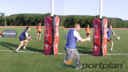
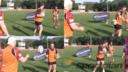
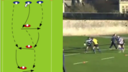
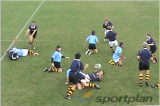
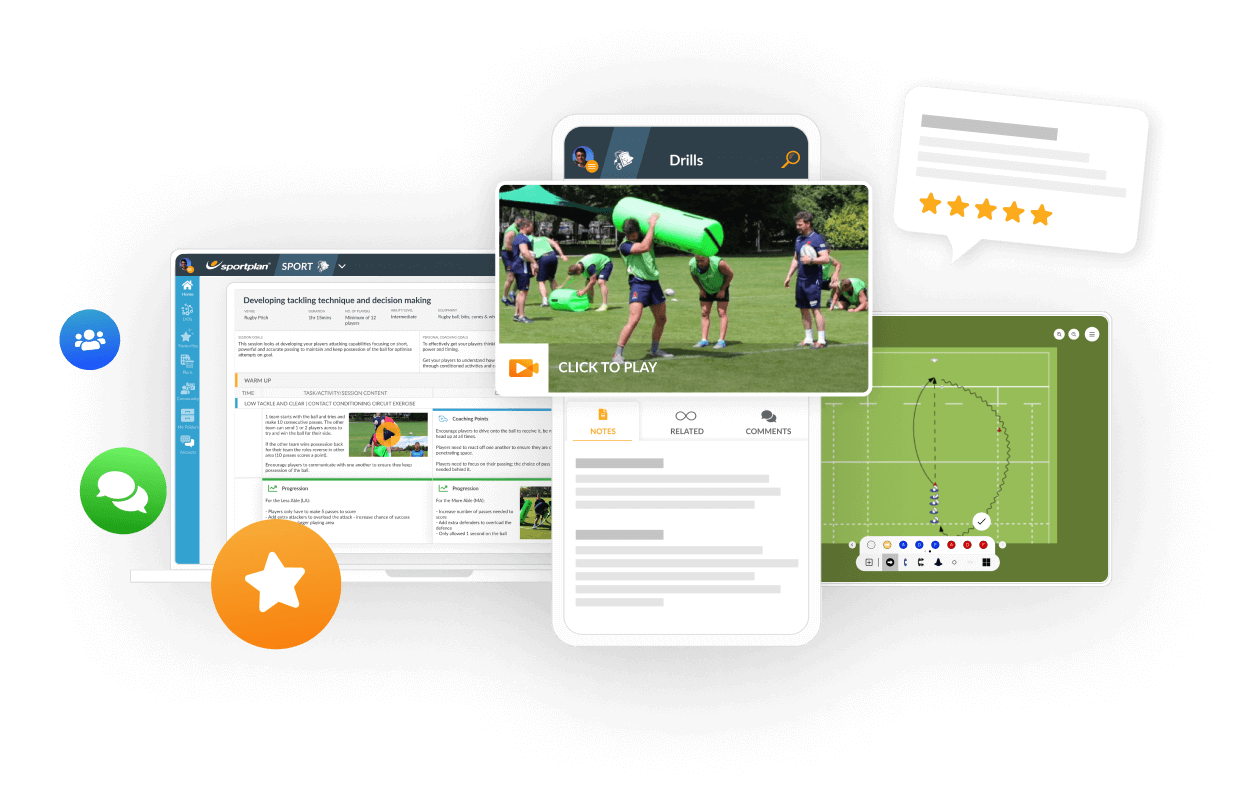
In a game your players are going to have to work with awkward positions and chaotic situations. This drill will help them develop their offloading skills while maintaining a spacial awareness.
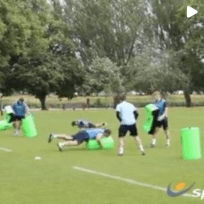
One player is in the middle of a group where there is a tackle sausage (If you haven't got one of these see progression)
The player in the middle moves around the tackle sausage while offloading balls to the players around him whilst continuously receiving more balls.
Progression
Instead of a tackle sausage have another player in the middle who can start of just standing but as the drill goes on they can slowly build up the intensity and start making more and more of a nuisance of themselves until it is close to game intensity.
Players should stay light on their feet and poised for action.
Your players should maintain an awareness of what is going on around them but always be focused on the task at hand.
When making an offload players may be getting tied up by a tackle but they should still not take their eye off the player they are offloading too.
Also when catching an offload there may be a lot going on in the surroundings but try and coach your players to always keep their eye on the ball.
This will be dependent on your players ability to listen well and scan.
in more ways than one
 sportplan_netball
in more ways than one
sportplan_rugby
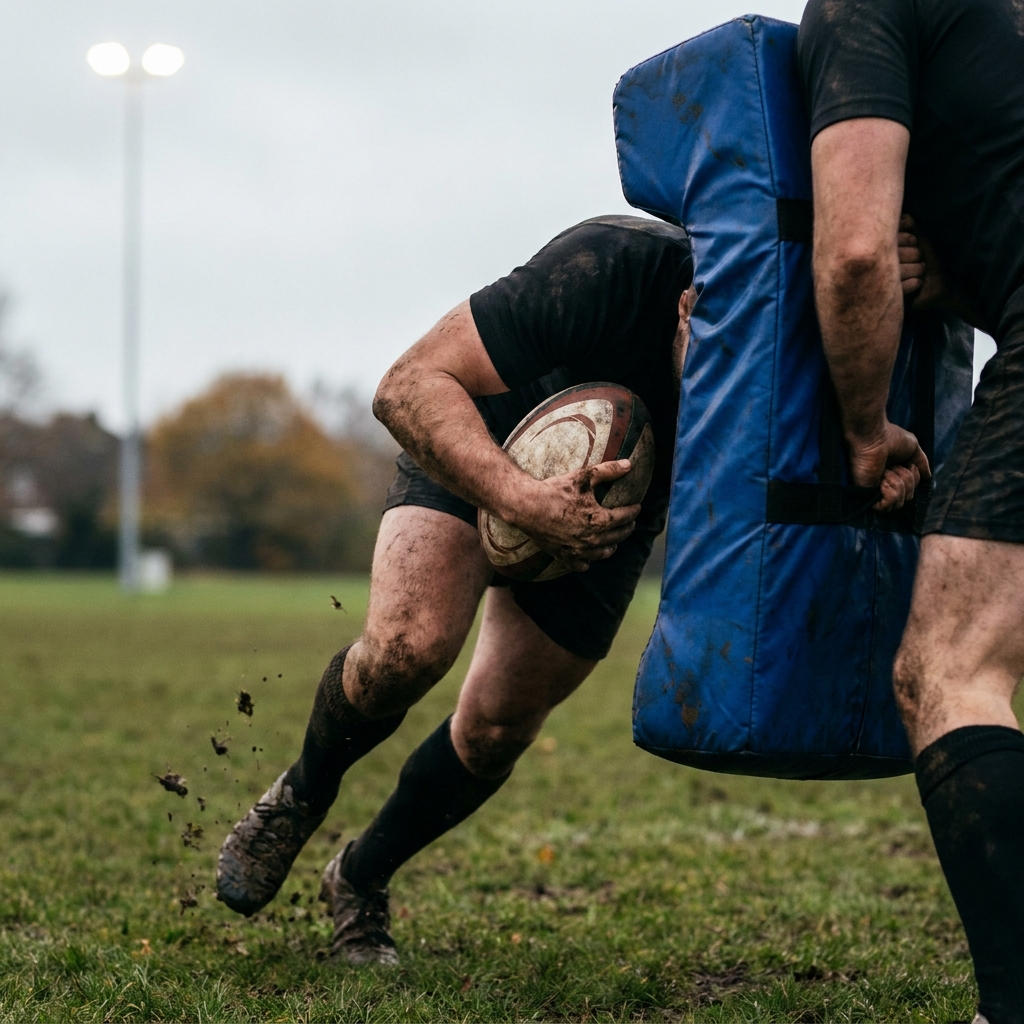
Tacklers are aiming lower, so carriers who dip late put heads at risk. Teach footwork, a strong early body height and leg drive to win the collision safely.
The hooker's brake foot moved from trial into full law in July 2026. Here is how to coach it so your front row stays stable, legal and safe.
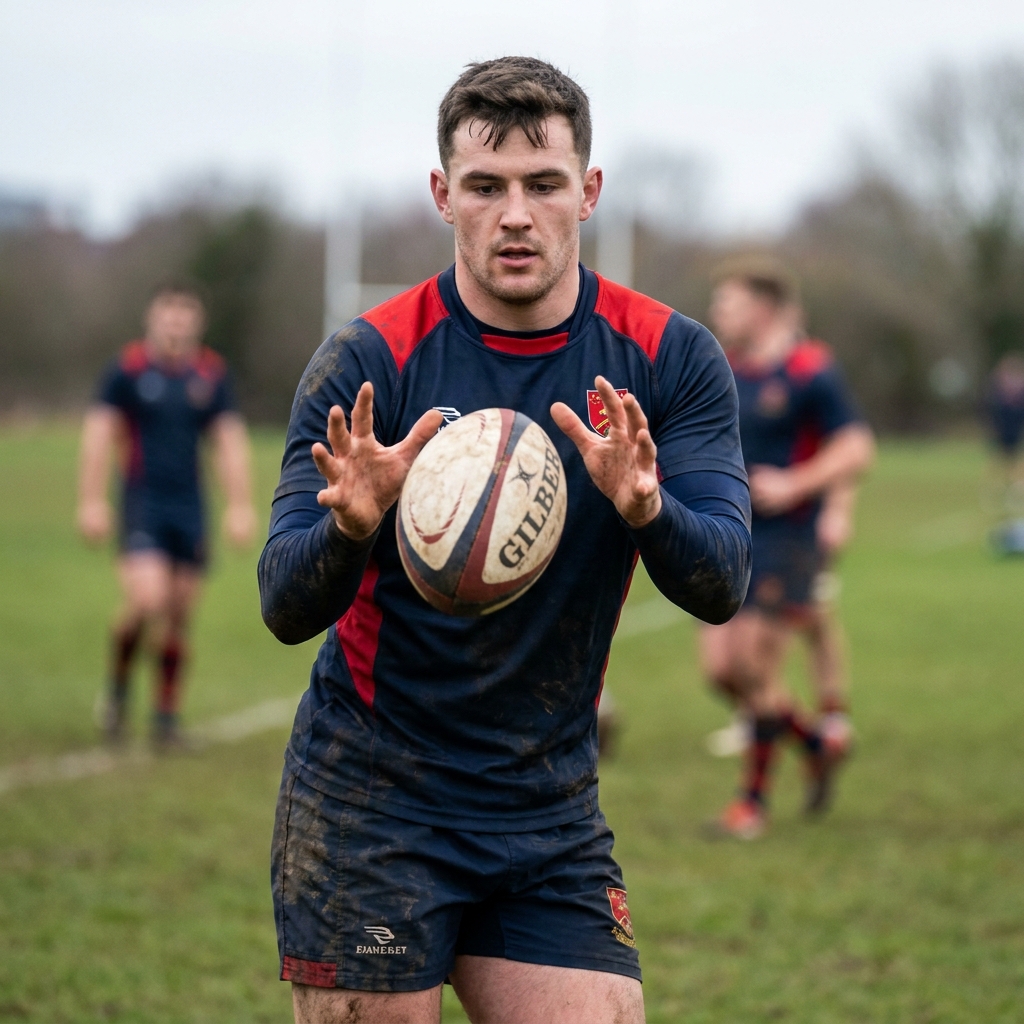
Your players can pass beautifully in a warm-up grid. Then a defender closes, their lungs are burning, and the ball goes to ground. Here is how to build catch-pass skills that hold up when it matters.