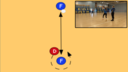
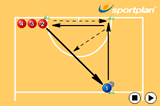
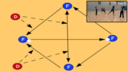
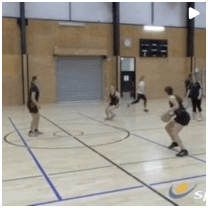
Have two feeders passing a ball back and forth about 5m apart.
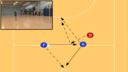
Position two cones on either side of one feeder, making a gate. The defender has to run between one gate after an intercept, before making the next intercept, alternating sides.
The feeder at the opposite end has the option of holding onto the ball if the defender moves too early. If this happens then the other feeder who was set to receive the ball will move in between the cones that the defender has just come from, to receive the ball out to the side.
This will help the defender recognise if they are moving too early or too late and make them recover to move back for the intercept.
Timing is important; if the defender moves in too early then the player at the other end can hold onto the ball and allow the other player an opportunity to move. But if they move too late then they will not get the intercept.
The defender should come in at an angle so that they can see what the Feeder is doing and recover quickly if they move.
in more ways than one
 sportplan_netball

in more ways than one
sportplan_netball
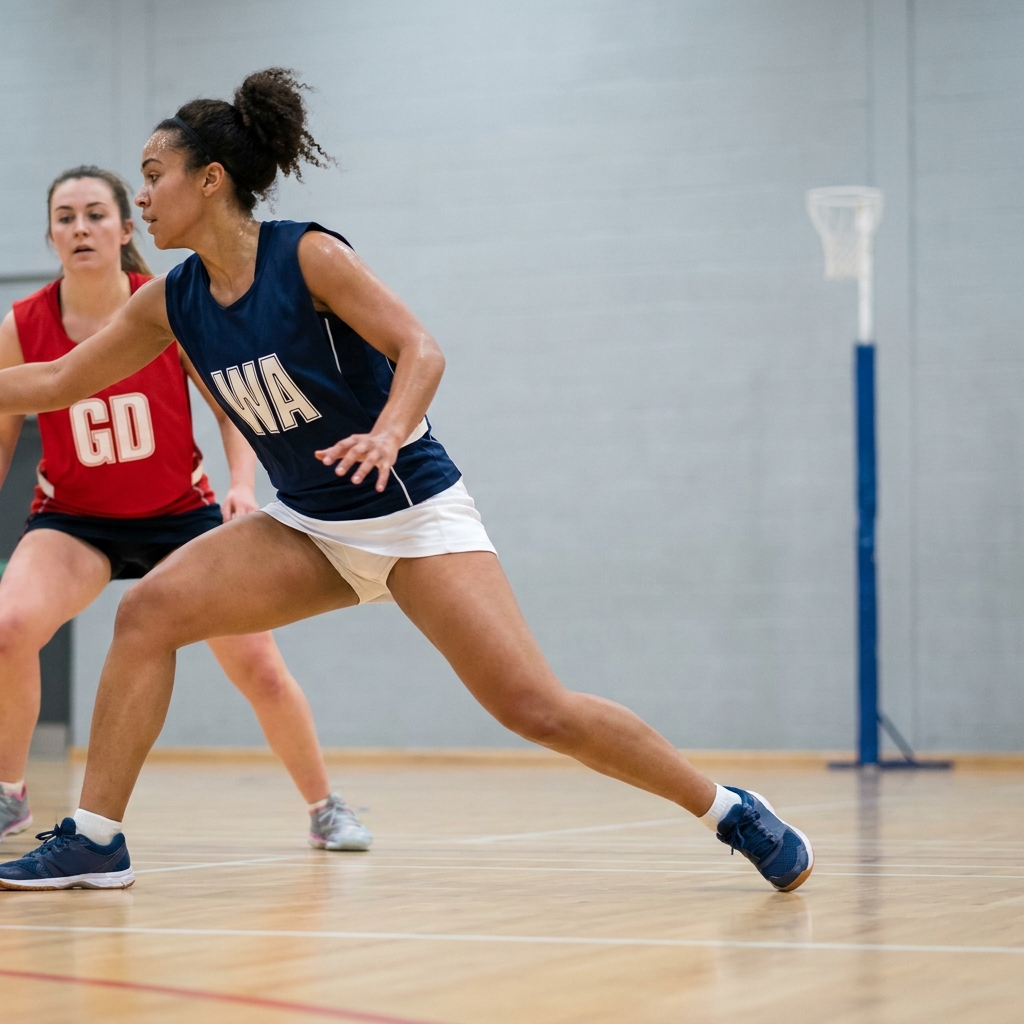
Tight markers win when attackers run in straight lines. Teach your players to dodge, change pace and time their drive so they get free when the ball is ready.
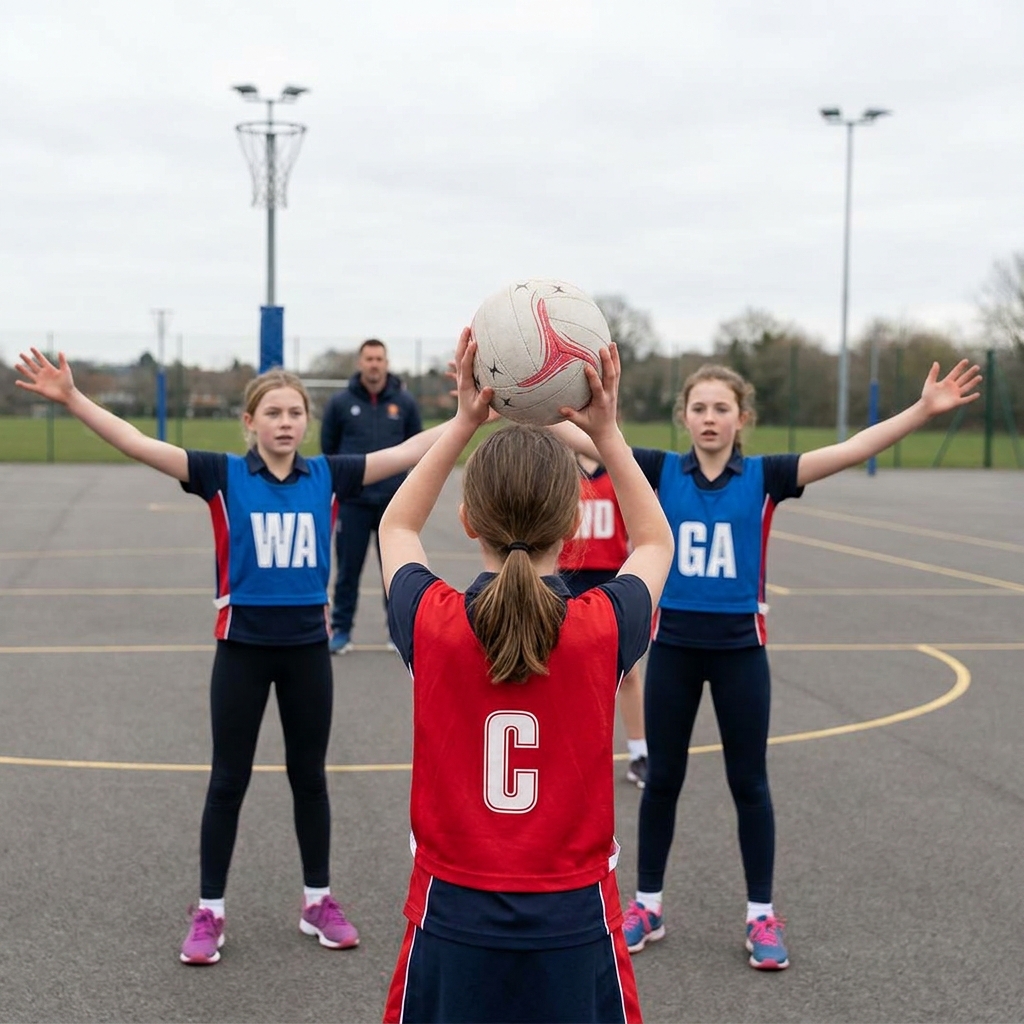
When everyone chases the ball, nobody is free. Teach your team to spread out, offer two options and clear space so the ball moves cleanly down court.
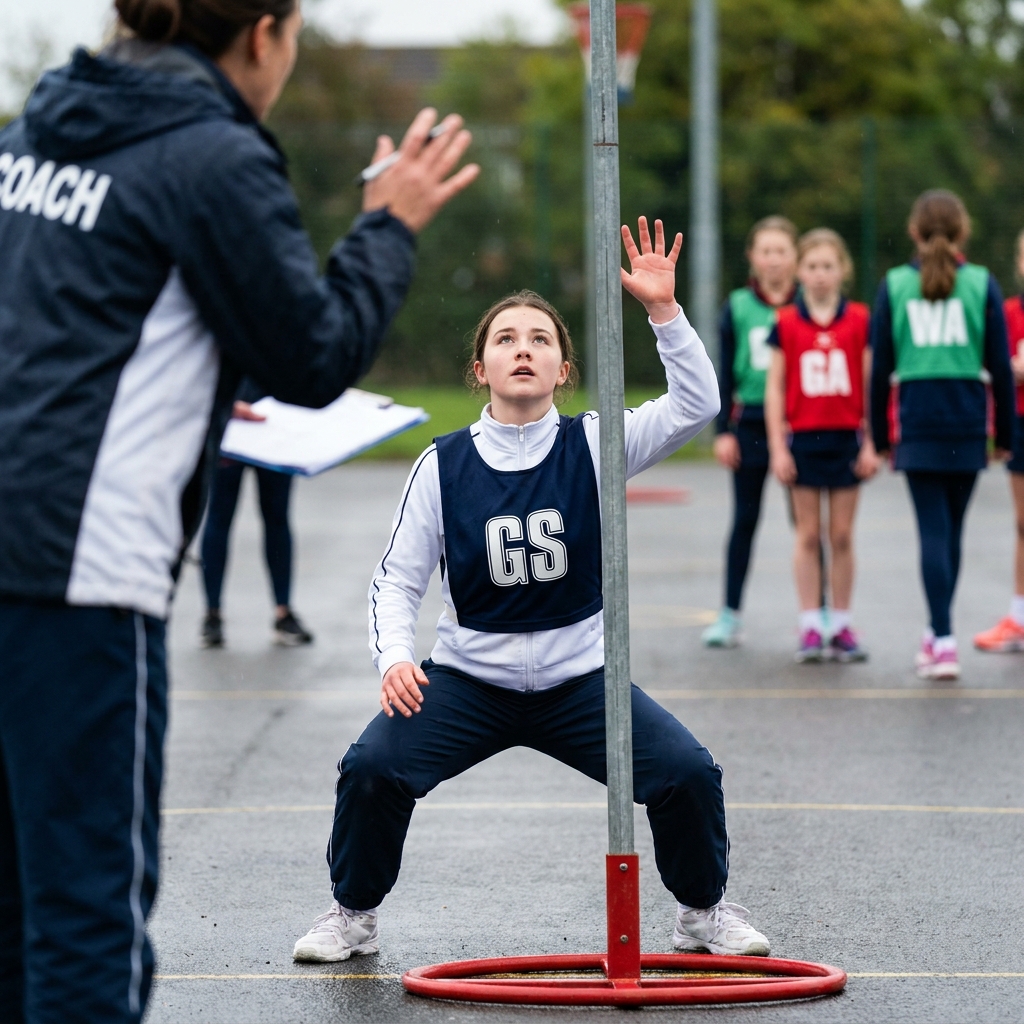
A shooter who can hold a strong position under the post is worth more than one who runs all over the circle. Here is how to coach body shape, a legal hold and a well-timed release, and how feeders make the most of it.