Football: reaction

June 2026

The rise of the dedicated set-piece coach is one of the most significant tactical shifts of the past five years. Aston Villa's Austin MacPhee, Arsenal's Nicolas Jover, and Brentford's set-piece team have shown that a handful of well-designed attacking routines can be worth between five and ten extra goals a season. At the elite level, that can be the difference between European football and a relegation scrap.
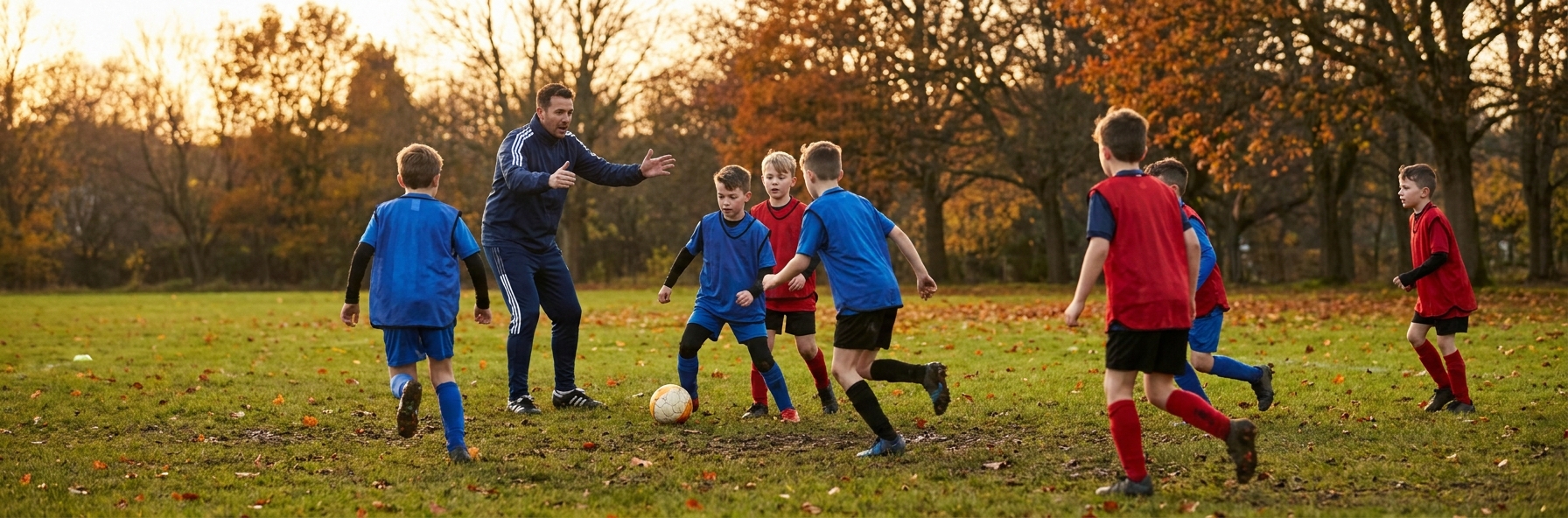
The good news is that the principles behind these routines are not secret. With a clear framework and a willingness to spend ten minutes per session on set pieces, any team from grassroots to semi-professional can transform their dead ball threat. Here is what the specialists actually do, and how to translate it to your own team.

The Numbers That Started a Revolution

Just eight matches into the 2025/26 Premier League season, there had already been 56 set-piece goals. Across a full season, set pieces account for around 21 percent of all goals scored in the top flight. At grassroots and youth level, that figure climbs above 35 percent because defensive organisation is weaker and individual mismatches are easier to exploit.

The clubs taking set pieces most seriously are reaping the rewards. MacPhee's routines at Aston Villa have produced an estimated 28 percent of their goals from corners and attacking free kicks alone. Arsenal have built whole game plans around the threat of their corner deliveries. Brentford have made a name for themselves with imaginative throw-in routines that confuse defences and create chances from nothing.

The Three Principles Behind Every Great Routine

Principle One: Disguise. The best routines start in ambiguous positions. Teams like Brentford and Tottenham line up in starting formations that could lead to half a dozen different deliveries. The defending team cannot organise effectively because they do not know what is coming until the runs have already begun.

Principle Two: Movement creates space. Static attackers are easy to mark. Specialists design routines built around crossovers, dummy runs, and blockers. The aim is to create a single moment where one attacker arrives unmarked at a specific spot. Everything else in the routine exists to create that moment.

Principle Three: Specific delivery to specific zones. Coaches and analysts identify the zones most likely to produce goals from each set piece type. The penalty spot. The near post six-yard area. The edge of the box for second balls. Once the zone is chosen, the deliverer practises hitting it until they can do it under pressure.

Corner Kick Innovations You Can Steal

The all-up corner. Some teams now commit all ten outfield players to attacking corners, leaving nobody on the halfway line. The logic is that the chance of a goal from the corner is higher than the chance of conceding from a long counter. At grassroots level this is bold, but if you face a team with a slow goalkeeper distribution it can be highly effective.

The screen and pull. Two attackers stand close together near the penalty spot. As the ball is delivered, one acts as a screen, blocking the path of a defender. The other pulls away into the space created. Practise this until the timing of the screen and the run are perfectly synchronised.

The short corner with purpose. Short corners are often dismissed as a waste of the threat. Done properly, they pull defenders out of the box, change the angle of delivery, and can lead to better crossing positions. Have a planned second action after the short pass: a one-two, a cutback to the edge of the box, or a switch to a deep crosser on the far side.

Attacking Free Kicks Around the Box

Free kicks in dangerous areas are too often wasted on direct shots that fly into the wall. Specialists treat them as another set piece opportunity with multiple options. The deliverer should be able to choose between four or five routines depending on what they see from the defenders.

A simple framework: design two routines for free kicks from the right channel, two from the left, and one central. Train each of them weekly. When match day comes, the deliverer signals which routine before stepping up, and every player on the pitch knows their job.

Throw-Ins as a Genuine Attacking Weapon

The most underused set piece in the game is the long throw. Stoke City built an entire era around Rory Delap's throws, and Brentford have brought the long throw back into modern fashion. If you have a player who can deliver a flat throw into the six-yard box, you have a corner you can take from forty different positions on the pitch.

Even without a long thrower, throw-ins can be productive. The combination throw - where two players combine to free a third for a cross or shot - is a low-risk, high-reward weapon. Design two or three throw-in patterns and practise them weekly. Your players will be amazed how often opponents are unprepared for them.

Training Set Pieces Without Boring Your Squad

The biggest barrier to better set pieces is that players find them tedious to practise. The solution is to make set piece training competitive. Award points for goals scored, deduct points for chances missed, and run a season-long leaderboard. Suddenly the ten-minute set piece block at the end of training becomes the most engaging part of the session.

Use video too. Show your players clips of professional teams scoring from the routines you want them to copy. Once they see why a specific run or screen matters, they will execute it with much more conviction in training and on match day.

Key Coaching Points

  • Disguise your starting positions: do not give the defence time to organise
  • Build every routine around a single, specific moment where one attacker arrives unmarked
  • Train deliverers to hit precise zones, not just whip the ball into the area
  • Have a planned signal so every player knows which routine is about to be used
  • Always plan for the second ball: arrange players around the edge of the box
  • Train set pieces weekly, briefly, with clear measurement of goals scored and conceded

Recommended Drills

VIEW ALL SET PIECE DRILLS

reaction DRILLS
View All
Unfortunately there were no results for your search! Please try again
reaction ANSWERS
View All

U10 boys - How to build confidence on the ball?

hi i coach a under 10's boys team.i am looking for help.unfortently we are not the best team around!all my player,s have not been playing long so we are a long way behind other teams we play i am trying to build conferdence on the ball at present they just wak it aways give up the balli am new to coaching and was wondering am i doing the right thing or should i be doing something else with them.

Archived User Coach

What positioning should a back 4 take up when the opposition?

What positioning should a back 4 take up when the opposition is constantly trying to play long balls over the top of our defence. Positioning before ball is played and immediate reaction positioning if our 2 centre halfs win the ball in the air

Archived User Coach

Kids are very slow and lack reaction time and acceleration

Hello all! My kids aged 9 and 7 are very slow when compared to their peers of the same age. They don't seem to fight for the ball and get and watch others play their game. They seem to lack the urgency (heart) needed for the game. (They LOVE football). How can make them move around and react faster. Any help you are able to provide is greatly appreciated. Thanks O

Archived User Coach

Reaction speed drills for goalkeepers?

Hello, Wisdom again. I was just wondering if there are any drills that can increase reaction time and speed. I am a goalkeeper and I know there's the simple turn the back to the player then the goalkeeper turns on the command of 'Go' but I was wondering if there any more complex drills to increase reaction speed. Many thanksWisdom Kimbangi, Goalkeeper

Wisdom Kimbangi Coach, England

Drills to improve reaction times

are there any drills for faster reaction time? Our centre half is very fast but we need him to react quicker to situations, are there any drills to help us achieve this. I have a couple of ideas but would appreciate a little help!! thanks.

Lee Pritchett Coach, England

Kids are very slow and lack re...

Hello all! My kids aged 9 and 7 are very slow when compared to their peers of the same age. They don't seem to fight for the ball and get and watch others play their game. They seem to lack the urgency (heart) needed for the game. (They LOVE football). How can make them move around and react faster. Any help you are able to provide is greatly appreciated. Thanks O

Archived User Coach

Drills to improve reaction tim...

are there any drills for faster reaction time? Our centre half is very fast but we need him to react quicker to situations, are there any drills to help us achieve this. I have a couple of ideas but would appreciate a little help!! thanks.

Lee Pritchett Coach, England

U10 boys - How to build confid...

hi i coach a under 10's boys team.i am looking for help.unfortently we are not the best team around!all my player,s have not been playing long so we are a long way behind other teams we play i am trying to build conferdence on the ball at present they just wak it aways give up the balli am new to coaching and was wondering am i doing the right thing or should i be doing something else with them.

Archived User Coach

Newbie, coaching U10s - Sportp...

Morning, I have just started coaching a local U10s team made up of kids (boys and girls) with varying skills and ability. We are viewed as one of the weaker teams in our region and lose much more than we win. I watched last season but wanted to help out this year. I am very new to coaching and would really appreciate some guidance on good drills to help players play with their heads up, looking for a pass, movement and positioning. They are good kids and I just want them to win a few games which will help them enjoy the game more.

Andrew Clarke Coach, Ireland

Think the coach is the problem...

I took over a under 8s team 2 years ago unfortunately soccer is not my game and I did as there was no other option other than to fold. Im a good coach in terms of developing a good team (discipline, teamwork , sportsmanship fun etc) but I think my lack of knowledge about the game is holding the team back . I have a 12 players who are about to move up to the under 10s level , they skill level ranges from timid to very skilled, I try to give each player equal time and the lower skilled players are improving (just not at the same pace as the opposition). Unfortunately the opposition we face seem to be light years ahead in terms of playing a scheme and we are often found out during games (i have used a basic zone defense to try and stop the team becoming ball magnets). I think its a mixture of me insisting all players get equal playing time and the fact I dont know enough about the game to be able to coach an effective scheme and to react to opposition schemes. They are good kids and I want to give them a taste of success (you can only say it was bad luck so many times) but cant seem to get our club to take it to the next level. The drills on sportsplan are helpful but a lot of drills are too complicated for the kids age or can simply go wrong very quickly in reality. We dont get thrashed in games but we cant seem to eke out a draws or wins (I know its not all about winning but try explaining that to the kids when they lose on a regular basis)Any suggestions

Paul Coach, Wales

Tips for diving on my weak sid...

Hello, my name is Wisdom and I'm goalkeeper for two teams. I was wondering if anyone knew any drills or tips that would help me gradually become better on diving on my weaker side. There will rare times where I do save shots on my weaker side but there are also times where I don't save those shots.I was also wondering if there any tips or drills that can help my goal kicks from the ground. I can get there right spot but I'm not generating enough power in it.Many thanksWisdom, Goalkeeper

Wisdom Kimbangi Coach, England

Need help with training my U9s...

Hi All, Need help with training my U9s with passing during the game. I have one player (centre mid) that knows how to pass at the right time during the game. The rest of my team, meaning LM and RM and striker put their head down and just run with the ball. What can i use during training to make them think about passing during a game. Thanks in advance

Archived User Coach

JOIN SPORTPLAN FOR FREE

  • search our library of 500+ football drills
  • create your own professional coaching plans
  • or access our tried and tested plans

Sportplan App

Give it a try - it's better in the app

YOUR SESSION IS STARTING SOON... Join the growing community of football coaches plus 500+ drills and pro tools to make coaching easy.
LET'S DO IT