The 6-Second Rule
Research shows that teams need approximately 6 seconds to reorganise defensively after losing possession. That tiny window is your opportunity to create high-quality chances - if your players know how to exploit it.
Yet most coaches spend 90% of training time on structured possession and set pieces. The chaotic moments of transition - where games are increasingly won and lost - get neglected.
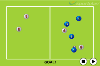
Why Transitions Matter More Than Ever
Modern football has become increasingly difficult to break down. Teams defend in compact blocks, rest defence is standard, and counter-pressing means you rarely have time on the ball.
In transition moments, everything changes. Distances between players increase. Defensive shape is compromised. Decision-making is rushed. This is when the best teams strike.
The 3 Principles of Effective Attacking Transitions
1. Immediate Forward Intent
The moment you win the ball, the first thought must be: can we go forward? Not sideways. Not backwards. Forward. Train your players to scan ahead before they receive, so the decision is already made when the ball arrives.
2. Vertical Runs Off the Ball
The ball carrier needs options. If everyone stands still watching, the transition dies. Drill your attackers to make immediate vertical runs - stretching the defence before it can set. One runner in behind is worth three players asking for it to feet.
3. Overload the Weak Side
When possession is won, the opposition is often ball-side heavy. The space is on the far side. Train your players to recognise this and switch play quickly - or carry the ball diagonally to exploit the space themselves.
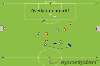
Training the Transition Mindset
Transition play can't be coached through drills alone - it requires a mindset shift. Here's how to develop it:
Stage 1: Recognition Training
Use video clips showing transition moments. Pause at the turnover and ask: "Where's the space? What's the first pass?" Build the scanning habit before introducing physical practice.
Stage 2: Conditioned Games
Play small-sided games where winning the ball triggers a 5-second countdown. If the attacking team doesn't shoot within 5 seconds, they lose the ball. This creates urgency without over-coaching.
Stage 3: Positional Triggers
Assign specific players as "transition triggers". When they win the ball, the whole team knows to explode forward. This creates coordinated movement rather than chaotic running.
Recommended Drills
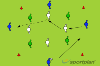
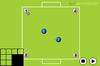
These drills will help your team master attacking transitions:

Sample Session: Transition Attack
A 60-minute session focused on attacking transitions:
- Warm-up (10 mins): 4v4v4 rondos - middle team transitions to attack on winning ball
- Technical (15 mins): 3v2 break attacks - focus on quick decisions and vertical runs
- Game-Related (20 mins): 6v6 with transition zones - bonus point for goals within 6 seconds of turnover
- Game (15 mins): 8v8 free play - coach freezes play on turnovers to highlight opportunities
Common Transition Mistakes
- Over-dribbling: The ball moves faster than any player - pass early to maintain speed
- Tunnel vision: The obvious pass isn't always the best - scan for runners in behind
- Stopping to control: First touch should be forward, not static - receive on the move
- Everyone attacking: Leave cover behind - one failed transition shouldn't become a counter-attack against you
Frequently Asked Questions
How do I stop my team losing the ball straight after winning it?
This usually comes from panic or poor body shape. Train players to receive side-on so they can see forward options. The first touch should protect the ball while opening up the pitch. Also ensure there are always support options nearby.
Should every player attack in transition?
No - you need balance. Typically 4-5 players commit to the attack while others provide defensive cover. The key is everyone knowing their role. Assign specific players as "go" triggers and others as "stay" anchors.
How do I coach transitions with younger age groups?
Keep it simple - focus on "find a friend forward" as the first thought. Use small-sided games where transitions happen naturally. Don't over-coach; let them experience the chaos and learn to read it themselves.
What's the difference between counter-attacking and transition play?
Counter-attacking typically means winning the ball deep and attacking long. Transition play is broader - it includes winning the ball anywhere and exploiting the temporary disorganisation. High turnovers leading to quick attacks are transitions, not counter-attacks.

 sportplan_football