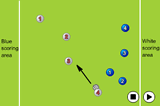
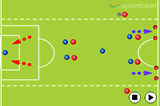
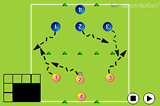
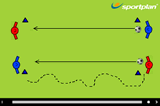
Station four players in each grid, with one ball per practice.
The white team start with possession of the ball.
Player 1 on the white team passes the ball into the opposing area. The white team can then send two players into the opposing area to defend.
A goal is scored when the blue team makes 5 consecutive passes without an interception.
Repeat in the opposite direction.
The team in possession should be very mobile, making runs off the ball to create space for the ball carrier.
Players off the ball should be accessible to the ball carrier at all times.
When a defender wins the ball, he should turn and look to pass it to his team immediately.
Various was of progressing this game can include increasing the number of defenders to three, make the area smaller, or increasing the game to 6 v 6.

in more ways than one
 sportplan_netball


in more ways than one
sportplan_football

Deliberate heading is now out of U11 grassroots matches. Here is how to coach chest, thigh and foot control so your players still win the ball in the air.
Long-range goals doubled at the 2026 World Cup as teams sat deep. Here is how to coach when to shoot from distance, the technique, and the follow-up.
Under FutureFit, your Under-9s stay at 5v5, your Under-11s stay at 7v7 and your Under-13s stay at 9v9. Same pitch, same numbers, one more year. Here is how to make sure that year feels like a step forward rather than a repeat.