The Coaching Problem
Your team loses the ball under pressure. Players panic when closed down, take heavy touches, and make rushed passes that go straight to the opposition. In training they look comfortable, but come matchday the composure disappears.
The issue isn't technical ability in isolation - it's the inability to execute under pressure. Players need thousands of repetitions making decisions in tight spaces with defenders breathing down their necks. That's exactly what rondos provide.
What Is a Rondo?
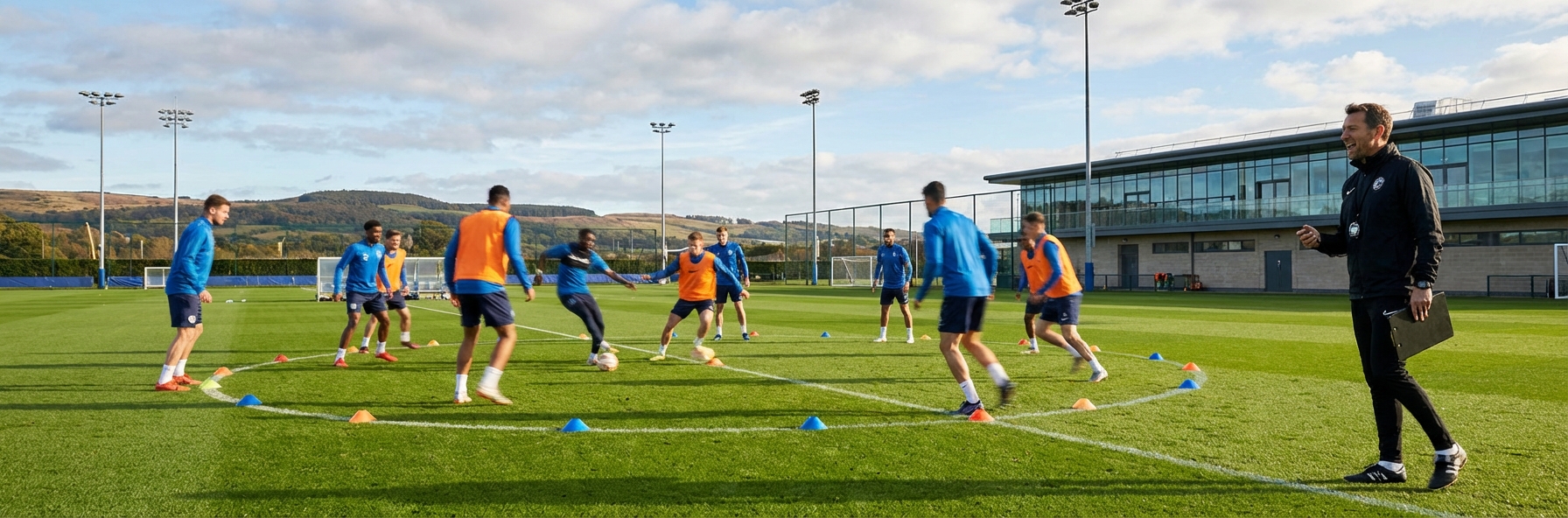
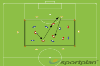
A rondo is deceptively simple: players form a circle and keep the ball away from one or more defenders in the middle. But within that simplicity lies football's most effective training tool.
Barcelona have built their entire philosophy around the rondo. Pep Guardiola famously said everything he knows about coaching he learned from rondos. The exercise teaches body shape, quick thinking, weight of pass, and composure - all under constant pressure.
Why Rondos Work
High Repetition in Small Spaces
In a 10-minute rondo, each player might receive the ball 50-60 times. Compare that to a full match where a midfielder might get 40 touches in 90 minutes. The concentrated repetition accelerates learning.
Constant Decision-Making
Every touch requires a decision: play one-touch or control? Which foot? Which teammate is free? The cognitive load mirrors match situations but in a controlled environment.
Immediate Feedback
Lose the ball and you're in the middle. The consequence is instant and motivating. Players self-correct because they don't want to defend.
The Rondo Progression Framework
Level 1: 4v1 (Beginners)
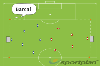
Four players on the outside, one defender in the middle. The large numerical advantage gives confidence and allows focus on technique. Coaching points: open body shape, pass across your body, communicate.
Level 2: 5v2 (Intermediate)
Five outside, two defenders. Now the windows close faster. Players must scan before receiving and play quicker. This is the classic rondo used by elite clubs daily.
Level 3: 4v2 (Advanced)
Four outside, two defenders. The reduced numbers mean every player is constantly involved. Mistakes are punished. This develops genuine match-ready composure.
Level 4: 3v1+1 (Elite)
Three players keep possession against one active defender, with a second defender who activates on the next pass. This creates transitional moments and simulates pressing triggers.
5 Rondo Variations for Different Objectives
1. Two-Touch Rondo
Maximum two touches forces quicker decisions and better body shape to receive. Use when players are becoming too comfortable with multiple touches.
2. One-Touch Rondo
One touch only. Requires exceptional scanning and pre-planning. Only introduce when players have mastered two-touch.
3. Split Rondo (Play Through the Middle)
Award bonus points for passes that go through the middle, splitting the defenders. Teaches players to be brave and find the penetrating ball.
4. Transition Rondo
When defenders win the ball, they immediately try to keep possession while outside players press. Teaches instant reaction to turnovers.
5. Positional Rondo
Players stay in specific positions (like a back four plus midfielders). Passes must follow realistic patterns. Connects rondo work to your actual formation.
Recommended Drills
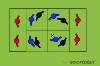
These Sportplan drills will help you implement rondos with your team:

Sample Session Plan: Rondo-Based Training
Here's a 60-minute session built around rondos:
- Warm-up (10 mins): Passing patterns in groups of 4 - focus on body shape and first touch
- Rondo 1 (12 mins): 4v1 rondos, 2-minute rounds, loser stays in the middle
- Rondo 2 (15 mins): 5v2 rondos, add the rule that splits through the middle = defenders swap out
- Game-Related (15 mins): 6v4 possession game - defending team scores by winning ball and passing to target player
- Cool-down (8 mins): 4v1 rondos at walking pace, focus on one-touch passing
Common Mistakes to Avoid
- Circle too big: If players have too much time, they don't learn to play under pressure. Keep the space tight.
- No consequences: The defender must swap with whoever loses the ball. Without consequences, intensity drops.
- Standing still after passing: Rondos teach pass-and-move. If players pass and watch, correct immediately.
- Lazy defending: Defenders who don't press make the exercise too easy. Demand intensity from everyone.
- Skipping progressions: Don't jump to 4v2 before players can handle 5v2. Build confidence first.
Frequently Asked Questions
What age can you start teaching rondos?
From U8 upwards, using 4v1 with a large circle. Keep it fun and don't worry about perfect technique - the game teaches itself. As players develop, reduce the space and add defenders.
How long should a rondo last?
2-3 minute rounds work best to maintain intensity. Run 4-6 rounds with brief rests between. Total rondo time of 12-18 minutes per session is ideal.
What size should the rondo circle be?
As a guide: one stride between players for 4v1, slightly larger for 5v2. If players consistently complete 10+ passes, make it smaller. If they can't complete 3, make it bigger.
How do I stop the same players always ending up in the middle?
Use time limits - if a defender hasn't won the ball in 30 seconds, swap them out. Also rotate weaker players to easier positions in the circle where they receive simpler passes.
 sportplan_football