


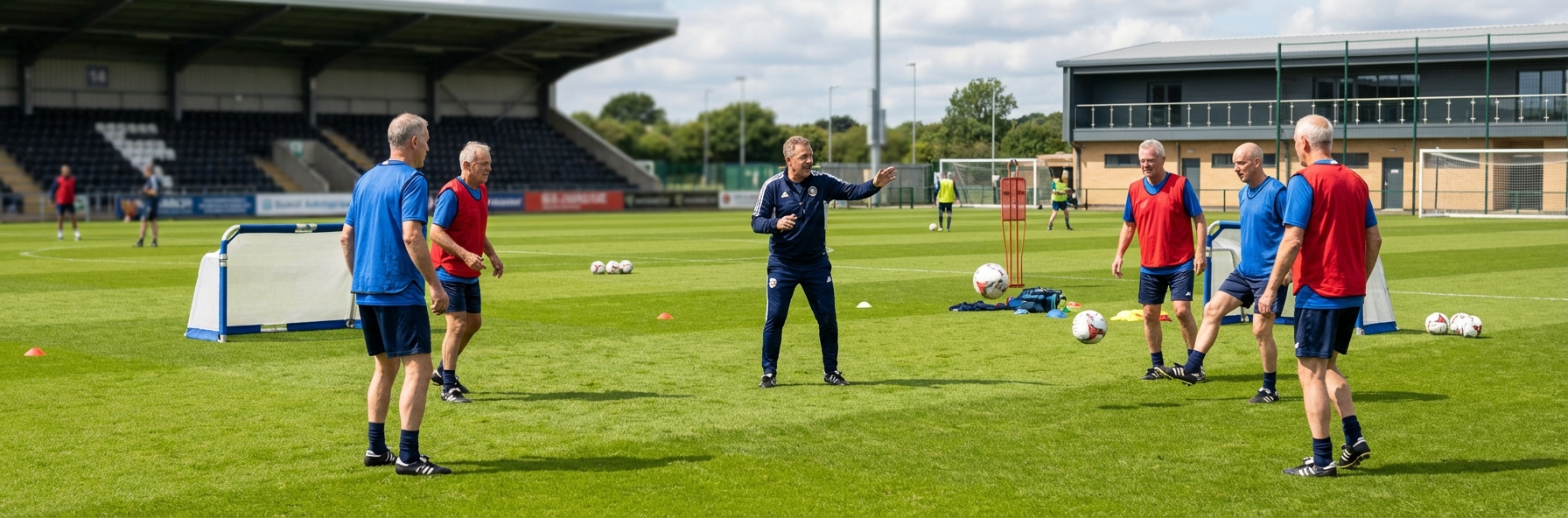
The best teams in world football don't just keep the ball. They use possession as a weapon - physically exhausting opponents while maintaining their own energy levels. Barcelona under Guardiola, Manchester City today, the best national teams: they understand that making the opposition chase is as effective as any pressing system.
For senior amateur and semi-professional teams, this approach offers a significant competitive advantage. Most opponents at this level aren't fit enough to press for 90 minutes. Make them chase the ball for the first half, and they'll have nothing left for the second.
The Science of Possession Fitness
Research from sports science departments across Europe shows that teams in possession cover less distance but at higher intensities. The average sprint distance for a possession-based team is actually higher than for a direct team - the difference is that sprints are shorter, more frequent, and more purposeful.
This has implications for training. Your players need to be conditioned for repeated high-intensity efforts with short recovery periods. Traditional long-distance running doesn't develop this. Possession drills with the right structure do.
The Rondo: Foundation of Everything
Every elite club uses rondos. The concept is simple: a group keeps possession while a smaller number tries to win it back. The execution determines whether it's a useful training tool or a waste of time.
Basic setup: 5v2 in a 10x10 yard area. Two touches maximum. Defender who wins the ball swaps with the player who lost it.
Intensity variables:
- Reduce the area to increase pressure
- Add time limits (10 passes = win for possession team)
- One-touch only periods
- Continuous rotation (new defender every 30 seconds regardless of possession)
The key to making rondos physically demanding is work-to-rest ratios. Defenders should work maximally for 20-30 seconds, then rotate. Possession players should be moving constantly, not standing still waiting for the ball.
Positional Play Boxes
Move beyond basic rondos with position-specific possession exercises.
Setup: 20x20 yard area divided into zones. 4v4+2 neutrals. Neutrals always play with the team in possession.
Rules: Complete 8 passes in your half, then you must progress to the opposite half. Opposition can only press with 2 players in each half.
Physical demand: The positional rules force constant movement. Players must create angles, support the ball, and transition quickly when possession changes. Heart rates stay elevated throughout.
Transition Possession
Add a physical and mental challenge by incorporating transitions.
Setup: 30x20 yard area with small goals at each end. 5v5.
Rules: Score by completing 10 consecutive passes (1 point) or by scoring in the goal (2 points). On turnover, the team winning the ball must make 3 passes before they can score in the goal.
Why it works: Teams must transition from attack to defence instantly. The 3-pass requirement prevents rushed counterattacks and forces composed possession even under pressure.
Overload Games
Create physical overload through numerical advantage.
Setup: Three 10x10 yard zones in a line. 3v3 in the middle zone. 1 neutral player in each end zone.
Rules: Ball can be played to end zone neutrals who must return it first time. Possession team scores by switching play through both end zones without losing the ball.
Physical demand: Constant scanning, movement, and adjustment. The switches of play require explosive changes of direction. Players will cover significant distance without ever sprinting in a straight line.
Game-Related Conditioning
4v4+4 continuous: Two teams of 4 play possession in a 30x30 yard area. A third team of 4 defends. After 90 seconds, teams rotate. The defending team becomes possession team 1, team 1 becomes team 2, team 2 defends.
This creates 90 seconds of high-intensity defending followed by 180 seconds of active recovery (possession). It replicates match fitness demands better than any interval running session.
Conditioning the Mind
High-intensity possession drills are as mentally demanding as they are physical. Players must make quick decisions under fatigue. This is exactly what happens in the 75th minute of a match when legs are heavy and minds want to take shortcuts.
Resist the temptation to reduce intensity when quality drops. The best training happens when players are forced to maintain standards while tired. That's when real development occurs.
Session Structure
A possession-focused conditioning session for senior players:
- 0-10 mins: Dynamic warm-up with ball
- 10-20 mins: Rondos with progressive intensity
- 20-35 mins: Positional play boxes
- 35-50 mins: Transition possession game
- 50-70 mins: 4v4+4 continuous
- 70-80 mins: Cool down and recovery
Run this session once a week during the season. Players will arrive at matchday physically prepared and mentally sharp.
The Competitive Advantage
Most amateur teams separate fitness work from technical work. Running happens without a ball. Possession drills are low intensity. This is a wasted opportunity.
Teams that integrate high-intensity conditioning with possession work develop players who can keep the ball under any circumstances. They create teams that grow stronger as matches progress while opponents fade. In tight games, this is often the difference between winning and losing.
Possession isn't passive. Done right, it's the most aggressive approach in football.