Rugby: 22

June 2026

If you watch the data, restart kicks happen more often than any other set-piece in a modern rugby match. A Six Nations game produces around twelve to sixteen restarts, more than the average lineout count and far more than scrums. Yet most teams - especially below elite level - still treat them as an afterthought. That is the gap top coaches are now closing.

The phrase "restart is the third set-piece" has become a coaching slogan in 2026 for good reason. The team that wins the restart battle controls field position, momentum and the opening sixty seconds of every passage of play. Conceding a try and then conceding the restart immediately afterwards is one of the most common ways to lose a match.

Why Restarts Are Suddenly Critical

Two things have changed. First, kickers have become more accurate. Restarts now land precisely on the 10-metre line and in the 15-metre channel, contested by tall, athletic chasers who jump for the ball. The days of a 22-metre dollop into the middle of the pitch are gone.

Second, the reward for retention has grown. With modern attacking shapes, a team that retains its own restart is straight into structured phase play in the opposition half. A team that loses the restart is defending in their own 22 with a disorganised line. The swing between those two outcomes is enormous.

Building a Reception Pod

Top teams now train a dedicated restart reception pod, exactly as they train a lineout pod. The pod typically has four roles, and every player must know which role they have before the kick is taken.

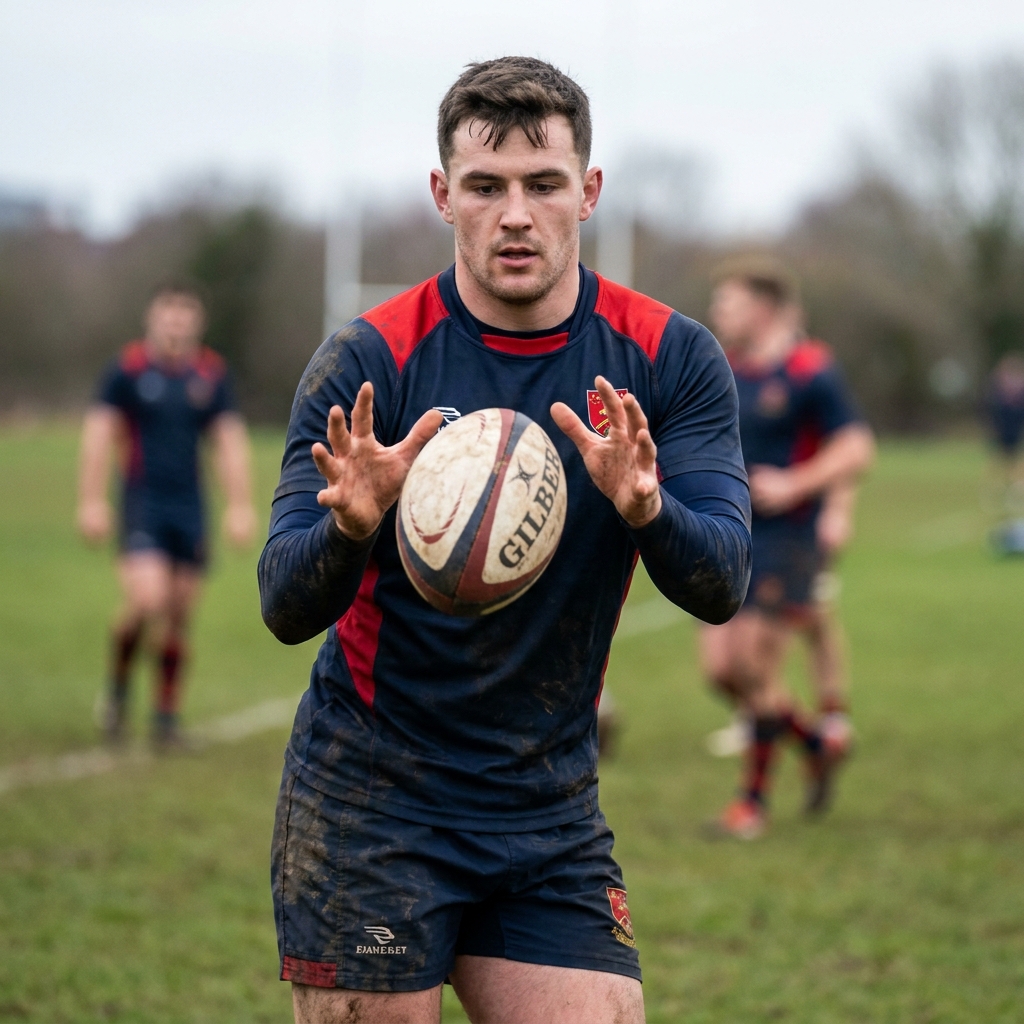
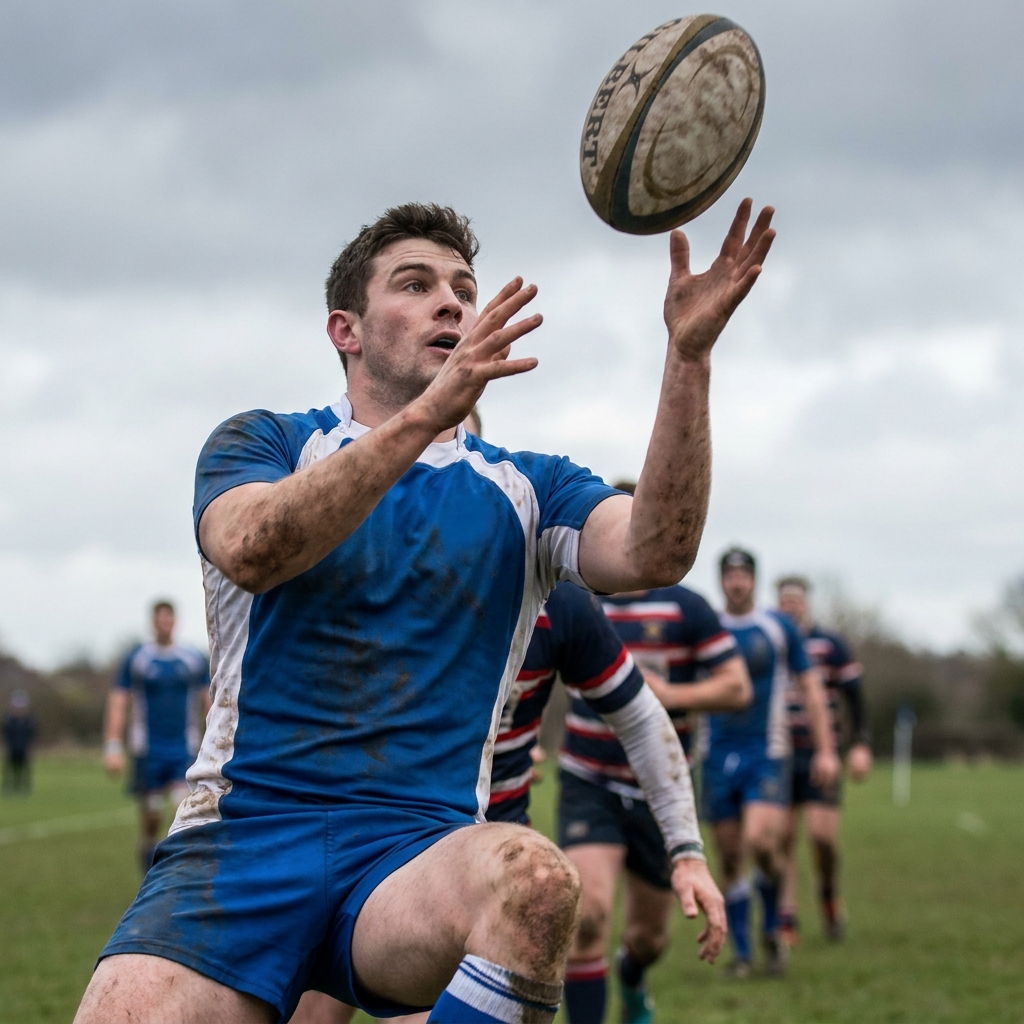
The catcher: Usually a lock or back-rower, chosen for height and timing. They call early - "mine" or the channel number - and commit to the catch.

The lifter: A prop or hooker who arrives at the catcher's side, hands ready, to give a lift on the contested ball. Lifting is legal at restarts and dramatically improves your win rate against good chasers.

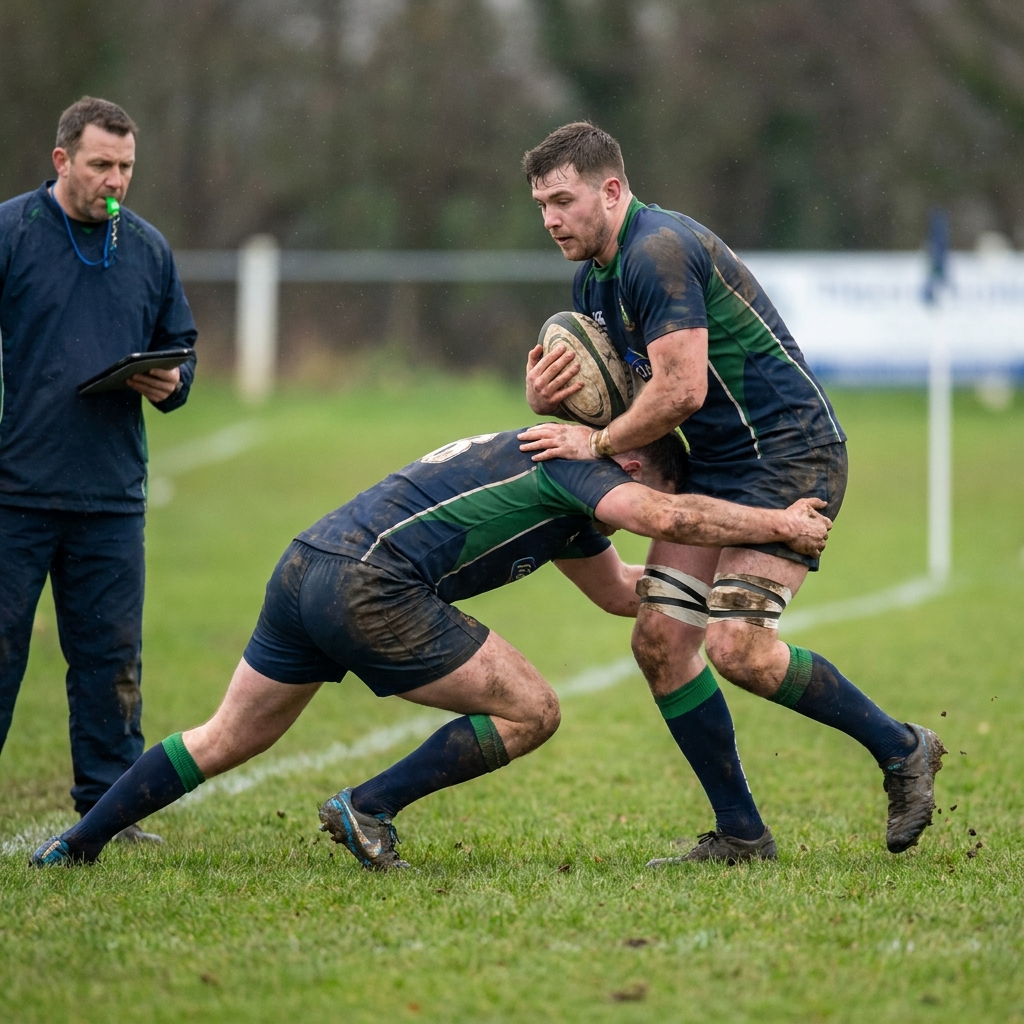
The protector: A second forward who stands between the catcher and the chase, taking the contact if it comes and forming the first ruck cleanly.

The exit option: A back, usually the fly-half or full-back, in position to receive the next pass and either kick to touch or launch a counter.

How to Coach Restart Reception

Restart skills are perishable. Train them every week, even if only for ten minutes. Build the session in three blocks.

Block 1 - Catching under contest (5 minutes): One coach kicks high balls from the halfway line. Your designated catchers work in pairs - one catches, one acts as a chaser jumping to contest. Rotate every two reps. The focus is timing the jump, not winning every ball.

Block 2 - Receiving as a unit (10 minutes): Full pod of four sets up. Coach kicks restarts. Pod must catch, secure, ruck and recycle clean ball to a back. Add an opposition chase line of three after five reps.

Block 3 - Restart-to-exit scenarios (10 minutes): 12v12 or 10v10 game starting from a restart. After receiving, the team in possession has one rule: get out of their own half within three phases. This trains the link between reception and territorial exit.

Attacking Restarts - The Other Half

Receiving is half the picture. The other half is recovering your own restart. Modern restart kicks are aimed at one of three landing zones: short on the 10 (5-7 metres beyond the kick mark), mid-deep at the 15-metre line, or long into the far corner. Each option requires a different chase pattern.

The short restart is the highest-percentage recovery option but the hardest to execute accurately. Reserve it for moments when you genuinely need the ball back - after conceding a try, with time running out, or to disrupt a stronger opponent. Drill the kicker until they can land a restart in a one-metre window on demand.

Key Coaching Points

  • Restarts are the most frequent set-piece - train them weekly
  • Build a named reception pod with four clear roles: catcher, lifter, protector, exit
  • Lifting is legal at restarts - use it
  • The exit kick after a clean catch is as important as the catch itself
  • Reserve the short restart for moments when winning it really matters

Recommended Drills

VIEW ALL KICKING DRILLS

22 DRILLS
View All

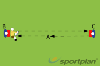
3 Touch Kick

Split your players into two teams, giving one group of players a set of coloured bibs to set them apart, and quickly tell your players the following laws: We will be playing a rugby league style touch. When touched: set the ball down, stand over the ball, allow the scum-half to move the ball away from the point of contact. The defenders should stay on side following a touch, and should not compete for the ball. Any infringements in defence should result in the defending team conceding 10 Meters or possibly giving 1 or more extra touches to the attacking team. I'll leave this to your judgement depending on your team's age, skill level, and your session target/s. The attacking team can sustain three touches before they have to kick. Their kick should be as it would be in the game: a kick to touch, a kick for territory, or a kick that can be regained e.g. a grubber kick. The defenders should behave as they would in a real game. Quick put in's from the touchlines replace lineouts. Defenders who take the ball from an attacking kick should counter attack. A forth touch results in a turn over. The Scrum Half has a maxium of 5 seconds to move the ball from the point of touch. A ball kicked directly to touch from outside the attacking teams 22, or where the ball has been taken into the 22 by the attacking team and then kicked into touch - will result in a turn over with play starting on the five meter line closest to where the kick was made. The defence should be 10 meters back. A ball kicked from inside the attacking teams 22 can go directly to touch, as long as the attacking team did not carry the ball into their own 22 before the kick. The resulting put in will be to the opposition from where the ball has went into touch. Quick put-in's are enoucraged, if not possible the ball is played from the 5 meter line with the defence 10 meters back. Give points for quick put ins that work. Feel free to play with any of noted laws, let us know the law variations that work for you!

Warm Up

3 Touch Kick Warm Up - Rugby D...

Split your players into two teams, giving one group of players a set of coloured bibs to set them apart, and quickly tell your players the following laws: We will be playing a rugby league style touch. When touched: set the ball down, stand over the ball, allow the scum-half to move the ball away from the point of contact. The defenders should stay on side following a touch, and should not compete for the ball. Any infringements in defence should result in the defending team conceding 10 Meters or possibly giving 1 or more extra touches to the attacking team. I'll leave this to your judgement depending on your team's age, skill level, and your session target/s. The attacking team can sustain three touches before they have to kick. Their kick should be as it would be in the game: a kick to touch, a kick for territory, or a kick that can be regained e.g. a grubber kick. The defenders should behave as they would in a real game. Quick put in's from the touchlines replace lineouts. Defenders who take the ball from an attacking kick should counter attack. A forth touch results in a turn over. The Scrum Half has a maxium of 5 seconds to move the ball from the point of touch. A ball kicked directly to touch from outside the attacking teams 22, or where the ball has been taken into the 22 by the attacking team and then kicked into touch - will result in a turn over with play starting on the five meter line closest to where the kick was made. The defence should be 10 meters back. A ball kicked from inside the attacking teams 22 can go directly to touch, as long as the attacking team did not carry the ball into their own 22 before the kick. The resulting put in will be to the opposition from where the ball has went into touch. Quick put-in's are enoucraged, if not possible the ball is played from the 5 meter line with the defence 10 meters back. Give points for quick put ins that work. Feel free to play with any of noted laws, let us know the law variations that work for you!

General

Unfortunately there were no results for your search! Please try again
22 ANSWERS
View All

What is the current thinking regarding kickoff receiving alignment?

What is the current thinking regarding kickoff receiving alignment?

Gary Kent Coach, United States of America

ELV's 22m rule, kicking clear from your 22.

With the new 22m ruling in the ELV's the ball cannot be carried or passed into the 22 and kicked directly into touch. Does this rule apply if a ball carrier is tackled and forced into their 22 or if the ball is carried into the 22 and then the ball carrier is tackled inside their 22? In either of these situations is the team in possession allowed to kick directly to touch without a lineout being awarded to the opposition from the position where the ball was kicked?

kevin croke Coach, Ireland

What is the correct restart after a player has missed?

What is the correct restart after a player has missed a drop goal?

Archived User Coach

Has anyone got any drills for defending a driving lineout

Has anyone got any drills for defending a driving lineout

Archived User Coach

How quickly must a player call a mark when he catches?

How quickly must a player call a mark when he catches an up and under inside his 22. We had someone catch the ball whilst diving on the floor - he looked up and then called a mark. Is this legal or does someone have to call a mark whilst in the process of catching?

Archived User Coach

My team is training in sintetic pitch.What kind of?

My team is training in sintetic pitch. What kind of specific exercices can I do to prevent knees injuries?

Jose Mendes Coach, Portugal

Law 12 - the forward pass or throw forward

The law says that a forward pass is one "thrown forward" "in the direction of the opponents' goal line" Does that mean that, if the ball is passed and the receiver catches it NEARER to the opponents goal line than from where the ball was passed that the pass was forward? (Leaving to one side any other touches of the ball that might have taken place.) Maybe an example is better. Player 1 passes the ball sideways - releasing it on the 22 metre line. Player 2 (with no other player having touched the ball), running from well behind the 22 metre line, catches the ball when it has travelled sideways but the ball is now 20 metres from the opponents goal line (2 metres further forward from the place that the ball was passed). Is that a forward pass or throw forward? And if not, why not?

Archived User Coach

Foul play in a rugby game

2An in-goal player catches the ball from an opponent's kick and touches it down. That player is then late tackled. What actions are available to the referee? Asked using Sportplan on Mobile

Archived User Coach

How many tacklers are allowed in U10s rugby?

At under 10s I was under the impression that it is 1v1 tackling. Can someone clarify the laws on this please?

Aaron Lee Newson Coach, Wales

How to complete scoring opportunities?

My team have a problem scoring tries. They create chances but still can't score. How do I rectify that?

melvin kennedy Coach, South Africa

My son will not run with the ball

My sons plays for the U9 team, his position is number ten, he was put there due to his kicking power, drop kicking accuracy, etc - I have been teaching him over time to tackle this has helped him build his confidence - what I have been noticing is the fact that when he gets the ball, he wont run - he just refuses to do anything with it...I need to find a way to encourage him the move forward with it, but nothing ever happens, now his own team mates are starting to look down at him, since he has giving the game away far to many time. Help!

john mcqueen Coach, New Zealand

Perfecting attack structure

Drills to perfect the 1 3 3 1 attack structure Asked using Sportplan on Mobile

Pedro Waqa Coach, Fiji

forwards positions in open play

Hello, in open play i want to have my forwards split up across the field not just chasing the next ruck. im not sure exactly how to teach them where they should be standing. (positional play) (Dane coles always seems to be a wing in open play)

dan Coach, Germany

charged £44 instead of £22

hi just signed up with the 50% offer but took £44 out of my PayPal. can you help?

Marie p Findlater Coach, United Kingdom

3 months free subscription

Good morning I signed up to a three month free subscription plan on 7July 22. By my account I'm not due to pay a fee until 7 Oct 22. Yet I've been charged as of 16th August a fee of £26.99. Please refund and adjust your records accordingly. many thanks

ian booton Coach, England

Patience on attack

Good day all I would just like to get some advice or feedback.Our 0/13 team is playing very good rugby but when they enter an opponets 22 them seem to start rushing there play and make mistakes like knock-ons.How can whe get that out our game and to capatilize and score points and stay calm.

Dillan Van Wyk Coach, South Africa

Patience on attack - Sportplan

Good day all I would just like to get some advice or feedback.Our 0/13 team is playing very good rugby but when they enter an opponets 22 them seem to start rushing there play and make mistakes like knock-ons.How can whe get that out our game and to capatilize and score points and stay calm.

Dillan Van Wyk Coach, South Africa

Law 12 - the forward pass or t...

The law says that a forward pass is one "thrown forward" "in the direction of the opponents' goal line" Does that mean that, if the ball is passed and the receiver catches it NEARER to the opponents goal line than from where the ball was passed that the pass was forward? (Leaving to one side any other touches of the ball that might have taken place.) Maybe an example is better. Player 1 passes the ball sideways - releasing it on the 22 metre line. Player 2 (with no other player having touched the ball), running from well behind the 22 metre line, catches the ball when it has travelled sideways but the ball is now 20 metres from the opponents goal line (2 metres further forward from the place that the ball was passed). Is that a forward pass or throw forward? And if not, why not?

Archived User Coach

My son will not run with the b...

My sons plays for the U9 team, his position is number ten, he was put there due to his kicking power, drop kicking accuracy, etc - I have been teaching him over time to tackle this has helped him build his confidence - what I have been noticing is the fact that when he gets the ball, he wont run - he just refuses to do anything with it...I need to find a way to encourage him the move forward with it, but nothing ever happens, now his own team mates are starting to look down at him, since he has giving the game away far to many time. Help!

john mcqueen Coach, New Zealand

JOIN SPORTPLAN FOR FREE

  • search our library of 1100+ rugby drills
  • create your own professional coaching plans
  • or access our tried and tested plans

Sportplan App

Give it a try - it's better in the app

YOUR SESSION IS STARTING SOON... Join the growing community of rugby coaches plus 1100+ drills and pro tools to make coaching easy.
LET'S DO IT