How quickly must a player call a mark when he catches?
How quickly must a player call a mark when he catches an up and under inside his 22. We had someone catch the ball whilst diving on the floor - he looked up and then called a mark. Is this legal or does someone have to call a mark whilst in the process of catching?


The laws are quite clear = they do not allow any time between the catch and the call but must be simultaneous actions<>
The laws are quite clear = they do not allow any time between the catch and the call but must be simultaneous actions<

Timothy
I took this definition from irblaws.com which is a free site which shows all the laws of rugby with videos to help explain things.
DEFINITIONS
To make a mark, a player must be on or behind that players 22-metre line.
A player with one foot on the 22-metre line or behind it is considered to be in the 22.
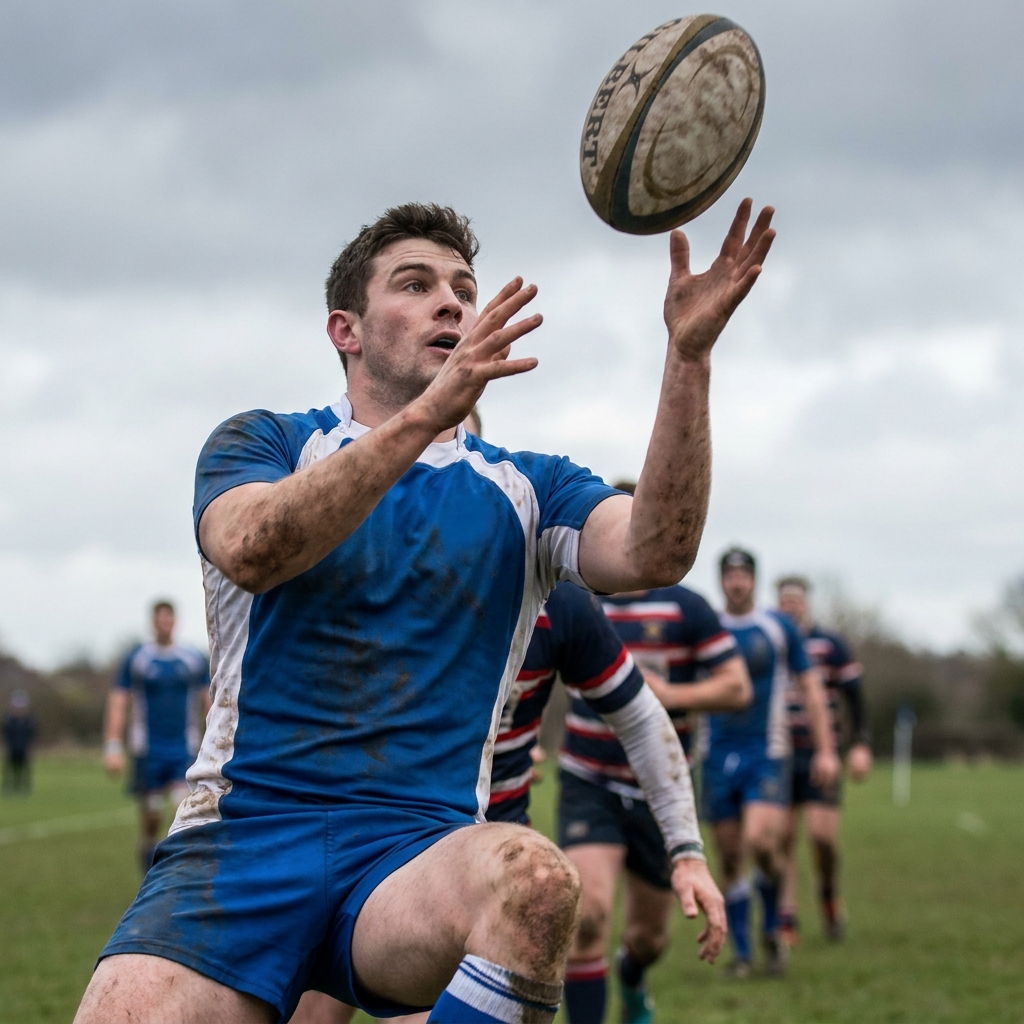
The player must make a clean catch direct from an opponents kick and at the same time shout Mark.
A mark cannot be made from a kick-off, or a restart kick except for a drop-out.
A kick is awarded for a mark.
The place for the kick is the place of the mark.
A player may make a mark even though the ball touched a goal post or crossbar before being caught.
A player from the defending team may make a mark in in-goal.
I hope this helps
Simon

 sportplan_rugby