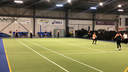
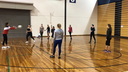
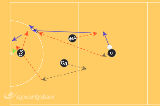
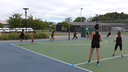
Set up: 1 third space (width), 3 players, 4 cones, 1 ball.
3 cones are set up midway across the width of the court in a gentle V shape, another cone is placed in line with the middle cone about 5 m in a straight line.
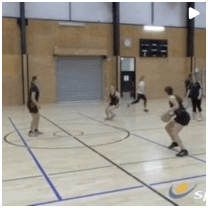
One player ( the feeder) stands on the lone cone with the ball. The other 2 players stand on the opposing sideline. The feeder calls ‘go’ and the two players runs traght out to the first cone and then split in a V to the cone on their side. The feeder decides who to pass to. Focus is on speed ones the two players split.
Players need to drive hard and fast once they hit the middle cone.
The feeder should deliver the ball in front of the attacking player so they can run on to it.
Defender becomes active and drives with the attacking player. Once the defender is active, attacking players may fine they need to do a double movement before they become free.
in more ways than one
 sportplan_netball

in more ways than one
sportplan_netball
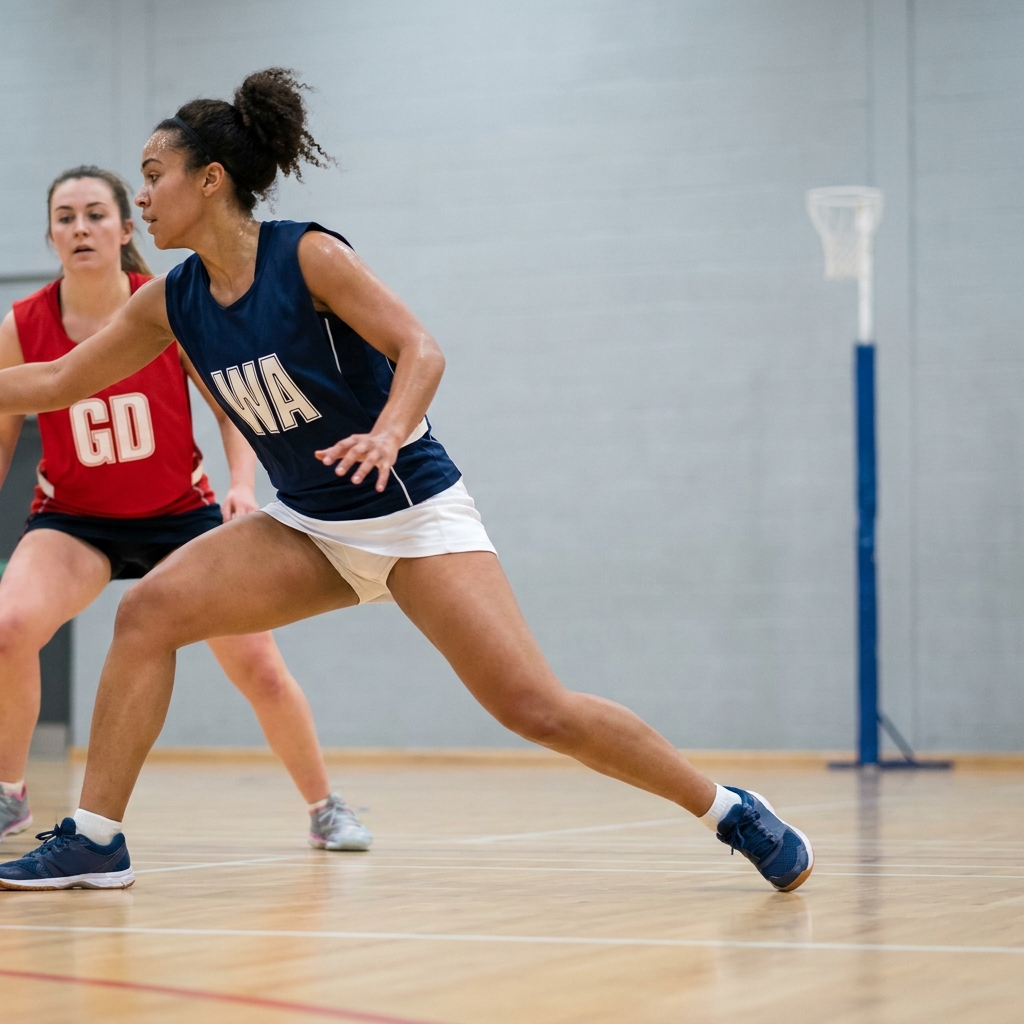
Tight markers win when attackers run in straight lines. Teach your players to dodge, change pace and time their drive so they get free when the ball is ready.
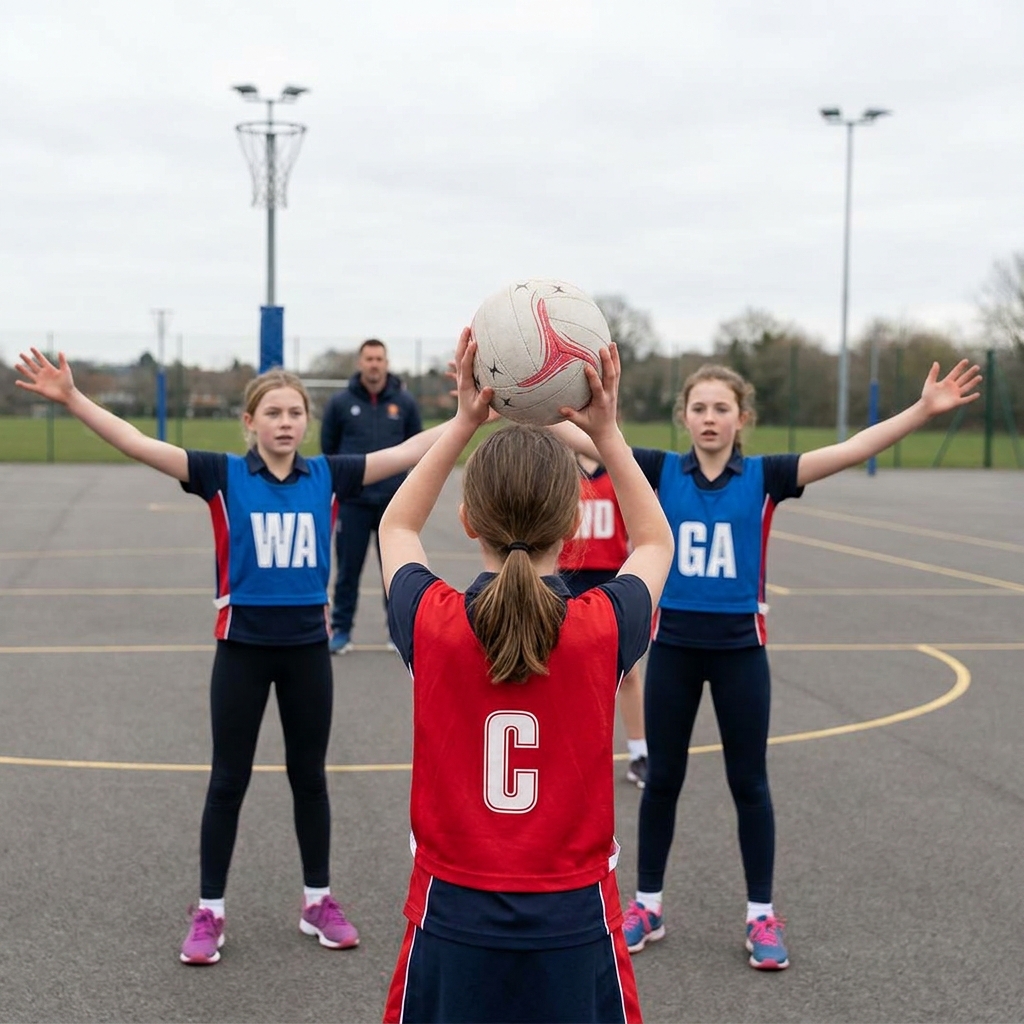
When everyone chases the ball, nobody is free. Teach your team to spread out, offer two options and clear space so the ball moves cleanly down court.
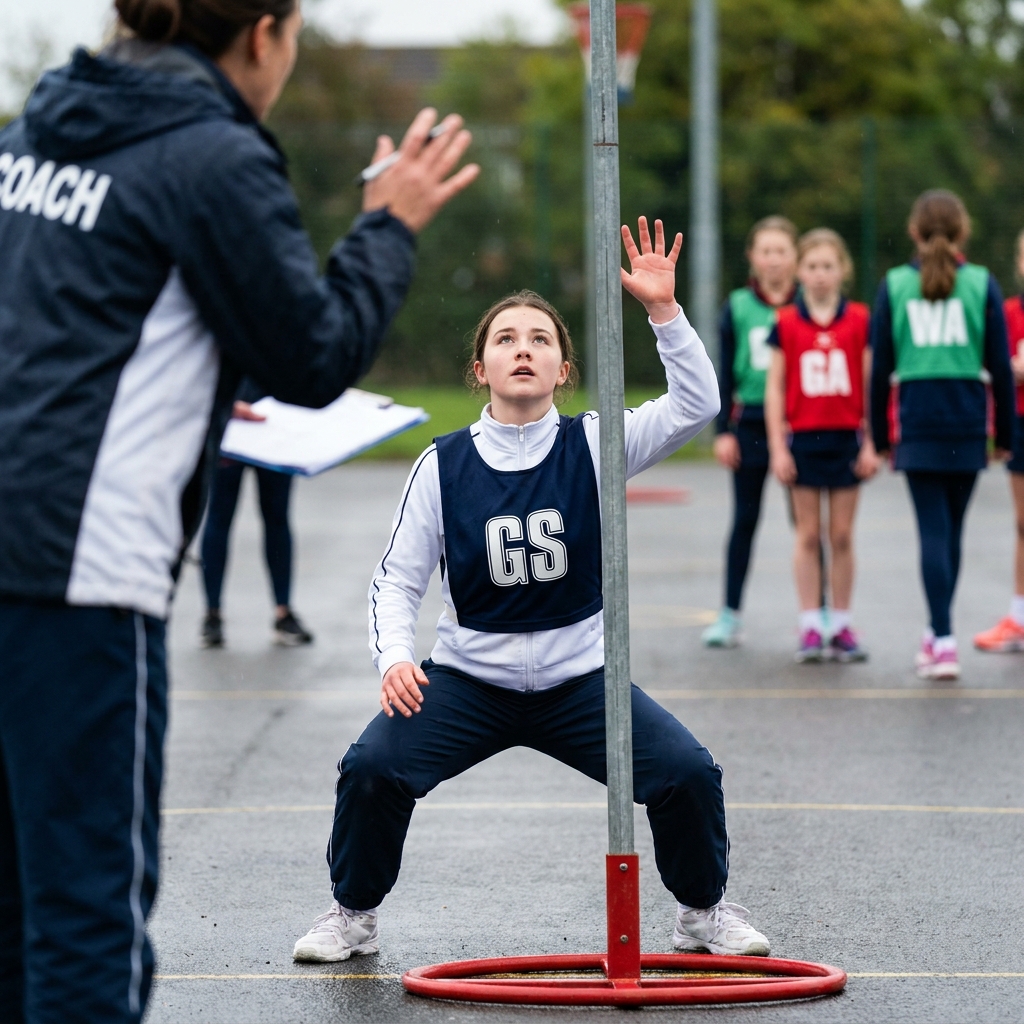
A shooter who can hold a strong position under the post is worth more than one who runs all over the circle. Here is how to coach body shape, a legal hold and a well-timed release, and how feeders make the most of it.