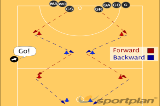
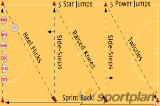
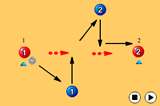
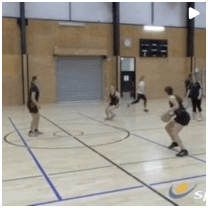
Split players into pairs with 1 ball between them and set up as diagram (half a third each if available).
Black C is the feeder and has the ball. The white C is the worker and will be working for 2 minutes and will then swap roles with the black C.
The worker works for 2 minutes trying to complete as many circuits of the star as possible in the 2 minutes.
The feeder can only pass the ball to the worker when they are driving forwards to start with.
The worker needs to ensure that they push off their outside foot to change pace and direction when driving towards the feeder.
The worker needs to have their head up and on their toes at all times ready to receive the ball. Keeping their eye on the ball.
The feeder needs to ensure that they don't pass the ball to early or too late (worker should not be stood still waiting for the ball). Timing and accuracy of the pass is paramount.
For the less advanced:
For the more advanced:
in more ways than one
 sportplan_netball

in more ways than one
sportplan_netball
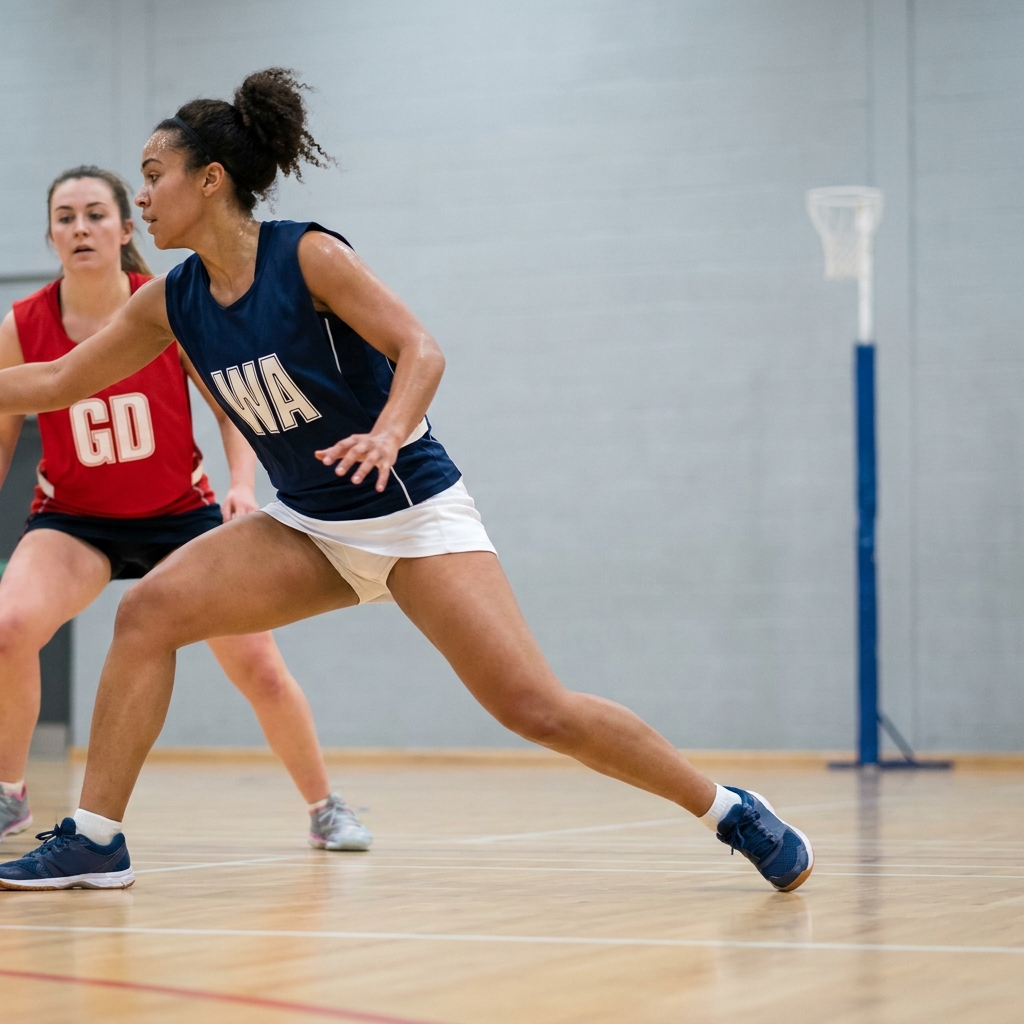
Tight markers win when attackers run in straight lines. Teach your players to dodge, change pace and time their drive so they get free when the ball is ready.
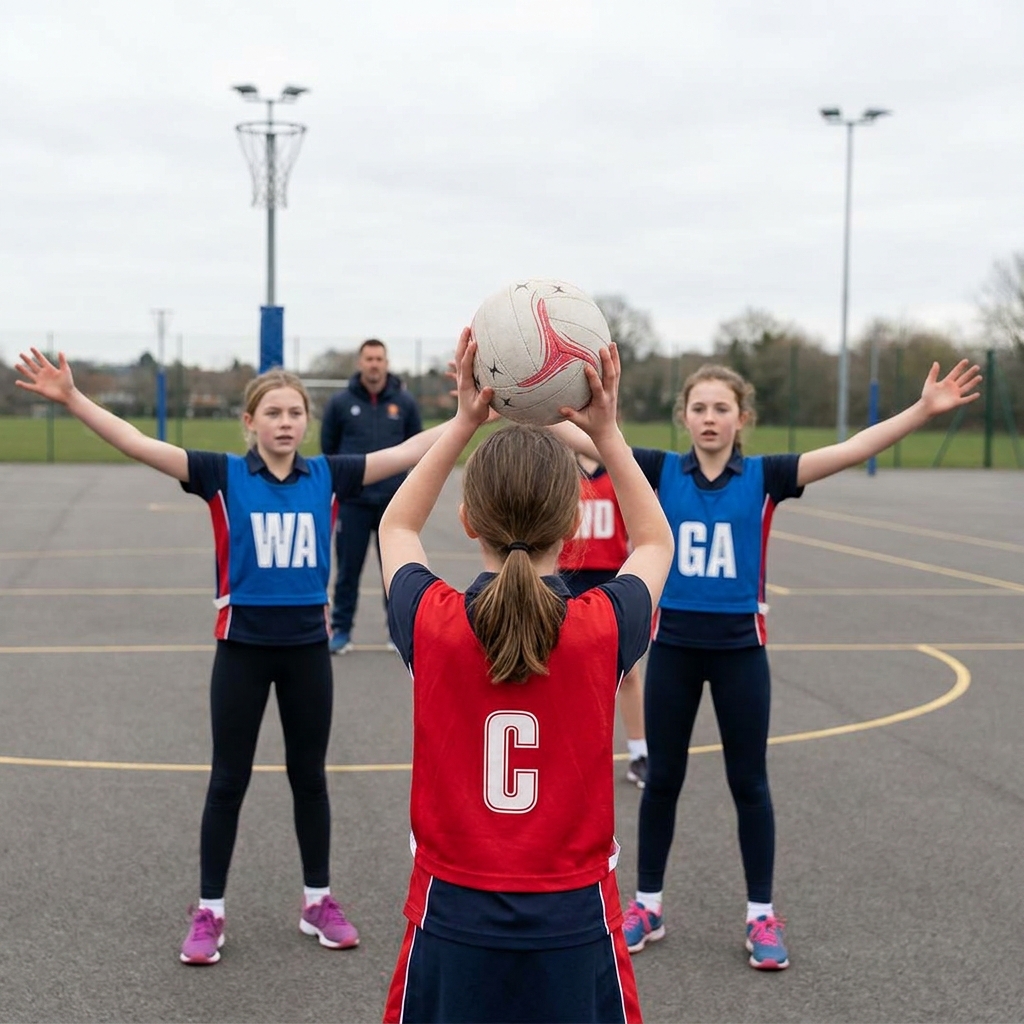
When everyone chases the ball, nobody is free. Teach your team to spread out, offer two options and clear space so the ball moves cleanly down court.
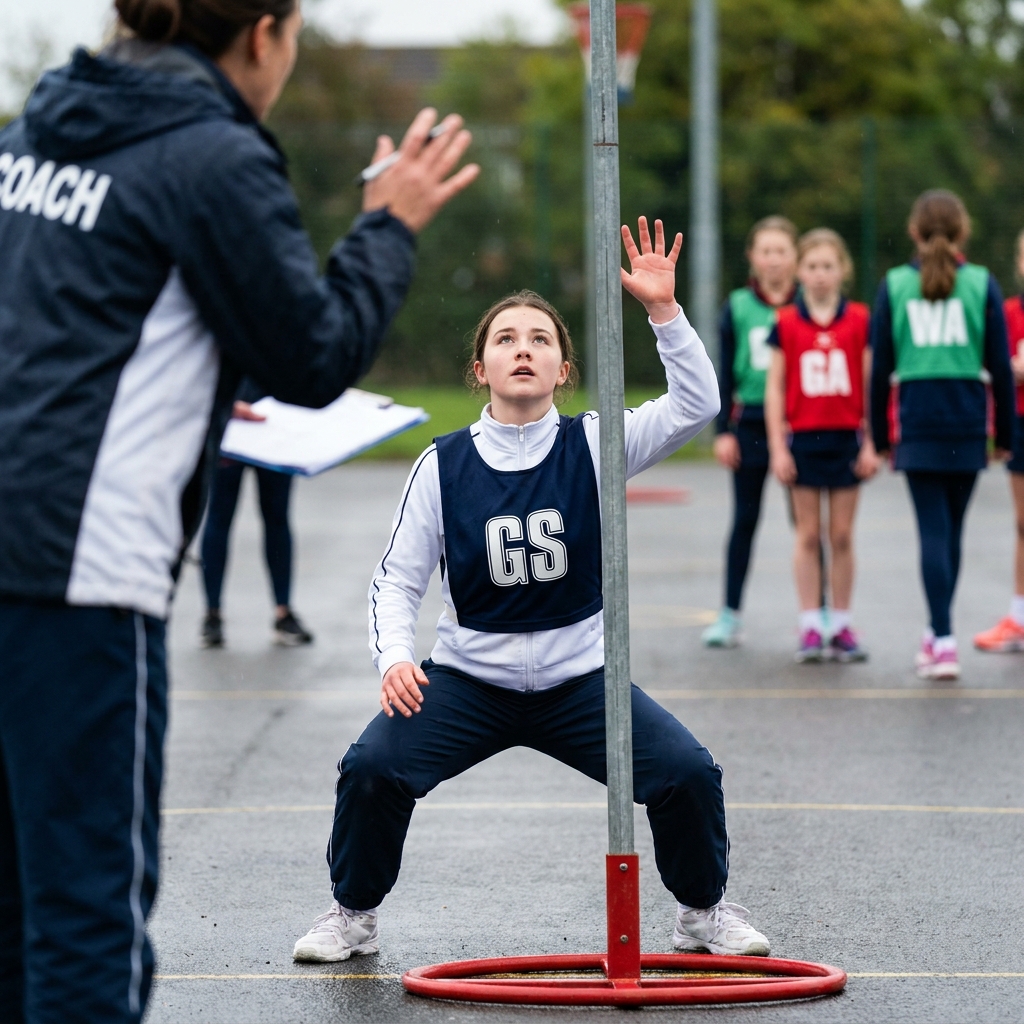
A shooter who can hold a strong position under the post is worth more than one who runs all over the circle. Here is how to coach body shape, a legal hold and a well-timed release, and how feeders make the most of it.