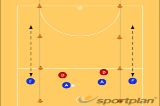
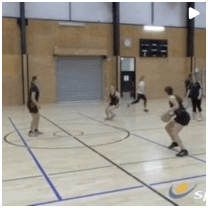
Have 2 feeders positioned on the third line about 5m apart.
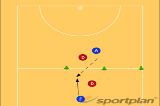
An attacker starts just off the semicircle, with a defender behind them.
Feeders pass side to side and the defender repositions to the ball side but still behind the attacker.
Within 3 passes from the feeders to each other the attacker moves around the circle edge to become a forward option.
Defender keeps repositioning behind to stop the attacker getting deep or on circle edge.
Points:
If Attacker receives the ball off the circle edge = Defender gets a point
If Attacker receives the ball on the circle edge = Attacker gets a point
Keep score out of 5.
Defender:
Notes:
If the attacker is dictated off the circle it forces long lifted feeds in.
Therefore the defender can use 2nd stage defence of arms over pass.
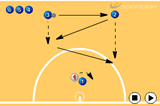
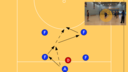
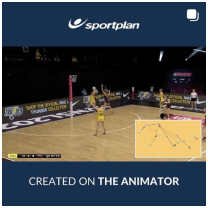
A second defender (D2) can be added behind in the semicircle
D1 is still behind the attacker and forcing high (off the circle edge) - dictating the attacker to stop her getting to the circle edge.
If the attacker is high, D1 commits to intercept. If the attacker goes deep then D2 can fly out to pick up the defending.
Timing: Defenders should go on the ball release

in more ways than one
 sportplan_netball

in more ways than one
sportplan_netball
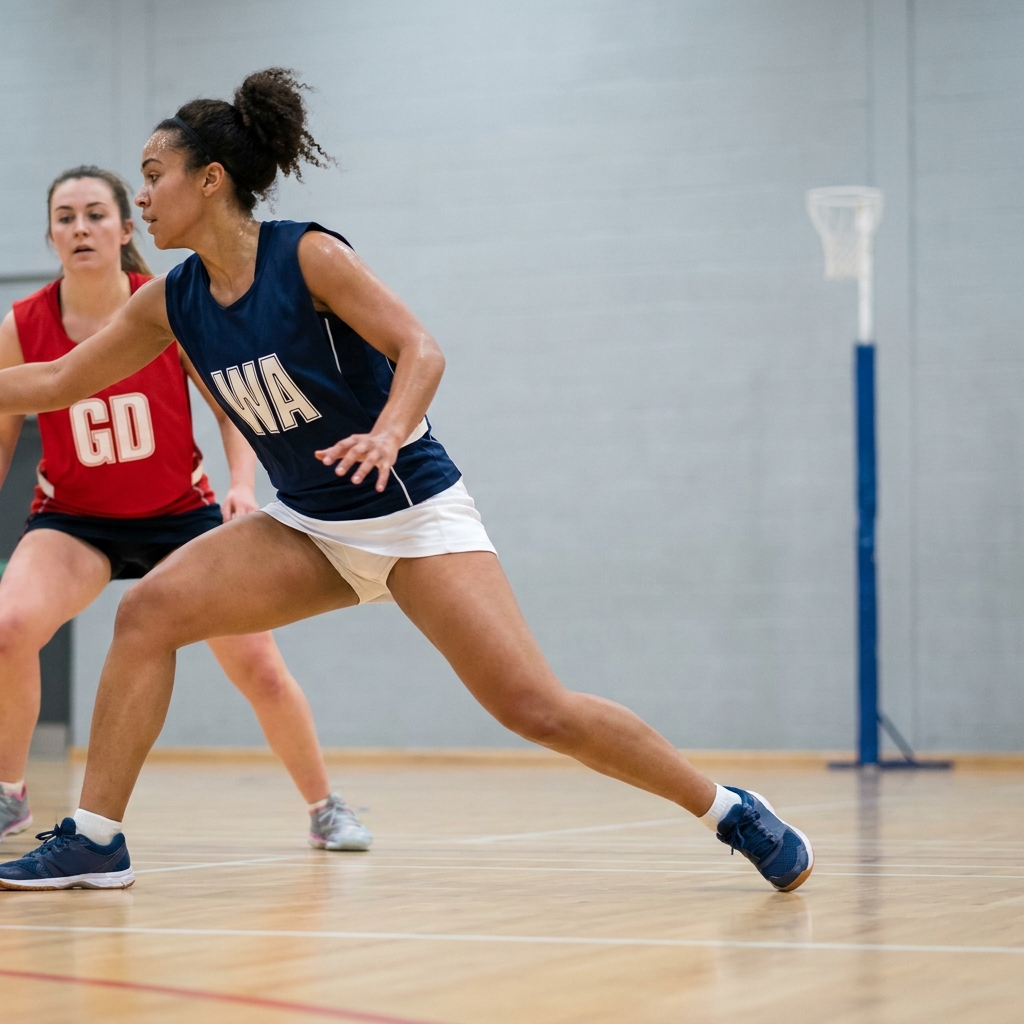
Tight markers win when attackers run in straight lines. Teach your players to dodge, change pace and time their drive so they get free when the ball is ready.

When everyone chases the ball, nobody is free. Teach your team to spread out, offer two options and clear space so the ball moves cleanly down court.
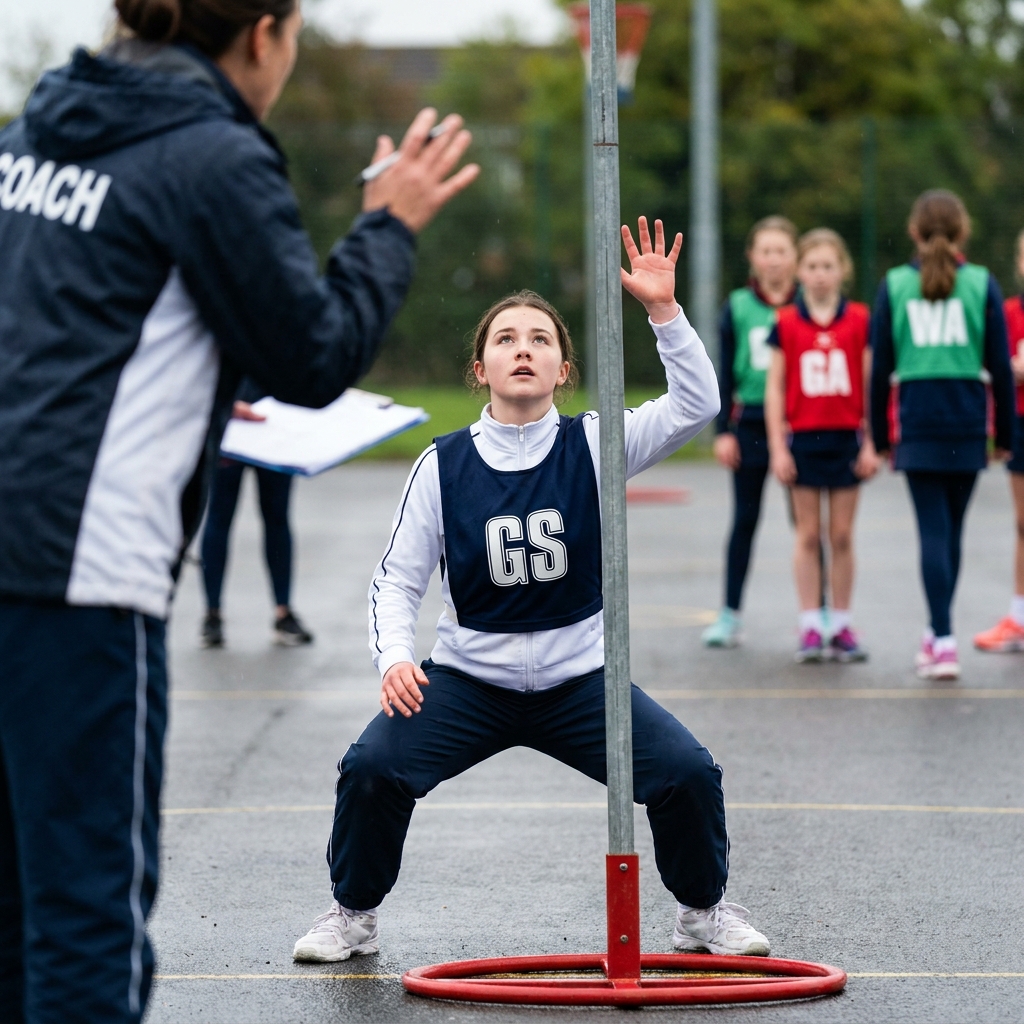
A shooter who can hold a strong position under the post is worth more than one who runs all over the circle. Here is how to coach body shape, a legal hold and a well-timed release, and how feeders make the most of it.