Rugby: defence games

June 2026

If you watch the data, restart kicks happen more often than any other set-piece in a modern rugby match. A Six Nations game produces around twelve to sixteen restarts, more than the average lineout count and far more than scrums. Yet most teams - especially below elite level - still treat them as an afterthought. That is the gap top coaches are now closing.

The phrase "restart is the third set-piece" has become a coaching slogan in 2026 for good reason. The team that wins the restart battle controls field position, momentum and the opening sixty seconds of every passage of play. Conceding a try and then conceding the restart immediately afterwards is one of the most common ways to lose a match.

Why Restarts Are Suddenly Critical

Two things have changed. First, kickers have become more accurate. Restarts now land precisely on the 10-metre line and in the 15-metre channel, contested by tall, athletic chasers who jump for the ball. The days of a 22-metre dollop into the middle of the pitch are gone.

Second, the reward for retention has grown. With modern attacking shapes, a team that retains its own restart is straight into structured phase play in the opposition half. A team that loses the restart is defending in their own 22 with a disorganised line. The swing between those two outcomes is enormous.

Building a Reception Pod

Top teams now train a dedicated restart reception pod, exactly as they train a lineout pod. The pod typically has four roles, and every player must know which role they have before the kick is taken.

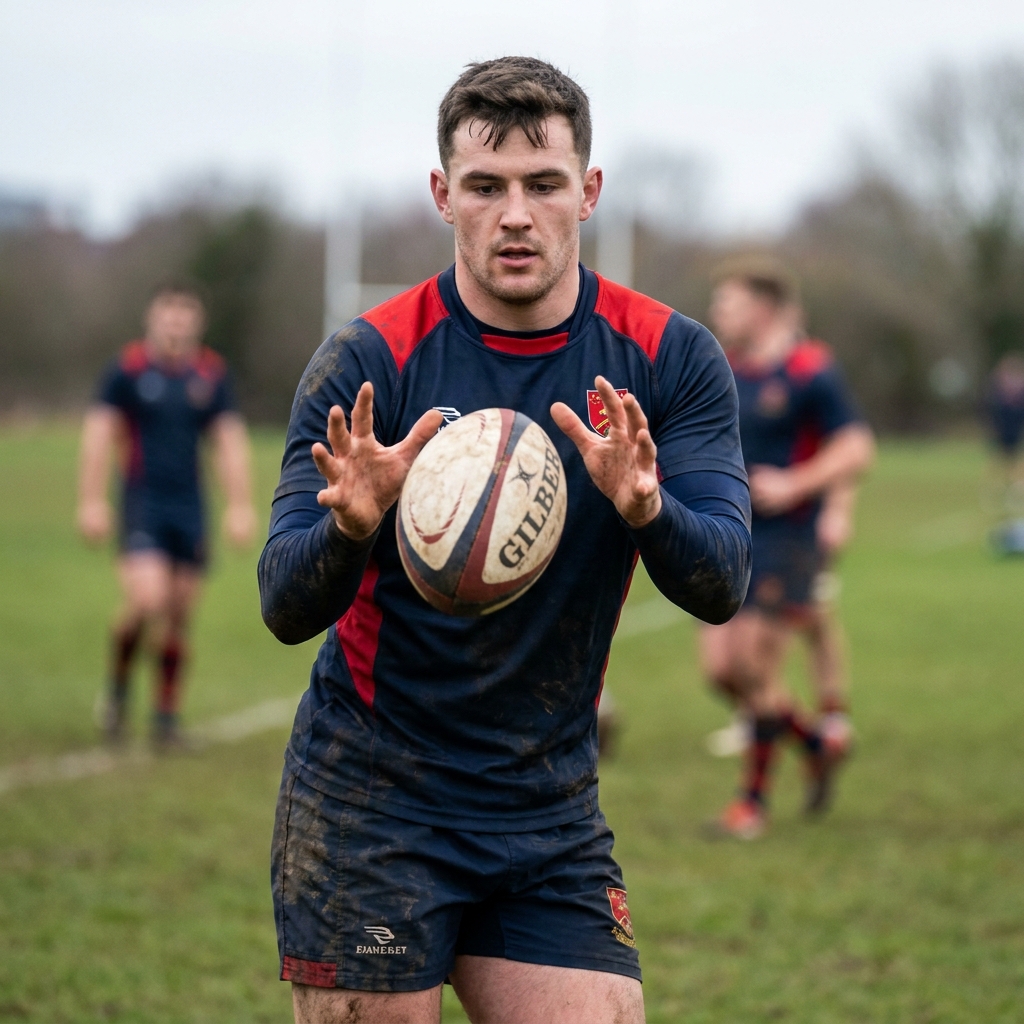
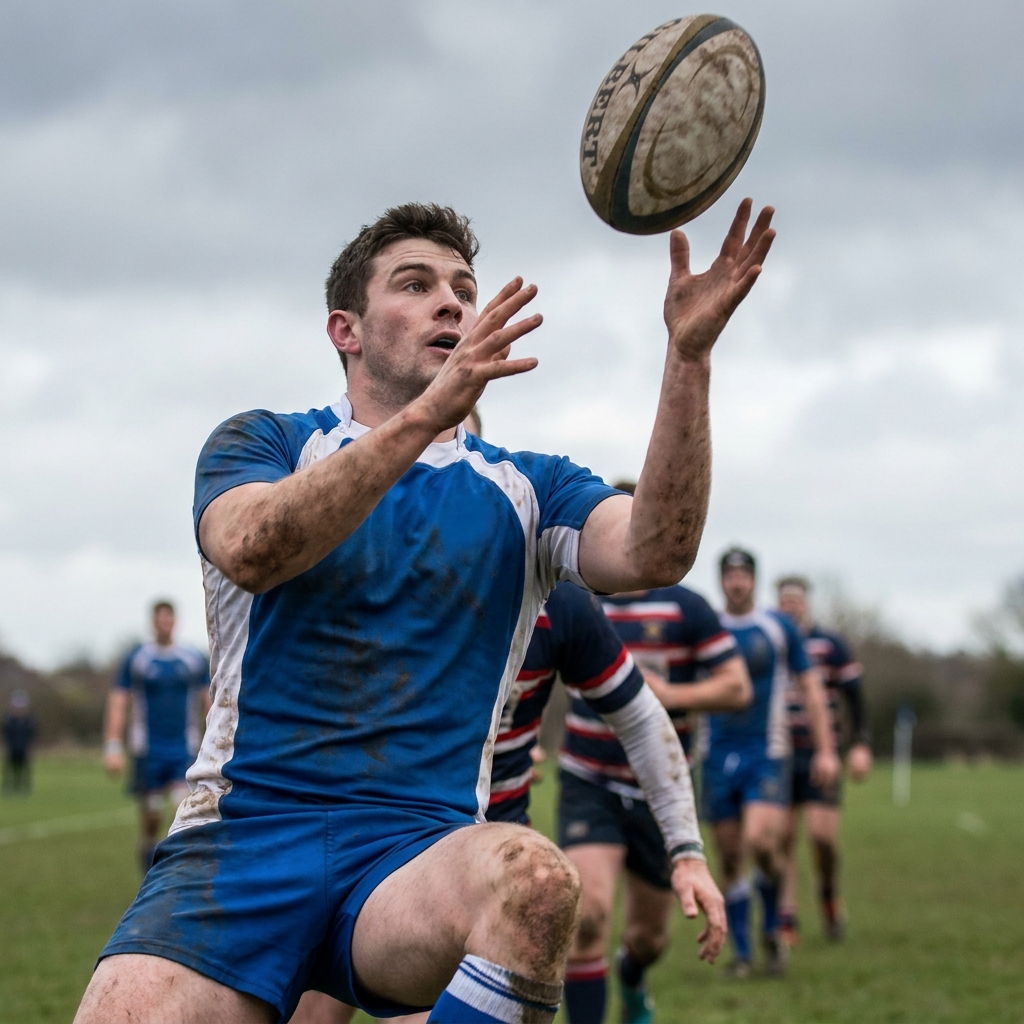
The catcher: Usually a lock or back-rower, chosen for height and timing. They call early - "mine" or the channel number - and commit to the catch.

The lifter: A prop or hooker who arrives at the catcher's side, hands ready, to give a lift on the contested ball. Lifting is legal at restarts and dramatically improves your win rate against good chasers.

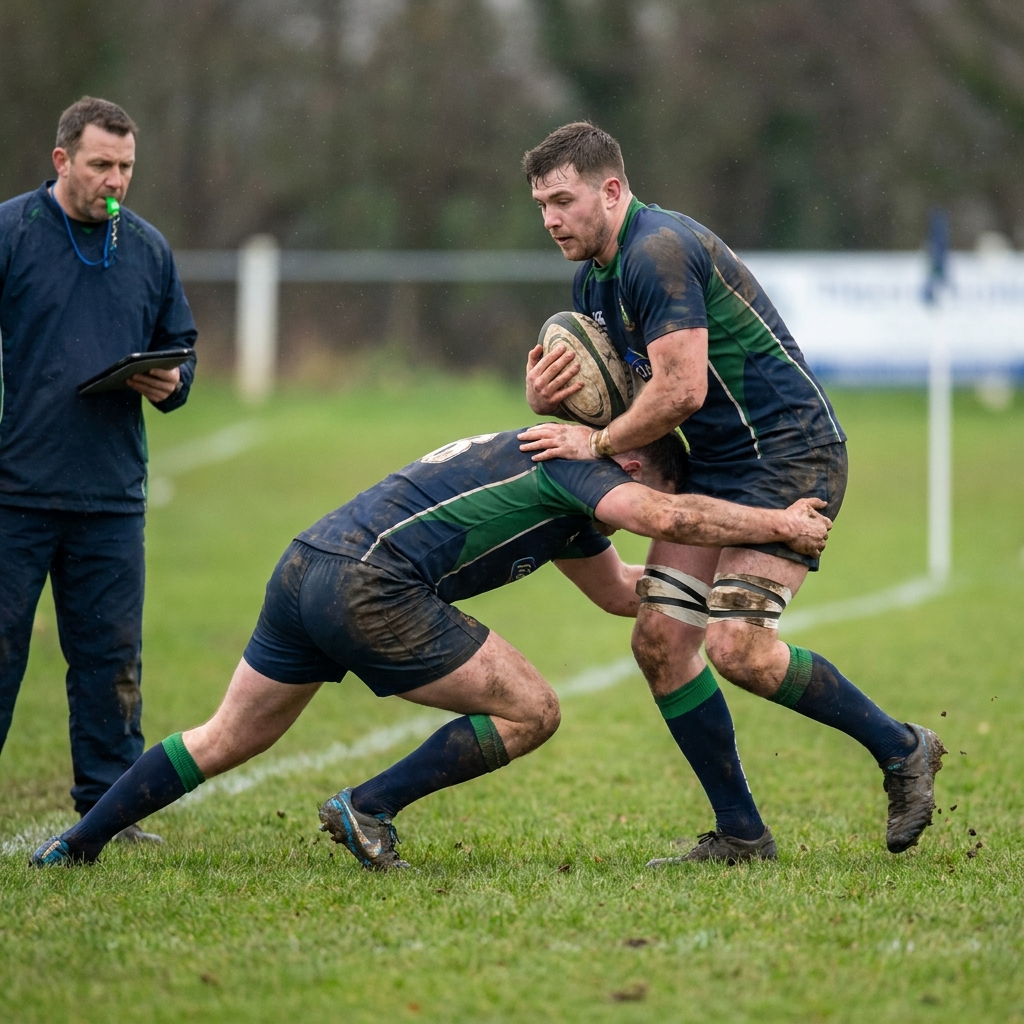
The protector: A second forward who stands between the catcher and the chase, taking the contact if it comes and forming the first ruck cleanly.

The exit option: A back, usually the fly-half or full-back, in position to receive the next pass and either kick to touch or launch a counter.

How to Coach Restart Reception

Restart skills are perishable. Train them every week, even if only for ten minutes. Build the session in three blocks.

Block 1 - Catching under contest (5 minutes): One coach kicks high balls from the halfway line. Your designated catchers work in pairs - one catches, one acts as a chaser jumping to contest. Rotate every two reps. The focus is timing the jump, not winning every ball.

Block 2 - Receiving as a unit (10 minutes): Full pod of four sets up. Coach kicks restarts. Pod must catch, secure, ruck and recycle clean ball to a back. Add an opposition chase line of three after five reps.

Block 3 - Restart-to-exit scenarios (10 minutes): 12v12 or 10v10 game starting from a restart. After receiving, the team in possession has one rule: get out of their own half within three phases. This trains the link between reception and territorial exit.

Attacking Restarts - The Other Half

Receiving is half the picture. The other half is recovering your own restart. Modern restart kicks are aimed at one of three landing zones: short on the 10 (5-7 metres beyond the kick mark), mid-deep at the 15-metre line, or long into the far corner. Each option requires a different chase pattern.

The short restart is the highest-percentage recovery option but the hardest to execute accurately. Reserve it for moments when you genuinely need the ball back - after conceding a try, with time running out, or to disrupt a stronger opponent. Drill the kicker until they can land a restart in a one-metre window on demand.

Key Coaching Points

  • Restarts are the most frequent set-piece - train them weekly
  • Build a named reception pod with four clear roles: catcher, lifter, protector, exit
  • Lifting is legal at restarts - use it
  • The exit kick after a clean catch is as important as the catch itself
  • Reserve the short restart for moments when winning it really matters

Recommended Drills

VIEW ALL KICKING DRILLS

defence games DRILLS
View All

Attack Vs Defence Continuous D...

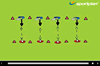
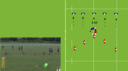
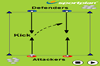
<span style=&quot;background-color: transparent;&quot;>Set a cone 2 meters from the defensive line. This will mark where the ball will passed from (feed) preferably from a scrum half.<span style=&quot;background-color: transparent;&quot;>Set a cone 0.5 meters each side from the mid point of the passing cone to simulate the sides of the ruck.<span style=&quot;background-color: transparent;&quot;>Set a cone a cone 5 meters from the ruck on the defensive line. 4 players start as attackers3 defenders start on their stomaches on the other side of the defensive cone (ruck) and 1 player on the defensive cone 5 metres from the ruck<span style=&quot;background-color: transparent;&quot;>The player on the 5 meter cone (defence) starts the drill by shouting ‘FOLD’ (or whatever call your team may use).<span style=&quot;background-color: transparent;&quot;>Defenders on their stomachs get up and fold around the ruck to take up a defence position. Players fold wide first, and ensure that 2 players are close to the ruck (Guard and Body Guard). <span style=&quot;background-color: transparent;&quot;>The player on the defensive cone bounces out (takes space in the defence line), the first player who folds takes up a position on the 5 meter defence cone (or inside the first attacking player)<span style=&quot;background-color: transparent;&quot;>Once the defence line is set the scrum half can pass the ball.<span style=&quot;background-color: transparent;&quot;>The attackers work to beat the defence, setting up a 'tip' (running a hard line) and 'pull back' option. They should read the defensive movements and make a decision to hit the tip option or pull out the back<br><br>

General

Unfortunately there were no results for your search! Please try again
defence games ANSWERS
View All

I am familiar with field positioning, play, and stategies?

I am familiar with field positioning, play, and stategies for the fowards but can anyone give me advice on how to pick a good flyhalf and scrum half. Also how to train them on making the best decisions on the pitch, for example when to pass out wide, how to relieve defensive pressure, when to kick, etc...? My backs are still new to rugby. Some have less than a year's experience and others are brand new to the sport.

William Barrett Coach, United States of America

any suggestions on getting u 13s to communicate

any suggestions on getting u 13s to communicate

Archived User Coach

just signed up to coaching under 6s,would like to hear?

just signed up to coaching under 6s,would like to hear what exercises / "drills" work best aside from making sure they all have a laugh?

Archived User Coach

Under 10 - Pre Match Preparation

If you have 30 min before the start of a match how should you prepare a team of under 10 players. How do you get them suitably motivated to hit the ground runnung with a high level of intensity.

William OBrien Coach, England

Scoring tries - habit?

Why is it important to get players to score the try when completing a handling/running drill?

Archived User Coach

I am coaching the U11 this season. There are some significant?

U11 Rugby I am coaching the U11's this season. There are some significant rule changes from U10. Please can I get some advice on what lessons were learned from coaches who have been through a similar experience.

William OBrien Coach, England

Outside Centre attacking game .. how do I get a player to make this position his won?

Outside centre attacking game .. how do get a player to make this position his own?

Archived User Coach

problem- slow start at 7s games

I coach a womans 7s team. Every two weeks we have a two game tournament. The problem is that for the whole first game the girls play like they haven't woken up yet, and only in the second game their real rugby comes out. How do I help them play strong from the start?

eli Coach, Israel

u10 rugby practice sessions. How to get them match ready

How does one coach u10rugby? I know this is a very broad question but I am looking for various ideas. At this age they do no have rugby knowledge and spacial awareness that becomes inherent at older age groups. Because of this I am finding it hard to get the maximum out of practice sessions because most of the time you are trying to educate the players as to where to stand and correct techniques etc Which interrupt game play and practice? Any advice ?

Archived User Coach

U10s organisation in defence. ...

I have started an under 10s team up, and I would say about 8 from the 13 children I have , did not play rugby until about 6 months ago. Of these players, there seems to be a lot of potential, as we are scoring tries against teams, that very rarely concede tries.the problem I got with them, is that we are very poor at organising our selves in defense when the opposition has the ball, which does result in us conceding quite a few tries. We have some very good tacklers in the team. Can anyone offer some ideas on how I can get them to organise themselves? Thanks . Chris.

christopher jenkins Coach, Wales

Looking for drills to improve ...

We have recently formed a new under 10s team. Out of the team , roughly half have played before, and the other half are new to the game. We played Sunday and were well beaten , although the side we played has a very good reputation for being a good side. I do see promise though in our team, it's just the organisational side that needs attention. Example, keeping our players from bunching, realigning in defence, etc. after doing the coaching course, I am we'll aware of trying not to pigeonhole players into positions, but I think they need this to help them organise themselves easier. Are there any drills to help with the above? Cheers, Chris.

christopher jenkins Coach, Wales

Blindside position - I'm new t...

This is my first year playing on a rugby team for my school, grade 9, im much smaller than everyone else but i run fast and can be strong. my position is the blind side wing, and i dont understand what im supposed to do. it seems like i just jog and stay far away, but i dont know what im supposed to do if someone from the opposite team comes near me and noone else is one them, am i supposed to tackle? i also have trouble tackling cause my arms dont rap fast enough when they run into me, any advice?

Archived User Coach

Getting 9-10 year olds to spre...

Getting quite frustrated that my u10's are not using the space on the pitch and tend to bunch up. Despite various drills and game scenarios to force them to spread out and pass to someone in space they revert in any game to bunching up around the ball and taking it back into the thick of the opposition rather than looking left or right! Any ideas how to change their ways?

Ian G Coach, England

Improving game awareness. How ...

Improving game awareness. How can I improve players insight into "what happens next", besides by whatching (games)? Players tend to be fixed on the ball(situation) and seldom look at what is in front of them%3A how can I stimulated them to take time to quickly look around and assess the situation?

Yvonne Bouman Coach, Netherlands

First time coaching the U13s n...

I have just started helping our head coach with under12's team. He wants to retire and has put me forward to be head coach next season. I am a little worried on how i should aproach training with the boys, going to a full 15 a side team on a full pitch. Any ideas would be greatly appreciated.

Archived User Coach

Position discipline! - Sportpl...

I am a coach with an under 10 rugby side. Last season the team found it hard to stay in their positions (acting like a swarm of bees). Can anyone suggest how i can get them to stay in positions, particulary our backs.

Lindsay james Coach, England

How can I improve my team's li...

How can I improve my team's line speed in defence? Are there any drills which can help me?

michael klieve Coach, England

Tackling nerves - I coach 10 y...

Tackling nerves - I coach 10 year old boys. Some are very nervous about being hurt when tackling opponents although the same guys are like lions with the ball in hand. As a result our defence suffers. We have tried hammering home the correct technique to give confidence but to no avail. Can anyone suggest any psychology or drills I might try?

Archived User Coach

(U11 Rugby) - How to referee t...

I'm coaching and reffing U11 rugby and one of my players is the definitive 'big lad'. His 'strength' is his size and his power, but last weekend he didn't seem to get reffed fairly. The opposition couldn't tackle him down, one on one and when another two joined in to make a mini maul, that didn't slow him down much either. The ref then let other people join in the (one sided) struggle to tackle him down, which seemed very unfair as A) it's outside the laws of U11 rugby,, B) it makes it nigh on impossible for him to offload, C) when he is brought to ground, he has 4-5 players all over him and he got pinged for 'holding on'. He is a recent arrival to rugby and it was our first game for a couple of months, so the situation hadn't reared his head before. We are keen that he learns all of the core skills of rugby and doesn't get used as a battering ram, but after seeing a pack of hyenas trying to pull down the big fella, something just didn't seem right to me.I'd be grateful for any thoughts and opinions.

Archived User Coach

JOIN SPORTPLAN FOR FREE

  • search our library of 1100+ rugby drills
  • create your own professional coaching plans
  • or access our tried and tested plans

Sportplan App

Give it a try - it's better in the app

YOUR SESSION IS STARTING SOON... Join the growing community of rugby coaches plus 1100+ drills and pro tools to make coaching easy.
LET'S DO IT