I have thoroughly enjoyed using your site to help me with my coaching plans for my under 9's netball team.

what is the best tactic or strategies to use to bit the opponent defence?

We are playing in n a grand final this week and the opposition has a very tall GS and holds very well. I am thinking of getting my defences to double team her but wanting to know best way to teach this & also what's the best way of stopping the GA (just getting WD & c to try & block her getting in the ring) any thoughts on best way to beat a tall shooter. The girls are 13 but played a lot of netball. Thanks

what is best defence strategies to use to block all the way for opponent and intercept or still the ball?
Ask a question and have it answered by Coaches from around the world and Sportplan's team of Experts.
Defending the Throw In. On the weekend, the opposition had a set play (on some occasions but not all the time). GK was throwing in. The GD, WD & C all gathered between the centre and the 1/3rd line, closer to the 1/3rd line. Each of them broke at different times. 1st GD leading left, then WD leding right and C down the middle. This week if they do that again, I think I will not have my GA/WA/C next to the girls, but 4-6 ft in front of them waiting for the leads on the angle to watch the leads and the throw in. Any other suggestions? we play that team again this week!!
I am looking for some advice on being a better GD. Any advice out there will be greatly appreciated. Also some strategies on the defense side for GK, WD. Question submitted from "Sportplan Netball" on Facebook, by Inge Kruse.

Would like some advice as to how to coach defenders to defend a shooter who holds to protect space? Any advice would be appreciated. Thank you.
(I dont usually play WD,so i`m still getting used to the position.When defending the WA at the centre pass, should i be on the inside or the outside of my player on the line?). How do i defend on the goal circle and try and get intercepts?when should i leave my player and try and go for an intercept?
What is the best way for players 11-13 to mitigate the affect of open players using their elbows. It is brought to the umpires attention and they do their best. However, I have in the last few weeks heard 2 different coaches (when I was observing games - hence I could hear the coach) give instructions to her players to "use elbows and intimidate". Seems a growing trend based on what a lot of players are doing on court in a range of teams. Defensively my players are starting to shy away from staying close to their oppn player. When on attack - I tell them to keep moving so the oppn defense can't set up on them and use the elbow. The poor GS particularly is getting really knocked about a lot of time as she is trying to execute a hold sometimes.
Hello - i am looking for a few GD tips on the best way to defend a shooter that receives the ball a couple of ways as i always struggle to get around them when they do these moves! First way is that the shooter lunges out very wide (practically doing the splits) to receive the ball from the feeder on the circle edge and steps back closer to the net with the foot that is closest. I can defend her getting close to the net, but then she turns to the feeder and jumps and splits - thus always ending up close to the net. The second way is when the shooter stays quite stationery under the net, a couple of foot off the back line and holds her space there. she receives the ball by a large over head pass, so she steps back slightly on one leg to receive the ball from the feeder. what would be the best way to defend all the large overhead long passes to her, or draw her out? any help or some ideas i can try would be great! thank you :-)
I coach 16 and 17 yr olds, so they are more than capable. I have one girl who already knows what do but her explanations are terrible and I dont know how to explain it to the rest of the team.
Can a Defender hold up another defender? appearently one of my under 15's had seen it during a game
I coach a group of girls aged 14-16 in an intermediate division. i try and coach them so it will be their skills that will win them the game, and to play fair and skilfully. unfortunately this doesnt seem the norm. i am disappointed in the number of coaches today teaching kids to push, trip, elbow, lean, and without any regard to the fact that this is being done to children, who could get injured by their tactics. i understand, playing hard but fair, and contact is part of the game, as it is a physical game, but these a tactics that are being taught. has anyone come across this, and what is the right way to handle it, as the umpires dont seem too keen to put an end to it. (even when asked to). looking for all sides of this discussion.

How is the best way to defend a GS who is a foot taller than the GK and can hold faily well (and no exageration I have a very short team so putting a different defender wont change much )
Any tactics for a netball goalkeeper?
Our School netball coach resigned last night. I am an assistant coach for soccer, coach for volleyball, assistant coach for basketball and now will be a caretaker for our netball team due to play finals tomorrow. What drills and tactics can I use today at training to prepare them for a school tournament finals tomorrow?I need your prompt assistance please
Which tactics should I teach for GCSE Netball?
My GD was do face marking in a game and doing a fantastic job at blocking the GA entering the circle and not being able to shake her off, the umpire for the other team repeatedly called her for intimidation.To me it did not appear to be intimidation and the player herself umpires and sees this in many of the high level games. She is not pushing, no arms are used in fact it is the other players pushing into her. Is this intimidation I thought that was a pretty tough call. What constitutes as intimidation?
My U11's are playing an agressive team in our Grand Final. They physically hurt my team who come off, upset and even crying during the match. They make use of elbows, stepping on toes, bumping etc. How do I help my team find the confidence in playing such a team??

My teams is playing opposition this week who has a very good GD who is a master floater. Last time we played them we played into her hands and lost by 2 and I want to have a few tactics for this week.We also had a young player fill-in WA last time which didn't help as she was unfamiliar with our team. I was trying to get the players to look for our GA who was often free but I think she was playing too close to the goal circle which made things a bit crowded. I think also that once my players realised what the GD was doing, they started to hesitate on the pass.Our GS is reasonably tall and has a good hold so if we can get a good high pass into her before the GD can drop back that may help.Any other suggestions? Thanks in advance.

in more ways than one
 sportplan_netball
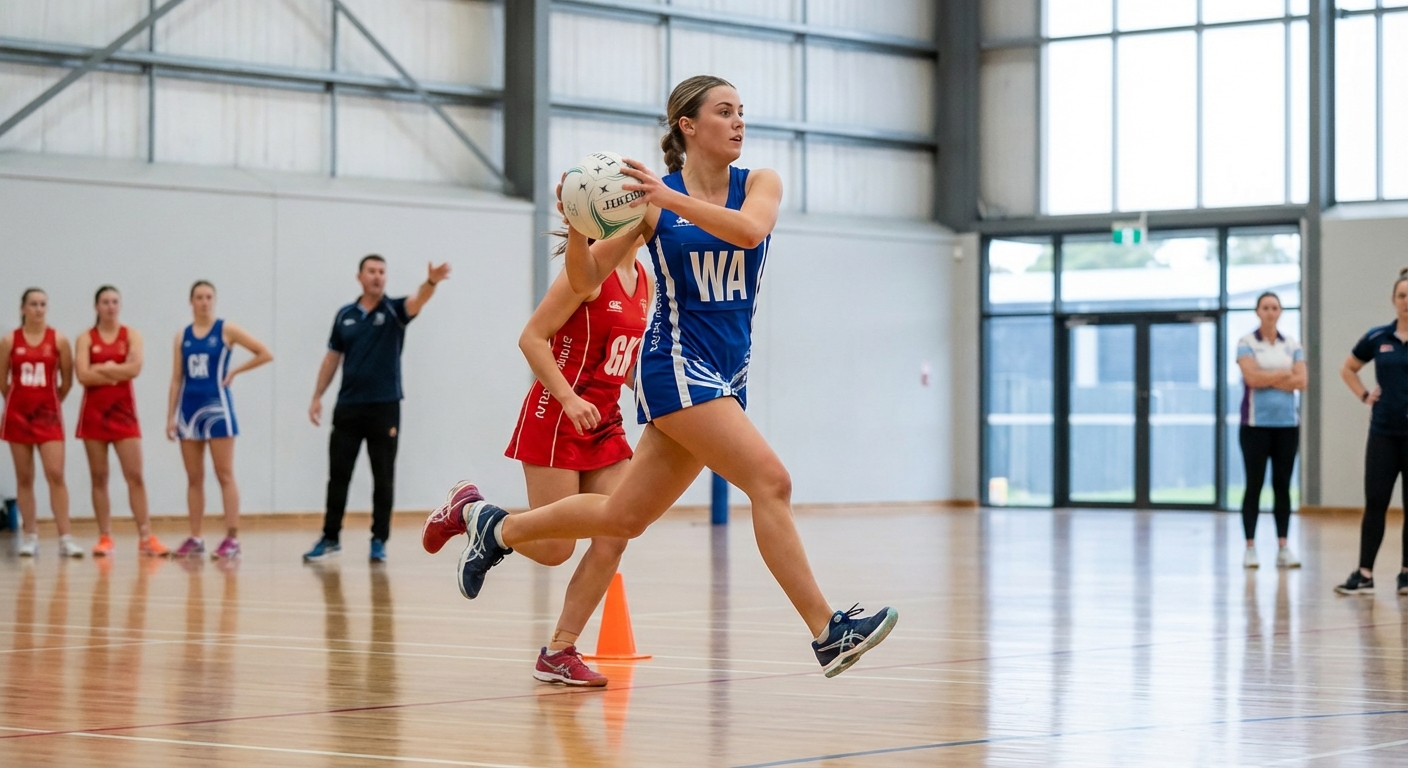
The Wing Attack is the critical link between midcourt possession and circle feeding. This masterclass breaks down the movement patterns, timing, and spatial awareness that separate elite WAs from the rest, with practical drills to develop these skills at every level.
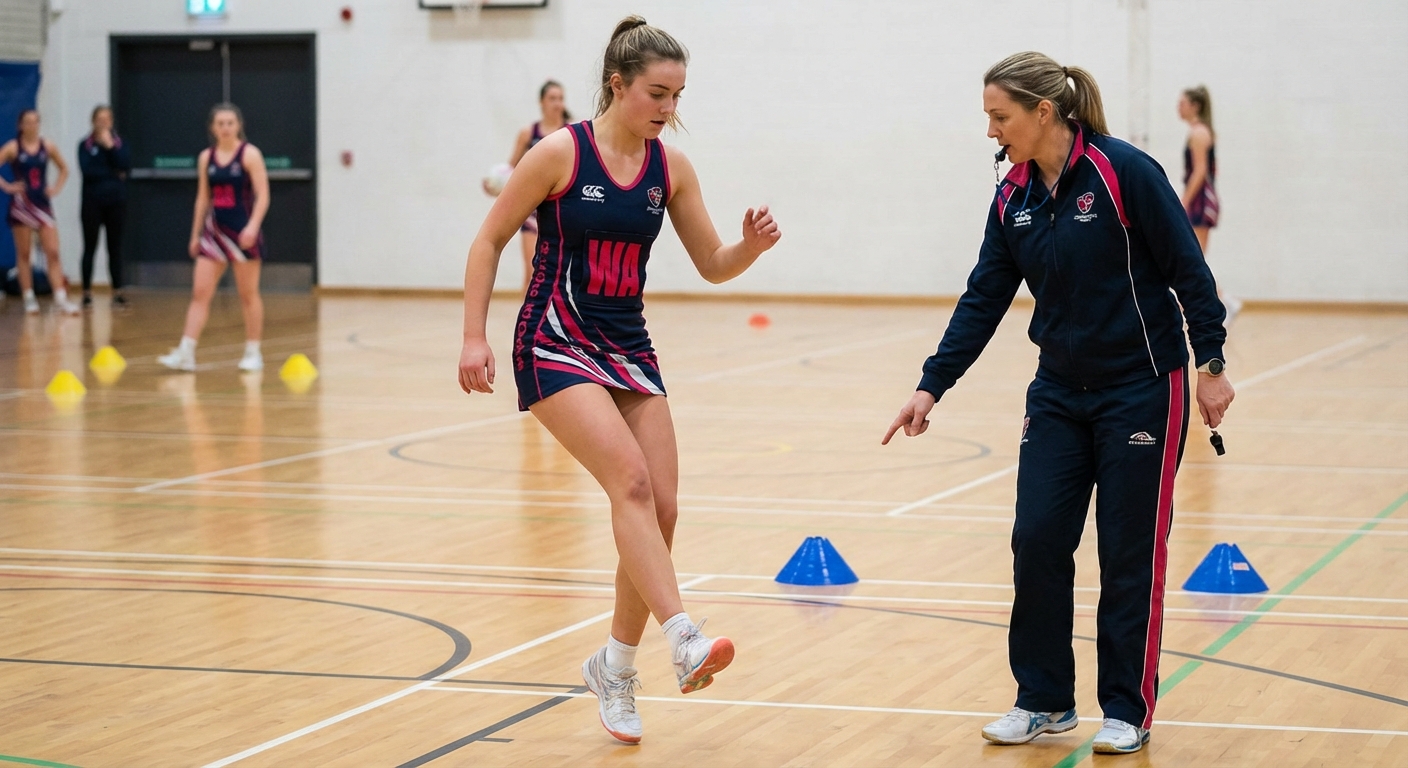
Footwork is the foundation of every skill in netball. This guide provides a clear explanation of the stepping rule, the mechanics of one-foot and two-foot landings, pivoting technique, and progressive drills to build footwork confidence from junior level upward.
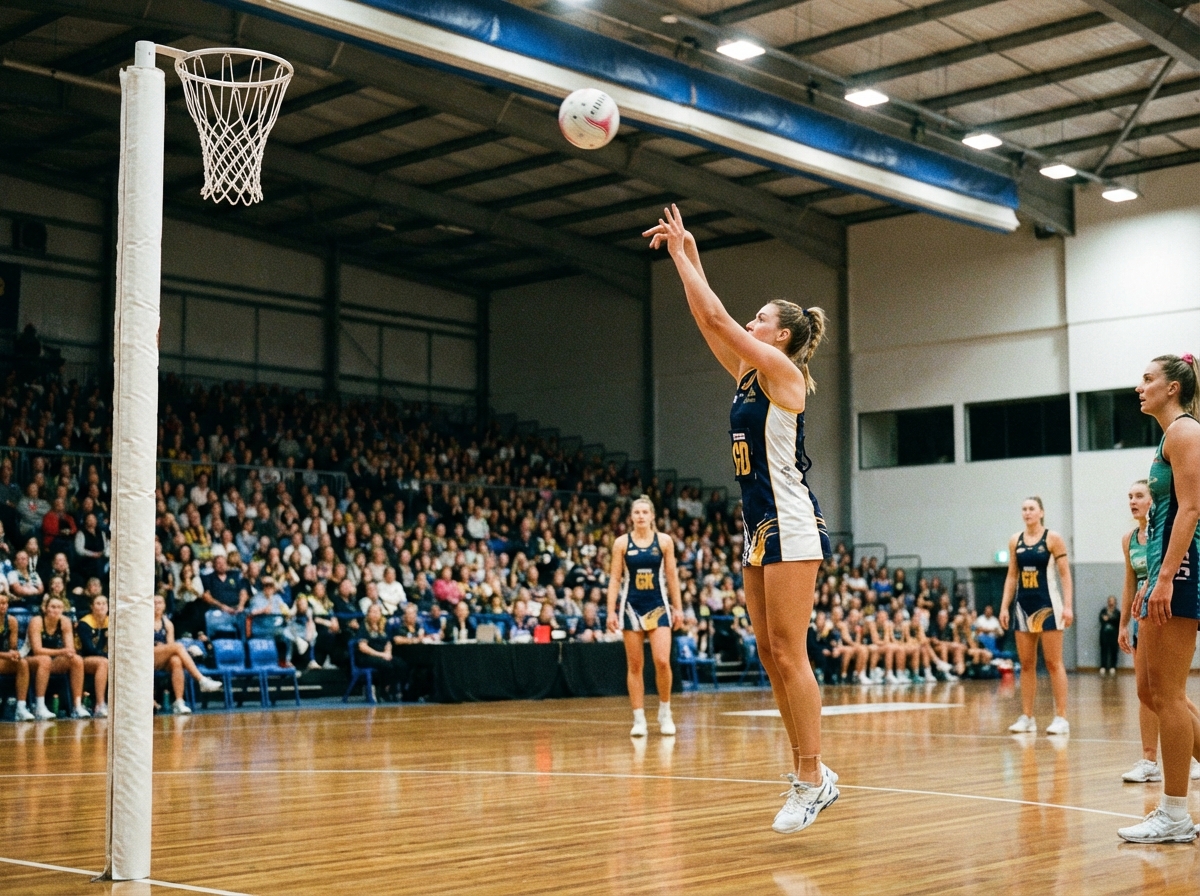
The early 'shoot from anywhere' era is over. Smart teams now use data-driven decision models to decide when the two-pointer is worth it.
Coaches from around the world look to Sportplan for coaching confidence.
I have thoroughly enjoyed using your site to help me with my coaching plans for my under 9's netball team.

I found this service to be excellent and it was of great help when planning my netball training sessions.

Sportplan is fantastic with all the various drills for every area of netball. My confidence as a coach has improved because I have Sportplan to support me.

Wow what a great website, I have found sportplan an important tool for me when planning my netball sessions with my netball team. There are alot of very helpful tips/ideas/skills that I can learn and teach to my team. Thank you sportplan I hope to continue to use your helpful tips and to learn more about improving my teams netball skills. Thanks again....keep it up....

I have been using Sportplan now for 3 years and can honestly say that I have never repeated the same session twice. My girls are always focused and are improving every year. Thanks Sportplan.
What a fantastic tool. The Chalkboard and session tools make an unbelievable difference in making training plans in both time and organization. I will be instructing all of my assistant coaches that this tool must be used for all sessions during the season, so that we may build a club coaching resource library.
I can't get enough of the Sportplan, It has given me back the enthusiasm i was starting to lose. My girls are so keen and are ready at 14 to take the next up in their game. Sportplan will help no end.