








Excellent drills, very detailed videos. Useful site for my U15 boys team.

2 Indoor Hockey situations%3A 1.)Could Sportsplan have Russel lay out how to defend a free hit/push into your circle from the left,center and right? More importantly show how the team moves/shifts when a pass is made from that area of the court to another in this situation. 2.) How to play against a 1/2 court system defense. What should the team be looking to do to find space and be successful.

can anyone give me some field hockey scenarios that i could use for a lesson i will be teaching the pupils in which they will learn through the game and will be stopped and told a scenario and will need to try to work out with their team what they think they should do?
how can I be the perfect defense in hockey.
My son has been given the role of sweeper in a team that has only won twice in two years. He is probably the weakest player in the team. What advice can I give him to think about when playing, so that he can improve and enjoy a personal sense of achievement. In training sessions I have never seen any drills designed to organise the defence which is amazing since the teams ambition is usually to keep the goals against to single figures! Are there standard apporoaches as to how close to be to the player you are marking or which side to stand to stop the attacker getting free with the ball on his open stick?.
Dear colleagues, what are the best ways to defend an attacking team that is playing with a field player with goalkeeping privileges? Te question concerns indoor hockey only.
I have recently taken on the role involving coaching junior hockey players (aged 10-13) who mostly have never played hockey before, and are very uninterested. Their basics are not good enough to play some games. How do I motivate them, and what kind of things shall I do in my session?
Any idea's on new pre game drills? We are now playing the '5' just passing and the last one shoots, but after a few months it got bored. So looking for new drills! Any suggestions?
Please could someone tell me the principles of transferring the ball. I can use the drills on here and some I have already used. However I would like my players to be "able to create own" if they know the princimples
How to improve personal defense ability?
i often feel like i dont play to the best of my abilities. during practices im almost at the top of my game but come the match my skills, confidence and abilities seem to take quite a tumble. i want to please know how to keep the pace on and off the field.please please, hockey is my life!
Hi, I have a complicated set of questions which shows my limited understanding of field hockey. Iâm coaching a U13 team of 22 girls in the U.S., and each player has at least one year of experience. Iâve played FH only with my kids though I have a basic understanding of the game and its concepts from playing soccer and basketball, and watching games for many years. I've coached kids in other sports, this is my first year coaching field hockey. (If youâre wondering why Iâm coaching, no parent in my community with playing experience would step up and my daughter loves the game.)A warming: This is a long set of interrelated questions but your taking the time will be greatly appreciated. Problem: The core problem is responsibility conflicts on defense. My players understand concepts of zone and marking separately. I donât know enough to explain how they should manage the two responsibilities in field hockey. I âget itâ by playing other sports for so long and therefore am able to see how they arenât âgetting it.â For clarity, I have in mind two kinds of offense players: OP1 (has the ball); OP2 (doesnât). The girls understand that zone means each has a certain area to protect; and marking, how to position themselves in relation to offensive player without the ball (OP2), and when to mark tight vs. loose, and to what it means to follow her mark. Situation 1 (Off-ball play): if one OP2 (OP2-A) enter zone of Left Midfield (LM), for example, how LM apply marking principles (a) when OP2-A enters zone; (b) a second OP2 (OP-B) enters zone; (c) if OP2-A leaves zone, LM should (i) release OP2-A and stay on OP2-B or (ii) follow OP1-A and leave OP2-B. How resolve these zone/marking conflicts for other positions: CM/RM? For RD/LD/CD? (We play a basic 3-3-1-3.)Situation 2 (Support teammate pressuring ball (D1). The girls understand basics of channeling, approaching OP1 to tackle, and how D2 should support D1 (e.g., D2 is cover for D2). Weâve done drills (1v2), but transferring into game situations is difficult. How explain D2 maintain zone responsibilities (a) if supporting D1 means D2 (a) vacates assigned zone and/or (b) or OP2 in zone). Situation 3 (Forwards). They are having trouble with changing defensive responsibilities from within the opposing teamâs quarter of the field, the middle quarters, and our quarter of the field nearest to our goal. Iâve thought about just making the defense solely marking but that creates its own chaos and tires out the girls. Without these basic concepts, the result is a joyless scrum: players are bunched up on defense, so if thereâs a turnover, the players are too close together for a counterattack. This is unfortunate because the speed of field hockey games should appeal to kids in the U.S. Thanks
Have any other coaches got tips, advice or drill ideas on how i can improve my team's ability to counter attack?

What is the best formation and game play for 7 sides tournament in defending and attacking?
what is the positioning and tips to no left them through the centre by heading to the lineand them cutting in
Hi allOver the weekend I coached my U18s and we did well but I wanted to find out, is there any tactics, coaching sessions for indoor hockey to help defend in different structures or heck even stop attackers from getting their angles right0
Suggestions on how to play this system. I have very young 1st team so feel i must play defensive hockey. Thanks
I am coaching my first season as head coach. I am confident that my team has improved on alot of skills (mostly due to sportplan.net, thank you!). The only thing that is driving me crazy that my team has not improved on is the over committing block tackle. When an opponent is coming down the field on a breakway, my defense runs up and block tackles, and the opponent shoots right past them. This will happen two or three times in a row, one defender after the other. I've told them to keep their feet moving and to keep off their toes, keeping their momentum with the opponent. I don't know how to practice this with them. We only have 9 players (this is a high school varsity team) so we can't scrimmage full field during practice. Please help! I'm desperate for a solution.
Hi allI am looking for advice on how to implement processes in my girls school hockey team. processes of setting up presses, defensive structures and counter attacking thinking. I have 14 players in the team from 15 years old to 18. we train twice a week. only a few play club hockey as well. We either play a 3-1-4-2 or a 3-1-3-3.I find it difficult for example, when you want to teach a press on the opposition 16, to simulate gameplay with only 14 players (if they are all at training). I can have my halves setup for taking the 16 and then get my strikers and links to setup, but then I still want defenders to see things from the back but they are taking the 16? Also when taking the 16 they then don't have any support in the drill because everyone else is setting up a press?I know we need to work on our basics in order for the other tactics and skills and game plans to work. However I find it frustrating with this team that on counter attacks for a few reasons which I am struggling to mend;- they only head forward. No one holds up the ball to wait for support.- they run straight and don't use angles- they pass too late and get tackled - they don't have the vision to see an early pass or pass into space- players without the ball do not run into useful positions and angles and get caught out by the person with the ball who then makes a pass to no one and it runs out of play.So suggestions please for;- open, creative but simple counter attacking- teaching processes for presses on free hits and 16s- coaching how to take 16s and work your way out- coaching vision and expecting your players to be in support. RegardsMatt
My Girls team I coach get caught a lot between man marking and zonal marking in the 23 yard area and sometimes end up with half the team doing one and the rest the other. Suggestions on the ideal defensive set up inside the 23?
Hi, my defense I'm worried cos two of my boys are heavy and slow. they working hard but I'm struggling to create a formation that doesn't put my defense at risk. I need your advice on what to do.

in more ways than one
 sportplan_hockey



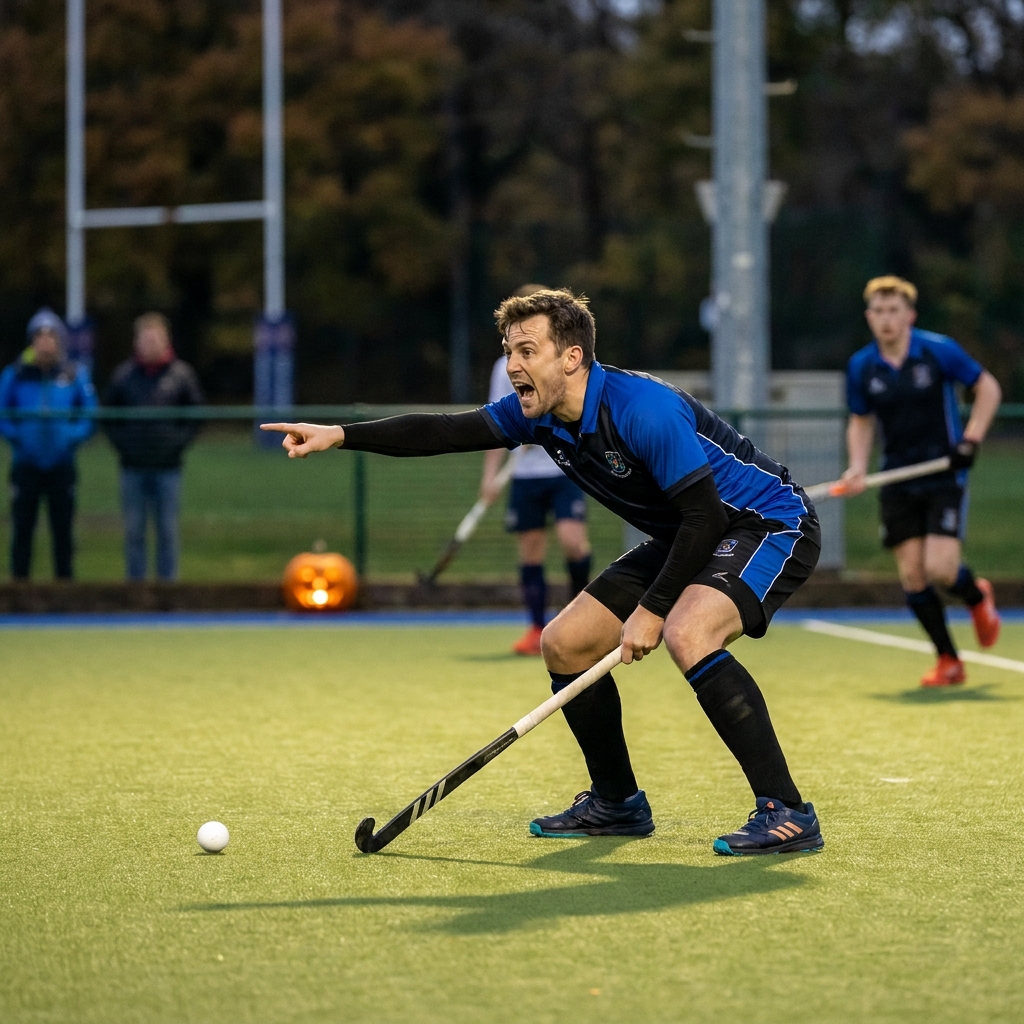
Two defenders chase the ball, nobody covers the runner, and a soft goal goes in. Here is the five-step treat for the mix-up haunting hockey defences this October.

A few weeks into the league season, poor first touches are costing teams the ball. Coach body shape, scanning and receiving on the move to keep possession.

Pre-season fitness fades fast once the league starts. Build conditioning into ball work and use rolling subs well to keep your squad sharp all season.
Coaches from around the world look to Sportplan for coaching confidence.
Excellent drills, very detailed videos. Useful site for my U15 boys team.

I love using Sportplan. It's been a great help for co-ordinating hockey practice and being able to help tweak skills and getting the most out of my players!

Great site. An absolute must for coaches who are willing to change and learn new drills. Superb, simply superb.

Wow what a great website, I have found sportplan an important tool for me when planning my netball sessions with my netball team. There are alot of very helpful tips/ideas/skills that I can learn and teach to my team. Thank you sportplan I hope to continue to use your helpful tips and to learn more about improving my teams netball skills. Thanks again....keep it up....

I have been using Sportplan now for 3 years and can honestly say that I have never repeated the same session twice. My girls are always focused and are improving every year. Thanks Sportplan.
What a fantastic tool. The Chalkboard and session tools make an unbelievable difference in making training plans in both time and organization. I will be instructing all of my assistant coaches that this tool must be used for all sessions during the season, so that we may build a club coaching resource library.
I can't get enough of the Sportplan, It has given me back the enthusiasm i was starting to lose. My girls are so keen and are ready at 14 to take the next up in their game. Sportplan will help no end.



