








Excellent drills, very detailed videos. Useful site for my U15 boys team.

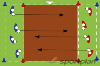
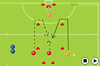
The drawbridge short corner routine

When playing 1 2 3 5 formation, the opposition choose to play 2 fwds high, how do you defend against it...
My team are constantly allowing oppositions to score from penalty corners we do 1st runner 2nd runner amp; 2 players on the post, what can I do.
I have done numerous exercises on goalscoring but my girls cant seem to finish. Any suggestions?
2323 formation can it work?
What are the best things to get your players to do when you come up against a full press / 3/4 press, anything that's putting a lot of pressure on high up the pitch?

A player beats their defender. Do I leave my player to defend as I am nearest to the ball, or should I stay and hold my position?
I coach a women's team wide range in age 16 - 54 , when the stars align we are a very strong team hard to beat and very stingy when it comes to goals against, the games we do lose are usually 1-0 games,The exception comes when we play a team that plays a 1-4-4-2 ,what makes it worse is that we play a 4-4-2 and are very successful with it, but when it comes to defending against it my Defense and Mids become confused. I have not had any luck in figuring out a way to explain to my team how to defend against it. Any ideas on an easy way to fix this? Thanks
Have a team of older group of ladies who need to learn to pass the ball back, any good drills for this?
We need to talk about the basics of hockey but any advice re coaching them on not bunching and drills to help with this would be much appreciated. Thank you.
What are the roles of blockers? Can you use them in a 3-2-3-2 formation? Asked using Sportplan Mobile App

How do I defend two High hanging strikers?
Hi all,I would like to ask what is the best formation to play a 7-a-side match(under-18) when u have strong defence(key player in defence) but unexperienced midfield. I had in mind 3-2-1 while defending and 2-3-1 while attacking. Any suggestions please?
how to play defending 3V2

Why does the covering defender not stay off the left shoulder of the front defender?
I am coaching my first season as head coach. I am confident that my team has improved on alot of skills (mostly due to sportplan.net, thank you!). The only thing that is driving me crazy that my team has not improved on is the over committing block tackle. When an opponent is coming down the field on a breakway, my defense runs up and block tackles, and the opponent shoots right past them. This will happen two or three times in a row, one defender after the other. I've told them to keep their feet moving and to keep off their toes, keeping their momentum with the opponent. I don't know how to practice this with them. We only have 9 players (this is a high school varsity team) so we can't scrimmage full field during practice. Please help! I'm desperate for a solution.
My Girls team I coach get caught a lot between man marking and zonal marking in the 23 yard area and sometimes end up with half the team doing one and the rest the other. Suggestions on the ideal defensive set up inside the 23?
Suggestions on how to play this system. I have very young 1st team so feel i must play defensive hockey. Thanks
I coach a women's team wide range in age 16 - 54 , when the stars align we are a very strong team hard to beat and very stingy when it comes to goals against, the games we do lose are usually 1-0 games,The exception comes when we play a team that plays a 1-4-4-2 ,what makes it worse is that we play a 4-4-2 and are very successful with it, but when it comes to defending against it my Defense and Mids become confused. I have not had any luck in figuring out a way to explain to my team how to defend against it. Any ideas on an easy way to fix this? Thanks
Hi allI am looking for advice on how to implement processes in my girls school hockey team. processes of setting up presses, defensive structures and counter attacking thinking. I have 14 players in the team from 15 years old to 18. we train twice a week. only a few play club hockey as well. We either play a 3-1-4-2 or a 3-1-3-3.I find it difficult for example, when you want to teach a press on the opposition 16, to simulate gameplay with only 14 players (if they are all at training). I can have my halves setup for taking the 16 and then get my strikers and links to setup, but then I still want defenders to see things from the back but they are taking the 16? Also when taking the 16 they then don't have any support in the drill because everyone else is setting up a press?I know we need to work on our basics in order for the other tactics and skills and game plans to work. However I find it frustrating with this team that on counter attacks for a few reasons which I am struggling to mend;- they only head forward. No one holds up the ball to wait for support.- they run straight and don't use angles- they pass too late and get tackled - they don't have the vision to see an early pass or pass into space- players without the ball do not run into useful positions and angles and get caught out by the person with the ball who then makes a pass to no one and it runs out of play.So suggestions please for;- open, creative but simple counter attacking- teaching processes for presses on free hits and 16s- coaching how to take 16s and work your way out- coaching vision and expecting your players to be in support. RegardsMatt

in more ways than one
 sportplan_hockey




A few weeks into the league season, poor first touches are costing teams the ball. Coach body shape, scanning and receiving on the move to keep possession.

Pre-season fitness fades fast once the league starts. Build conditioning into ball work and use rolling subs well to keep your squad sharp all season.

The first weeks of the season decide whether a junior or new player sticks with adult hockey. Here is how to keep them safe, give them a clear job and build their confidence from the very first bully.
Coaches from around the world look to Sportplan for coaching confidence.
Excellent drills, very detailed videos. Useful site for my U15 boys team.

I love using Sportplan. It's been a great help for co-ordinating hockey practice and being able to help tweak skills and getting the most out of my players!

Great site. An absolute must for coaches who are willing to change and learn new drills. Superb, simply superb.

Wow what a great website, I have found sportplan an important tool for me when planning my netball sessions with my netball team. There are alot of very helpful tips/ideas/skills that I can learn and teach to my team. Thank you sportplan I hope to continue to use your helpful tips and to learn more about improving my teams netball skills. Thanks again....keep it up....

I have been using Sportplan now for 3 years and can honestly say that I have never repeated the same session twice. My girls are always focused and are improving every year. Thanks Sportplan.
What a fantastic tool. The Chalkboard and session tools make an unbelievable difference in making training plans in both time and organization. I will be instructing all of my assistant coaches that this tool must be used for all sessions during the season, so that we may build a club coaching resource library.
I can't get enough of the Sportplan, It has given me back the enthusiasm i was starting to lose. My girls are so keen and are ready at 14 to take the next up in their game. Sportplan will help no end.



