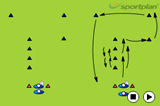
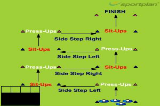
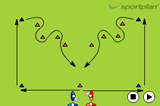
In fours players are moving up a channel. The support runner (blue player in the animation) calls themselves into the line, receives a pass, offloads and repeats down the second channel.
When the first group leaves the first channel, the second group should begin. That way there will always be activity.
Players should change their positions in the diamond.
Don't feel that you have to use all of the following coaching points, you may have some of your own. Also - keep in mind that your coaching points should be relevant to your session.
No verbal communications, support runners react to what they see.
in more ways than one
 sportplan_netball

in more ways than one
sportplan_rugby

Greasy balls and soft pitches turn tidy handling into a lottery. Here is how to coach your players to keep hold of the ball when November conditions bite.

Most line breaks are made by support runners, not ball carriers. Teach the angles, depth and timing that get them there.

The isolated ball carrier is rugby's spookiest turnover. Here is the five-step fix, plus drills that rebuild support lines fast.