Drill to practice overlap situations.
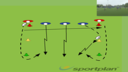
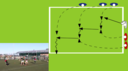
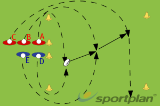
Set up a grid roughly 10m x 10m, with another grid roughly 5m x 5m adjacent to it (see diagram - red cones and green cones).
In the bigger grid have two defenders (red) and in the smaller grid have one defender (red).
Three attackers (blue) attack the 2 defenders in the first grid. Once they have completed the 3 v 2 situation the player with the ball and one other support player run around the cone and attack the one defender in the smaller grid.
Swap the attack and defence after 3-5 repetitions.
PROGRESSION:
The ball starts on the opposite side to practice passing in both directions.
A coach/other player feeds the ball to the three attackers so the drill can start in any position. The coach/other player can kick or roll the ball to the attack to start the drill.
Go forward
Provide support
Identify and communication of space - running angles of ball carrier and support players to create and attack space
Decision making
Continuity
Attacking a 3 v 2 / 2 v 1.

in more ways than one
 sportplan_netball
in more ways than one
sportplan_rugby

Tacklers are aiming lower, so carriers who dip late put heads at risk. Teach footwork, a strong early body height and leg drive to win the collision safely.
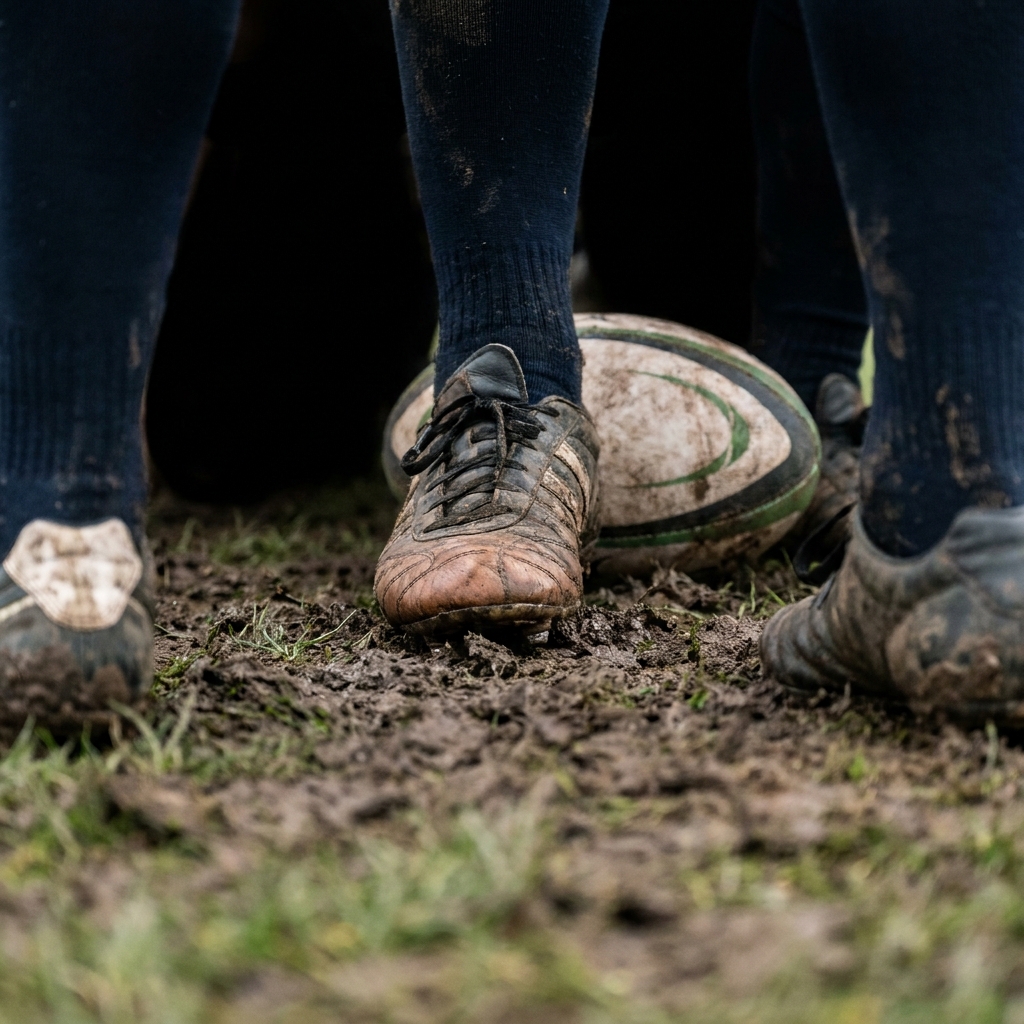
The hooker's brake foot moved from trial into full law in July 2026. Here is how to coach it so your front row stays stable, legal and safe.

Your players can pass beautifully in a warm-up grid. Then a defender closes, their lungs are burning, and the ball goes to ground. Here is how to build catch-pass skills that hold up when it matters.