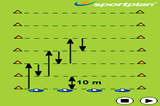
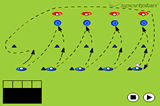
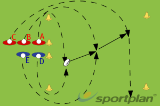
Set up 4 grids of about 8-10m by 5m.
3 players start on the first grid, working from one end to the other, covering the 5m distance.
Players continue working like this, until they reach the end of the grid.
Once the coach blows his whistle the line may press off.
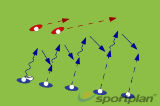
Defending in pod of three means you as a player need only worry about the player directly to your left and your right. If every player does that, then essentially the defensive line should be in order.
Therefore every player is a 2nd player between 2 players, with the exception of the 1st and last player in the line.
Progress the drill by forcing players to look in front of them.
Hold up colour cones in front of each box (ask an assistant to help if possible) and one colour at the source (ruck). While performing the drill players must call out these colours, even as they change.

in more ways than one
 sportplan_netball
in more ways than one
sportplan_rugby

Tacklers are aiming lower, so carriers who dip late put heads at risk. Teach footwork, a strong early body height and leg drive to win the collision safely.
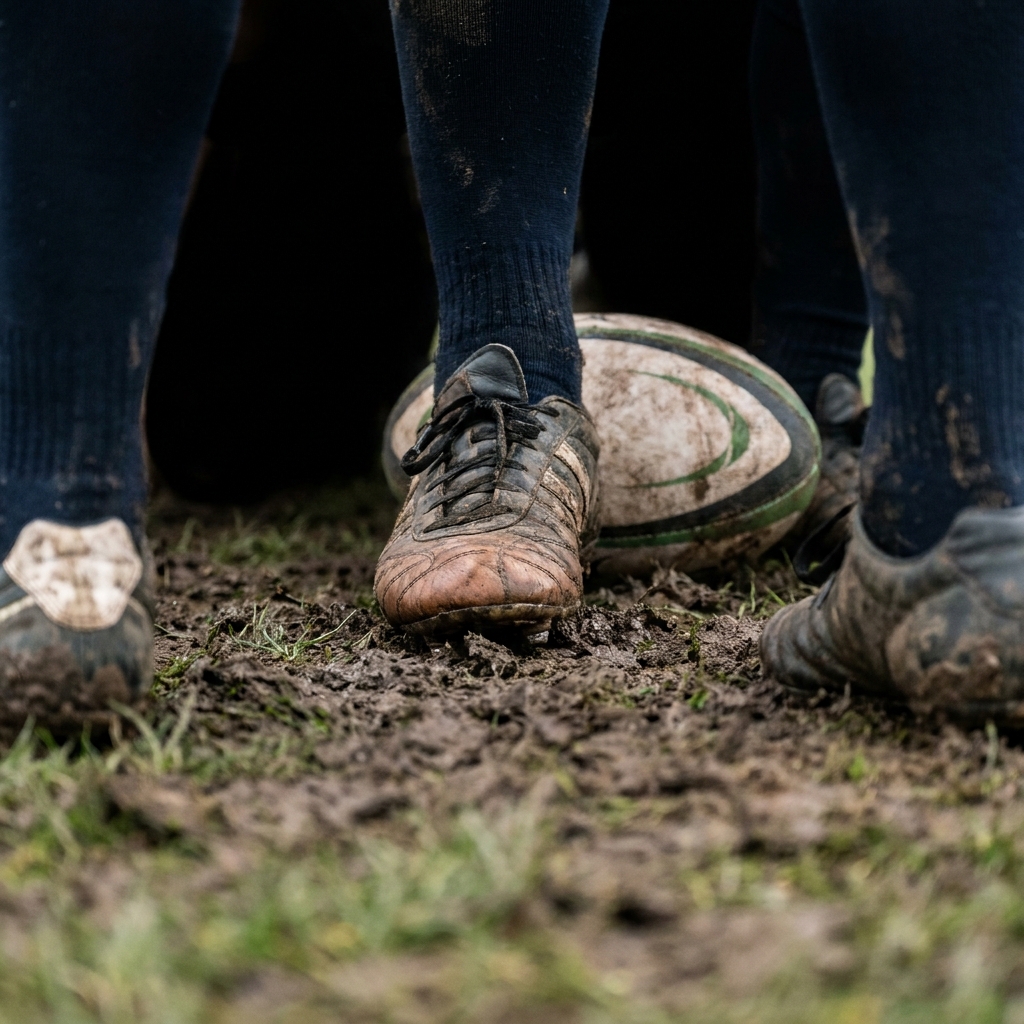
The hooker's brake foot moved from trial into full law in July 2026. Here is how to coach it so your front row stays stable, legal and safe.

Your players can pass beautifully in a warm-up grid. Then a defender closes, their lungs are burning, and the ball goes to ground. Here is how to build catch-pass skills that hold up when it matters.