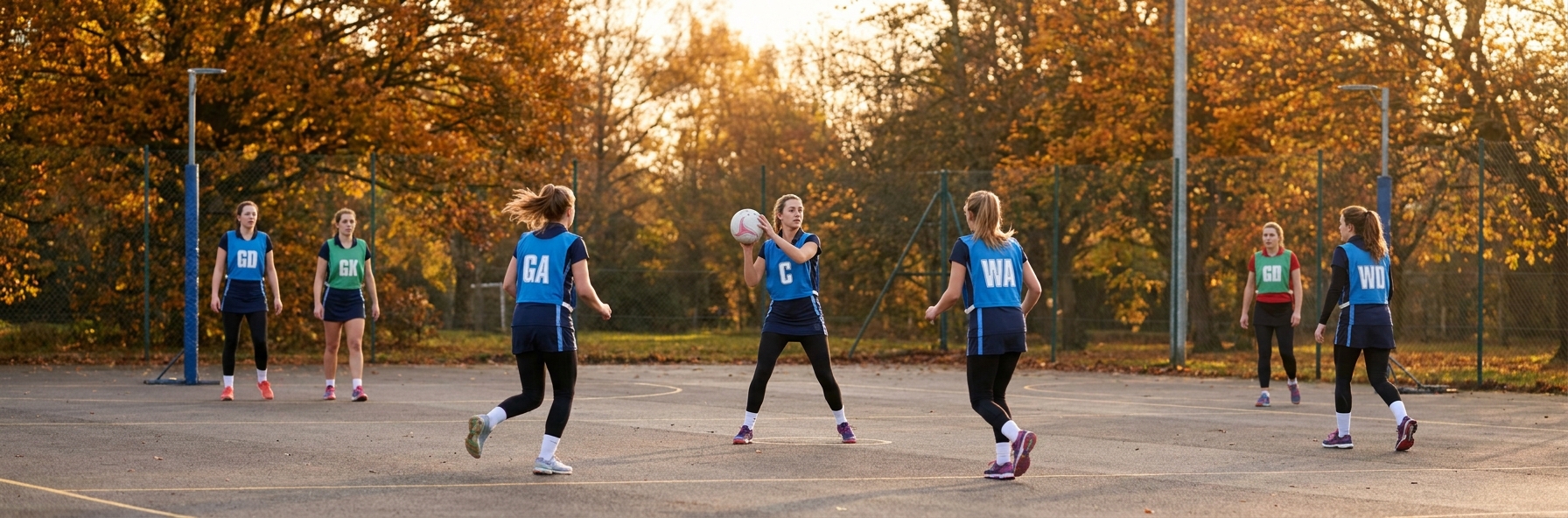
It is the autumn term, squads are new and every coach of a junior or developing team knows the sight. The ball goes into one corner and five players follow it. The thrower has nobody to pass to except the teammate standing right next to them, and the opposition only has to defend one small patch of court.
Good team play is not about everyone working hard to get near the ball. It is about players knowing when to come towards it, when to stay away from it and when to get out of the way. Fix the spacing early in the season and every other part of your attack becomes easier.
Why the Swarm Happens
Players crowd the ball because they want to help. Nobody wants to be the one standing still while a teammate is in trouble, so they all move towards the pressure. Younger players also tend to watch the ball rather than the space around it.
The problem is that every extra player near the ball brings a defender with them. The space shrinks, passing lanes close and the thrower ends up with poor options. Spacing is really about making the court big for your team and big for the defence to cover.
Four Principles of Court Balance
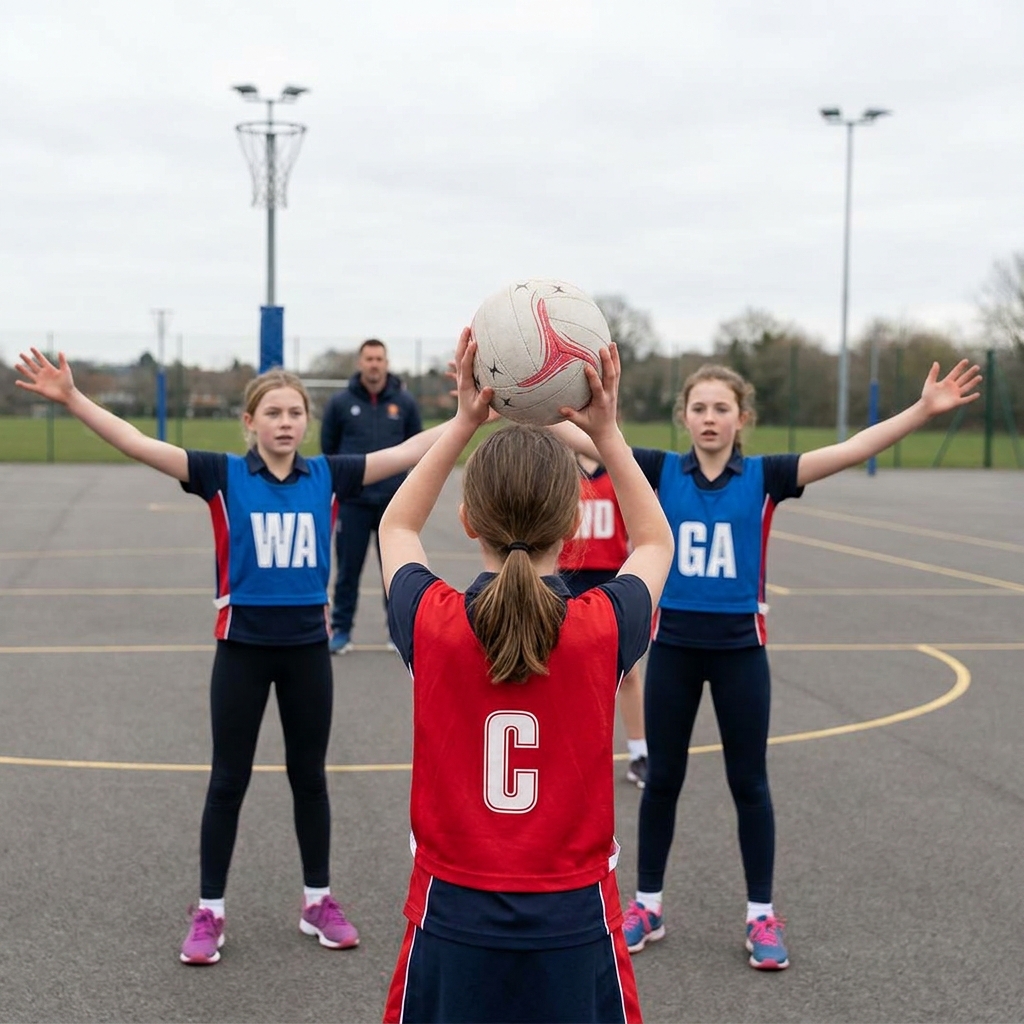
Step One: Two options for every pass. Whoever has the ball should always see at least two teammates offering. One is the main option, the other is the backup. If only one player is offering, the defence knows exactly where the ball is going.
Step Two: Use the width of the court. Players should spread across the court rather than stacking down the middle. Offers from different angles, one straight and one diagonal, are far harder to defend than two players running into the same channel.
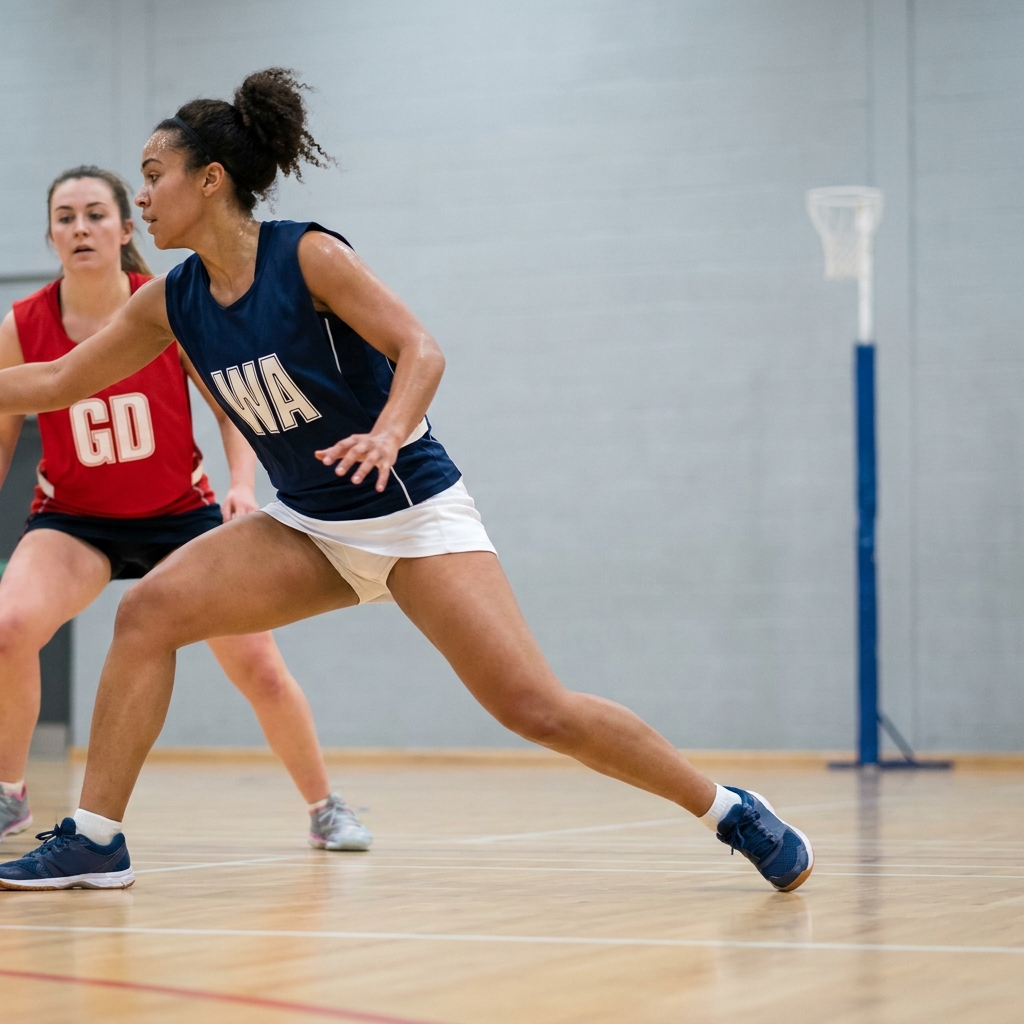
Step Three: Clear the space you are not using. If you are not the main option, move away and take your defender with you. A good clearing run is as valuable as a good drive because it opens the space for someone else.
Step Four: Rebalance after every pass. Once the ball moves, the picture changes. Players who have just passed should re-offer or clear, and the rest of the team should reset their spacing for the new thrower.
How to Train It
Warm-up: pass and move in small grids with a rule that players must always move to an empty cone. This builds the habit of looking for space rather than for the ball.
Technical: through-court passing in groups of four or five with the condition that every pass must have two offers. Start unopposed, then add defenders once the shape is reliable.
Decision-making: add a clearing rule. If a player is not the first or second option, they must clear to the far side of the third. Ask the thrower to name both options after each pass.
Game: a conditioned game where the umpire or coach can freeze play. On "freeze", check the spacing. If more than two attackers are within a few metres of the ball, possession goes to the other team.
Key Coaching Points
- Always give the thrower two options, a main and a backup.
- Spread across the width of the court rather than stacking in one channel.
- Offer from different angles so the defence cannot cover both.
- If you are not an option, clear away and take your defender with you.
- Watch the space around the ball, not just the ball.
- Reset your spacing every time the ball moves.
Recommended Drills
VIEW ALL GROUP PRACTICES DRILLS
Frequently Asked Questions
How do I stop my netball team bunching around the ball?
Give players a clear job on every pass. One player is the main option, one is the backup and everyone else clears. Conditioned games that punish crowding, such as losing possession if too many attackers are near the ball, quickly change habits.
What does "clearing" mean in netball?
Clearing is moving out of a space on purpose so a teammate can use it. A player who is not the next option runs away from the ball, taking their defender with them, which opens a passing lane for someone else.
How many players should offer for each pass?
Aim for two. One offer makes the pass predictable and easy to intercept, while three or more usually means players are crowding. Two offers from different angles gives the thrower a real choice without clogging the space.
 sportplan_netball