Why Every Club WhatsApp Eventually Becomes a Mess
It always starts the same way. You set up a netball team, somebody makes a WhatsApp group, everyone gets added, and for a fortnight it is brilliant. Then the new season arrives, three age groups are sharing two courts, fees are due, a fixture moves, and the group that once felt friendly turns into a wall of notifications you dread opening. If that sounds familiar, you are not doing it wrong - you have simply outgrown the tool.
WhatsApp was built for chatting with friends, not for running a club with twenty children, forty parents and a treasurer who needs to know who has paid. The problems are predictable, and recognising them is the first step to fixing them.
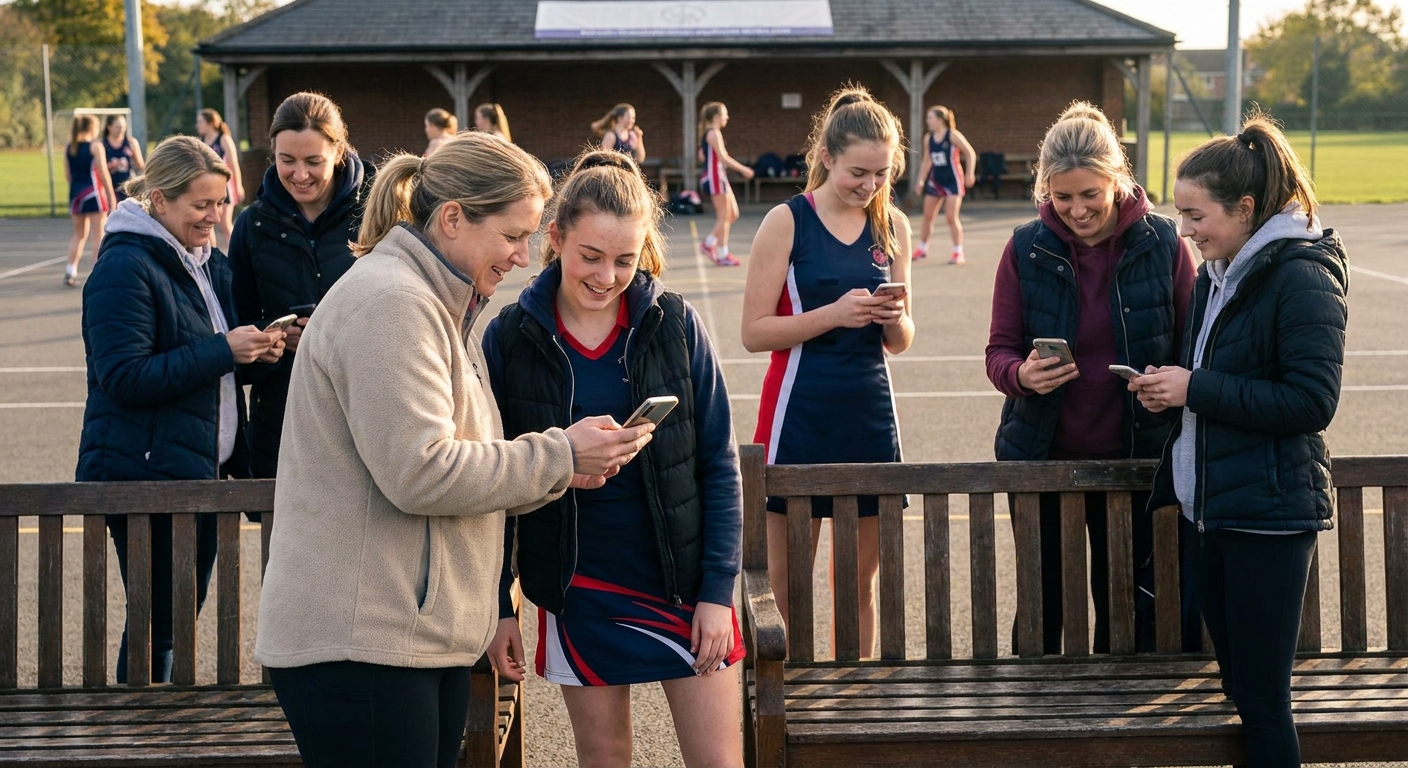
Notification overload. One question about lift-sharing triggers thirty replies, and every single one pings every single phone. Parents mute the group to protect their sanity, and the moment they mute it they stop seeing the messages that actually matter.
Important messages get lost. A change of venue for Saturday's match scrolls off the screen before half the team has read it, buried under emojis and "Can anyone lend a size 12 dress?". There is no way to flag what is official and what is chatter.
No read tracking. You send the new training time and have no idea who has actually seen it. Come Saturday, two families turn up at the old venue and blame you. WhatsApp's ticks tell you a message was delivered, not that the right person read and understood it.
Admin burnout. One volunteer ends up being the human switchboard - relaying messages, chasing replies, copying the same announcement into four different groups. It is unpaid, relentless, and the single most common reason good club volunteers quietly walk away.
The Safeguarding and GDPR Problem Nobody Mentions
This is the part that should give every junior netball club pause. The moment you add a child to a WhatsApp group, two things happen that most clubs never properly think through.
First, you have just shared that child's mobile number - and everyone else's - with the entire group. That is a disclosure of personal data. Under UK GDPR you need a lawful basis for it, and for a child that means consent from a parent or guardian. Most clubs never ask. And if a family leaves, you cannot un-share their number; it sits on the phones of everyone who was ever in the group, with no way for you to delete it.
Second, you have created a channel where an adult and a child can message one-to-one, privately, with no club oversight. That is exactly the situation safeguarding policy is designed to prevent. England Netball and the wider safeguarding-in-sport guidance is clear that communication with under-18s should go through parents or guardians, and that any messaging an adult does with a young person should be visible and accountable, never private. A personal WhatsApp account gives you none of that visibility.
None of this means a club using WhatsApp is automatically negligent - thousands do it carefully. But it does mean the casual "just add the kids to the group" approach carries risks that most volunteers have never been warned about. If your club runs junior teams, this is the issue worth solving first.
What Good Club Communication Actually Looks Like
Strip away the tools for a moment. Whatever you use, good club communication does four things well.
The right message reaches the right group. A U11 parent should not be buried in U15 logistics. Information should be targeted so that people only get pinged about things that genuinely concern them. The fastest way to make people start reading your messages is to stop sending them ones they do not need.
Availability is an RSVP, not a thread. "Who can play Saturday?" followed by thirty thumbs-up, three maybes and a side conversation is the single worst pattern in club admin. Replace it with a yes/no/maybe response you can count at a glance. You want a clean list, not a transcript you have to decode.
Children are contacted through a child-safe channel. Junior communication goes to parents and guardians, and any direct contact with a young player stays visible to the club. No private adult-to-child threads, ever.
There is one source of truth. Fixtures, kit, fees, venue, policies - all of it lives in one place that anyone can look up at any time, rather than being reconstructed from a chat thread. When a parent asks "what time is training again?" the answer should be a link, not another message you have to type out.
Getting these four things right is what separates a club that runs smoothly from one where the same volunteer answers the same question forty times a week. Our guide to running a junior netball team covers how communication fits alongside the rest of the season's admin.
Rules You Can Set Even If You Stay on WhatsApp
If your club is not ready to change tools - and plenty are not, because WhatsApp is free and everyone already has it - you can still tame the chaos with a few firm rules. The trick is to treat the group as a noticeboard, not a conversation.
Rules for sane club communication
- Announcements only. If your group settings allow it, restrict who can post so the main group is for official club messages, not chat. Spin up a separate optional "social" group for the banter that people can leave without missing anything important.
- Polls, not open questions. Never ask "who's available?" as plain text. Use a poll so replies are countable and you get a clean yes/no list instead of thirty notifications.
- One group per team or age band. Split by squad so a U11 family never wades through U15 logistics. Yes, it is more groups to run - but each one is calm.
- Quiet hours. Agree a no-messages window, for example after 9pm and before 7am, so nobody is pinged late at night. Write it in the group description.
- Parents only for junior groups. Keep children out of the group entirely. Communicate with under-18s through their parent or guardian, and never message a young player one-to-one.
- Pin and repeat. Pin the week's key message and resend the important stuff rather than assuming people scrolled back. Assume nobody read it the first time.
- One named admin, with backup. Decide who is responsible for official messages so families know which voice is the club's - and make sure at least one other person can step in so it is not all on one volunteer.
These rules will not solve the safeguarding and GDPR issues - a child's number is still shared the moment they are added, and you still have no read tracking - but they will dramatically cut the noise and protect your volunteers from burning out.
When a Purpose-Built Club Platform Earns Its Place
There comes a point - usually when you are juggling several teams, chasing match fees and worrying about junior safeguarding - where a tool built for clubs simply does the job better than a chat app retrofitted for it. This is the natural moment to consider a dedicated platform.
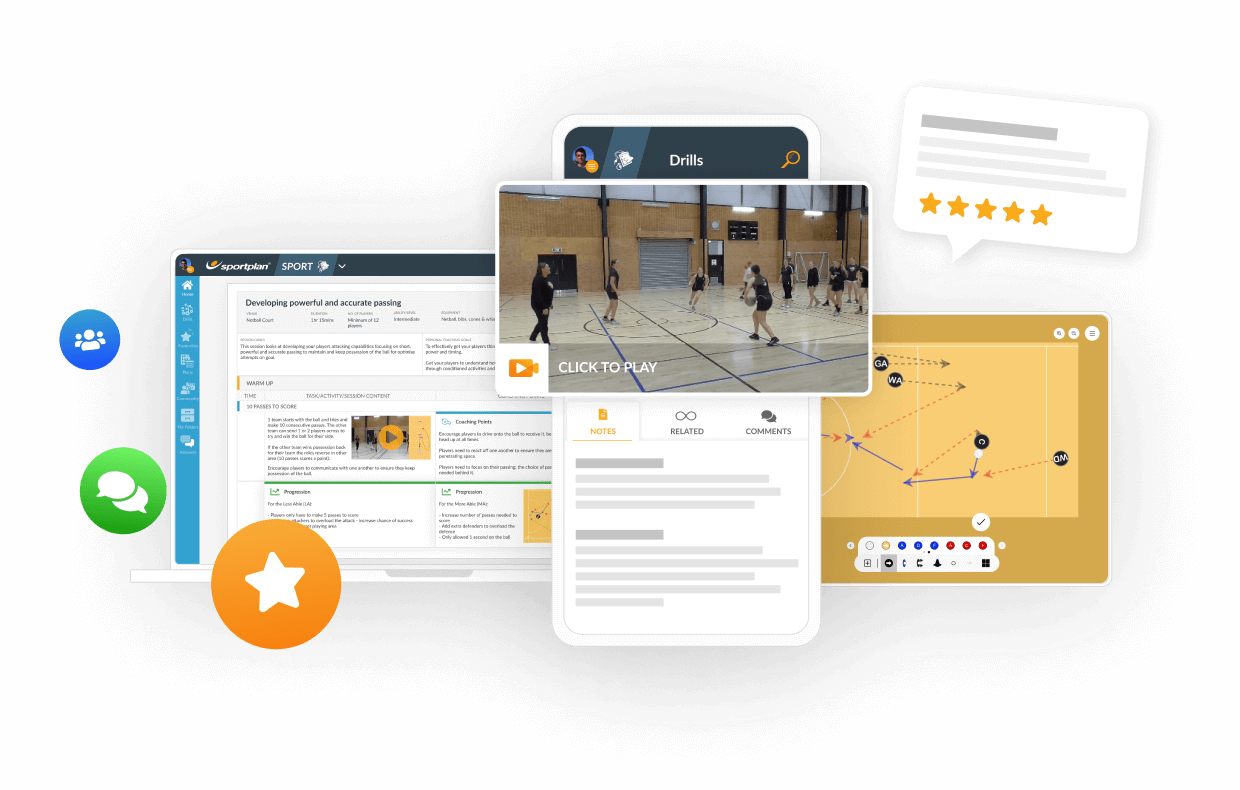
Teamo is one option built around exactly these problems: GDPR-compliant chats that stay child-safe by keeping a parent or guardian visible on every under-18 conversation, per-team email addresses so messages route to the right squad, a club newsfeed that acts as your single source of truth, and targeted notifications so people are only pinged about what concerns them. In the interest of being upfront, Teamo is made by the Sportplan team - the same people behind this site - so treat that as a recommendation with a stake in it, and judge it on whether it actually fixes your problems.
The honest caveat is that WhatsApp is free and universal, and for a single, settled team of adults who all already know how to use it, that is a genuine advantage a club app has to work hard to beat. The case for a dedicated platform gets stronger the moment children, money or multiple teams enter the picture - because that is where the chat-app shortcuts start to cost you. Whatever you choose, remember that governing-body systems like England Netball affiliation remain your system of record; a club app complements them, it does not replace them. Our round-up of free netball club apps compares the options if you want to weigh them up properly.
Tie Your Communication to Your Calendar
Most of the messages that clog up a club group are really about one thing: who is playing when, and where. Get your fixtures and availability organised and a huge slice of the noise disappears on its own. Our netball fixtures planning guide walks through building a season schedule that you can publish once and update in place, rather than announcing every change by hand.
And if you are setting all of this up from scratch, build communication into the plan from day one rather than bolting it on later. The starting a netball club checklist includes communication, safeguarding and consent alongside the kit, courts and committee, so you get the foundations right before the first whistle. You can browse every club and coaching resource in our Netball guides hub.
The Bottom Line
WhatsApp is not the enemy. It is a brilliant free tool being asked to do a job it was never designed for. If you love it and your set-up is simple, set firm rules, keep children out of the groups, and you can run a tidy team on it for years. But if you are managing juniors, money and multiple squads - and feeling the safeguarding weight that comes with that - it is worth being honest about whether a tool built for clubs would give your volunteers their evenings back. The goal is the same either way: the right message, to the right people, in a channel that keeps your children safe and your admins sane.
Frequently Asked Questions
Is WhatsApp safe for a junior netball team?
WhatsApp is free and familiar, but it carries real safeguarding risks for an under-18 team. Adding a child to a group exposes their phone number to every other member, mixes adults' and children's contact details in one place, and gives no club oversight of private messages between an adult and a child. Most netball safeguarding guidance now says juniors should be contacted through their parent or guardian, not directly, and that any channel used should keep an adult visible on every conversation. If you stay on WhatsApp, keep junior groups parent-only and never message a child one-to-one.
What is the best way to communicate with netball parents?
The best approach is one clear source of truth plus targeted notifications, not a single noisy group chat. Put fixtures, kit, fees and policies somewhere parents can look them up at any time, then push short, specific alerts only to the people each message affects. Ask for an RSVP to availability rather than a thread of thumbs-up replies, so you get a clean yes-or-no count instead of thirty notifications. Keep one channel for official club business and resist letting it drift into chit-chat.
How do I stop my club WhatsApp being chaos?
Set a few simple rules and enforce them. Use the group for announcements only and turn off members' ability to reply if your version allows it. Send availability requests as polls, not open questions, so replies stay countable. Agree quiet hours so nobody is pinged at 11pm. Split into smaller groups by team or age so a U11 parent is not buried in U15 messages. Pin the key information and repeat it rather than relying on people to scroll back. If the chaos persists, it is usually a sign the tool is being asked to do a job a proper club app does better.
Is it GDPR-compliant to use WhatsApp for a kids' team?
It can be, but it is harder than people assume. The moment you add members to a group you are sharing their phone numbers with everyone else, which is a disclosure of personal data you need a lawful basis and consent for - and for children that consent comes from a parent or guardian. You also have no easy way to delete a former member's data from other people's phones, no audit trail, and the data may sit on servers outside the UK. A child-safe, purpose-built club platform that stores numbers privately and lets you remove a member cleanly makes GDPR compliance far simpler than a personal messaging app ever will.
 sportplan_netball