Set up:
Half a court, 10 cones, elastic bungy x10.
Activity:
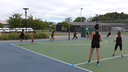
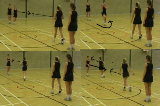
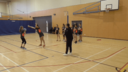
Players line up on the baseline. On the coaches call they accelerate to the coned line.
Progression:Players lay face down with their toes on the baseline facing away from the cones. On the coaches call, players jump up, turn 180 degrees and accelerate towards the coned line.
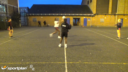
Second progression: Players are in partners with a bungy cord. One player has bungy around waist, the other is resisting them moving forward.
Focus: Speed over the first three steps
The focus is on the first three steps and pumping of the arms.
You may choose to do each activity between 2-4 times.
in more ways than one
 sportplan_netball
in more ways than one
sportplan_netball
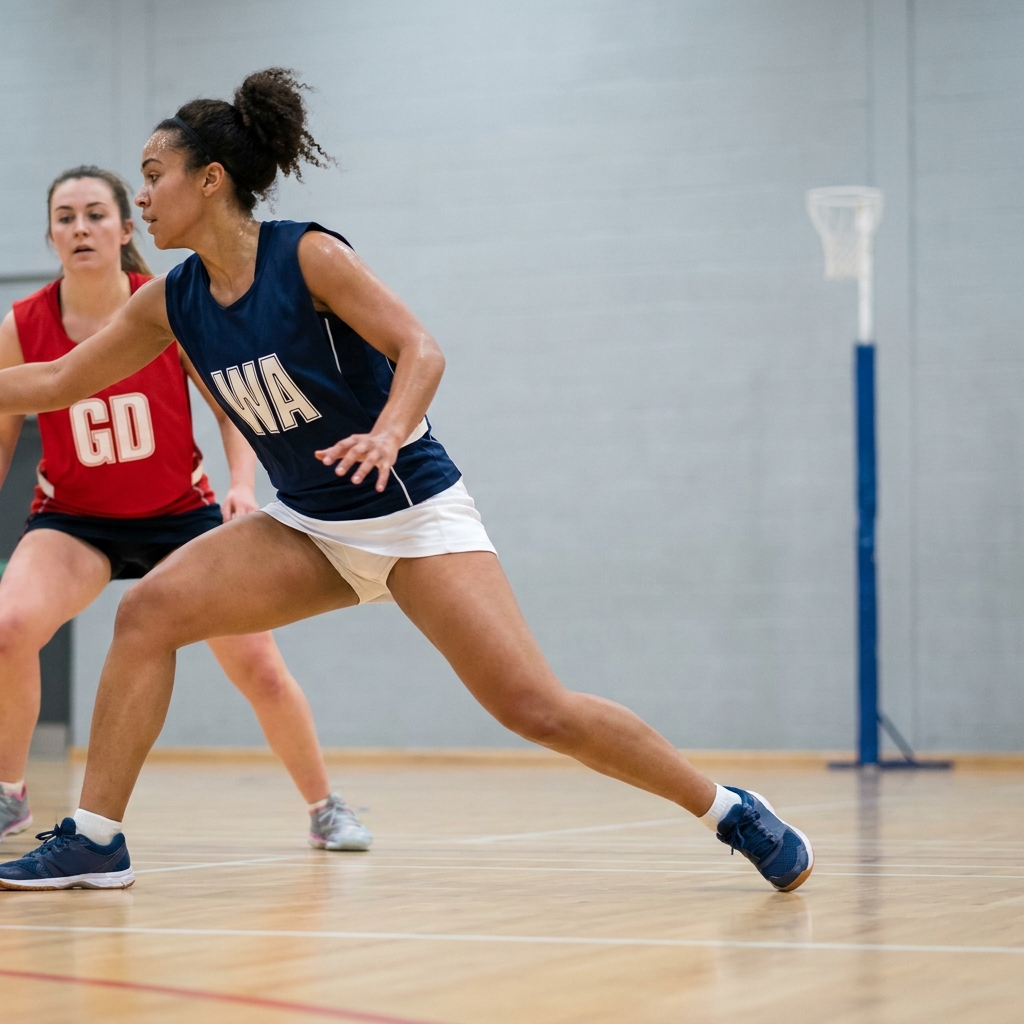
Tight markers win when attackers run in straight lines. Teach your players to dodge, change pace and time their drive so they get free when the ball is ready.
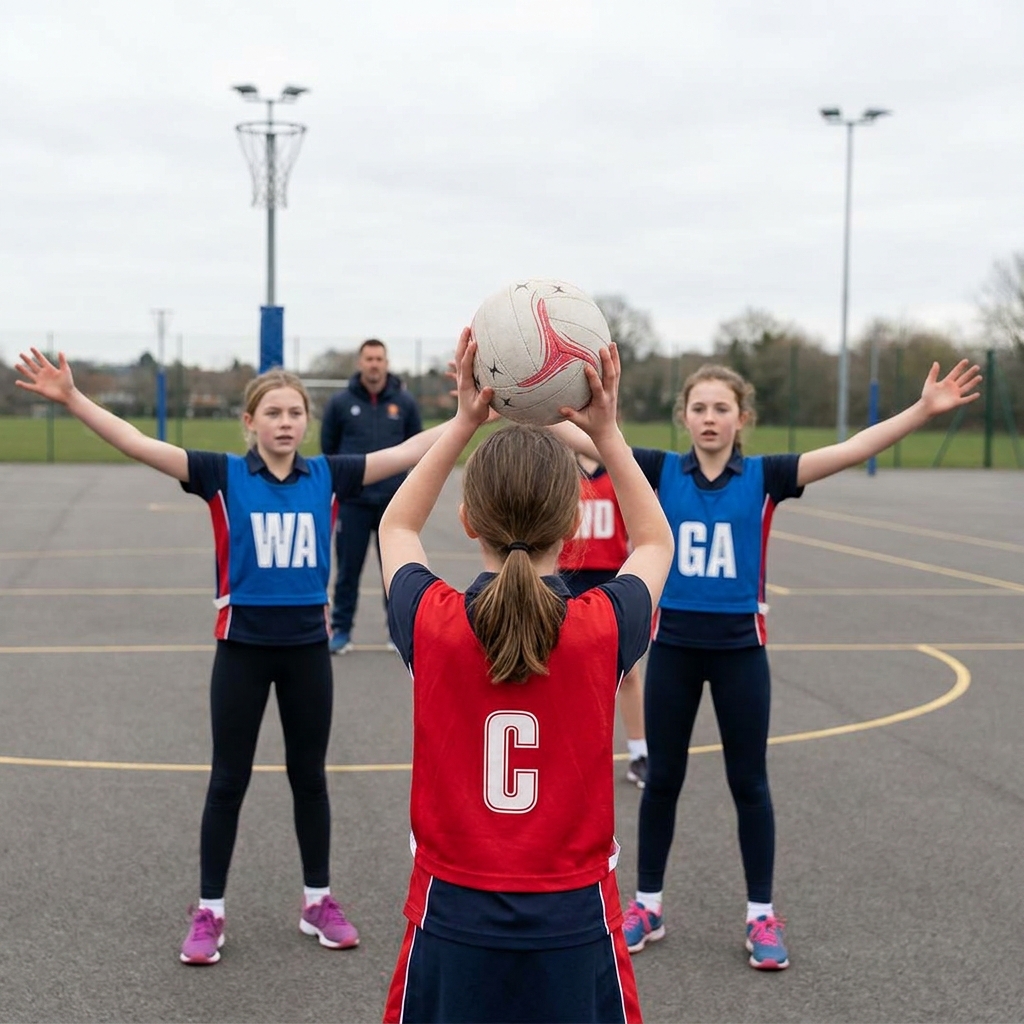
When everyone chases the ball, nobody is free. Teach your team to spread out, offer two options and clear space so the ball moves cleanly down court.
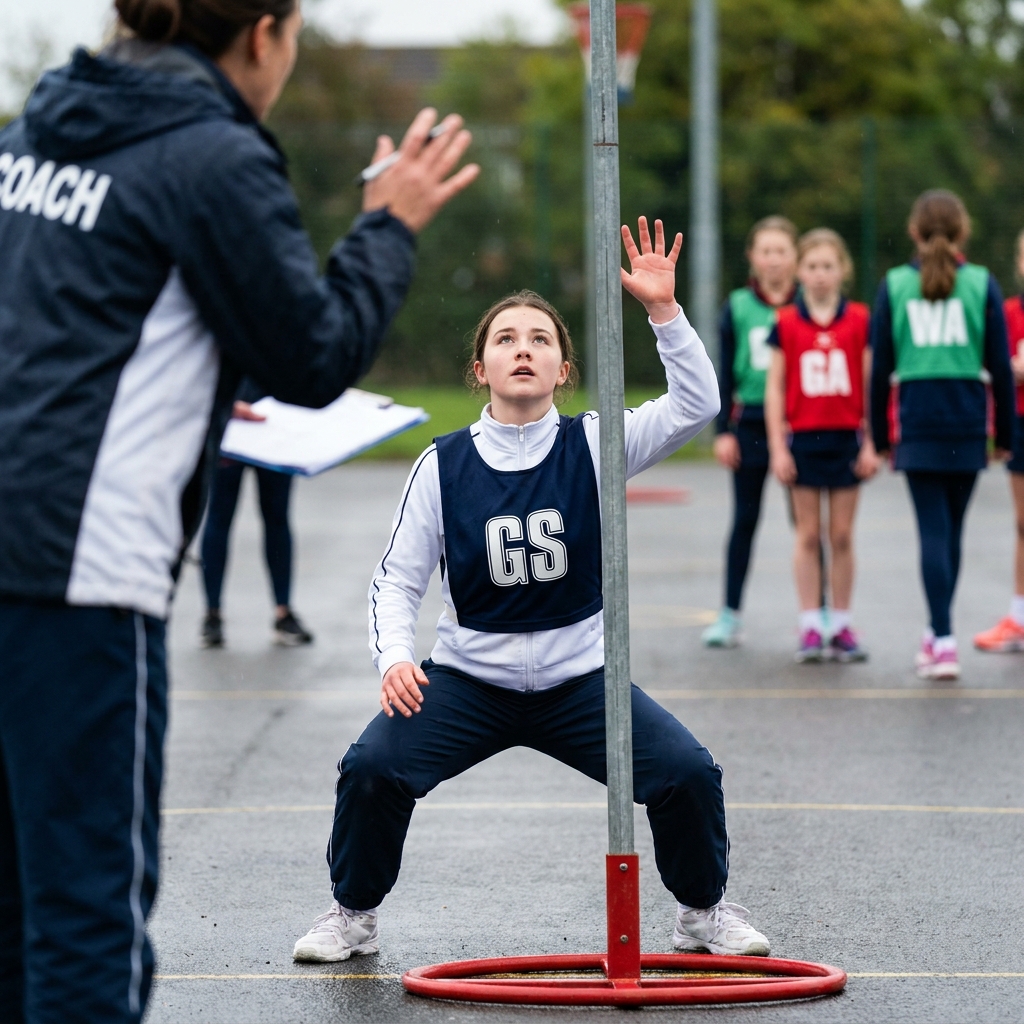
A shooter who can hold a strong position under the post is worth more than one who runs all over the circle. Here is how to coach body shape, a legal hold and a well-timed release, and how feeders make the most of it.