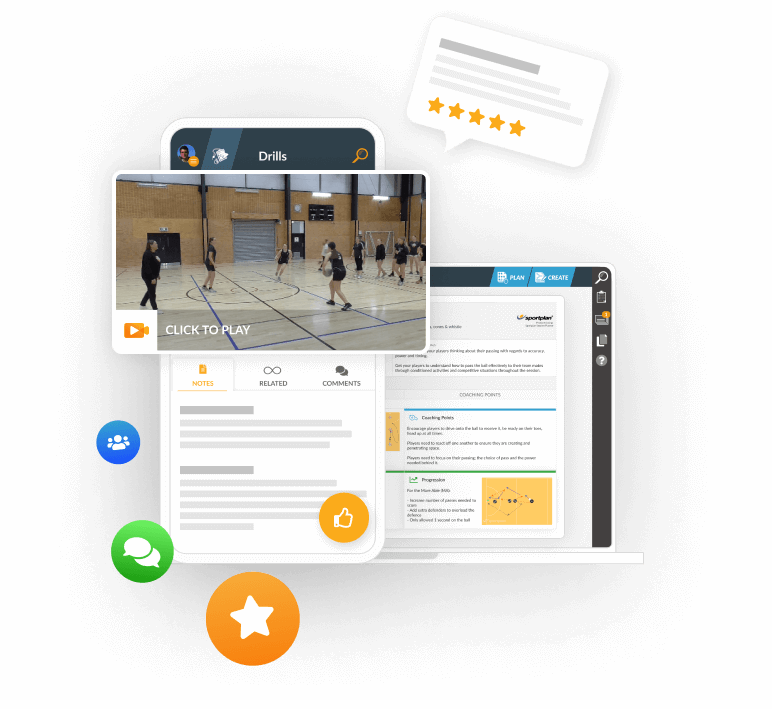
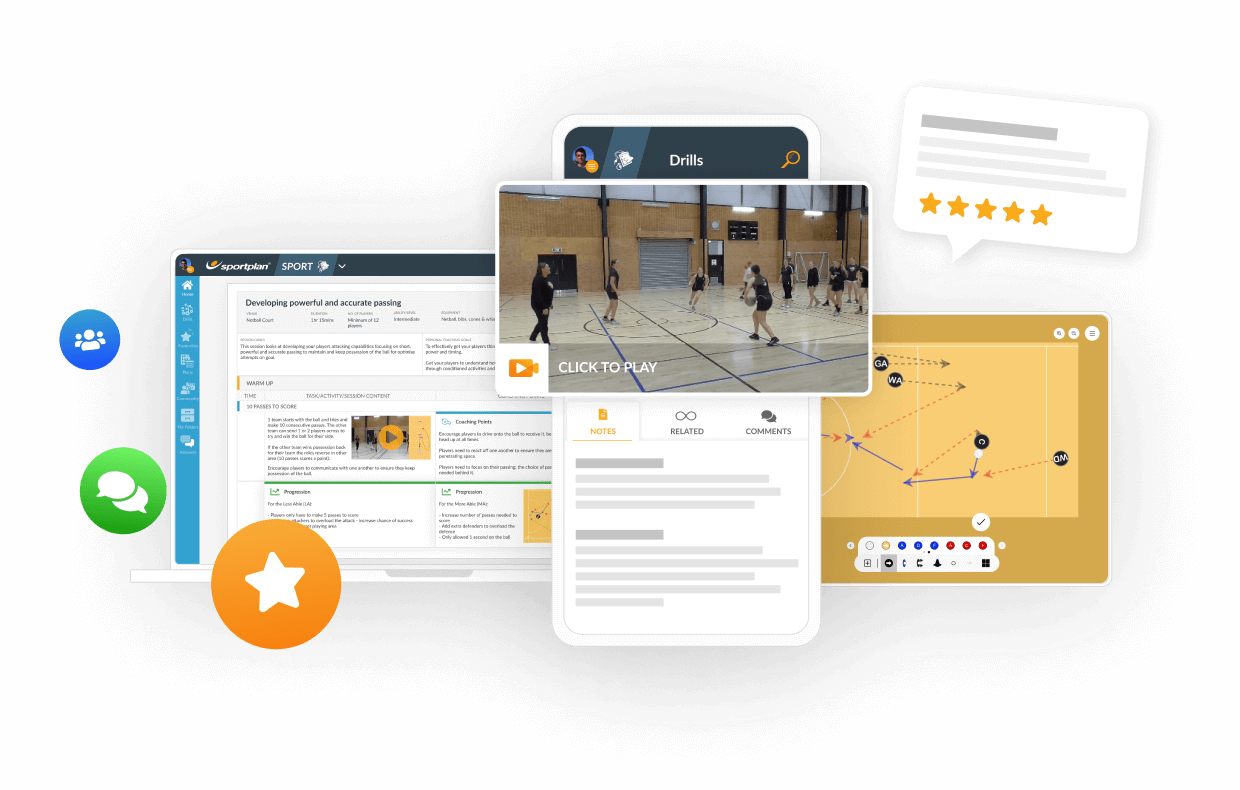
Equipment: Dependant on numbers, one ball between 2, full court area.
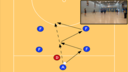
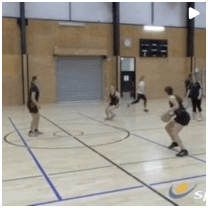
Players are in 2 lines down the length of the court.
One line of players has the ball. The other line stands inbetween these players facing them (i.e. not directly opposite).
Coach wil call either number; one, two or three. Followed by either left or right.
The number determines the movement. Left or right determines the way the workers drive.
If workers drive left they should lead with their left hand to the ball and if they drive right, the right hand should touch the ball.
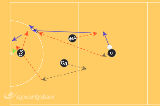
One: Workers drive to either left or right. Tap ball. Drive back on an angle to recieve a long pass.
Two: Workers drive and tap either left or right hand. Drive back the same angle with a side switch half way back.
Three: Same as two but once workers reach their start point they drive forward and recieve a flat pass from the post.
You may like to walk through this first.
Players need to move at the same time for the calls to work.
Ensure workers stay 'open' when driving back, they should turn their back and should always have eyes towards the ball.
This is tiring so keep rotations moving.
in more ways than one
 sportplan_netball
in more ways than one
sportplan_netball
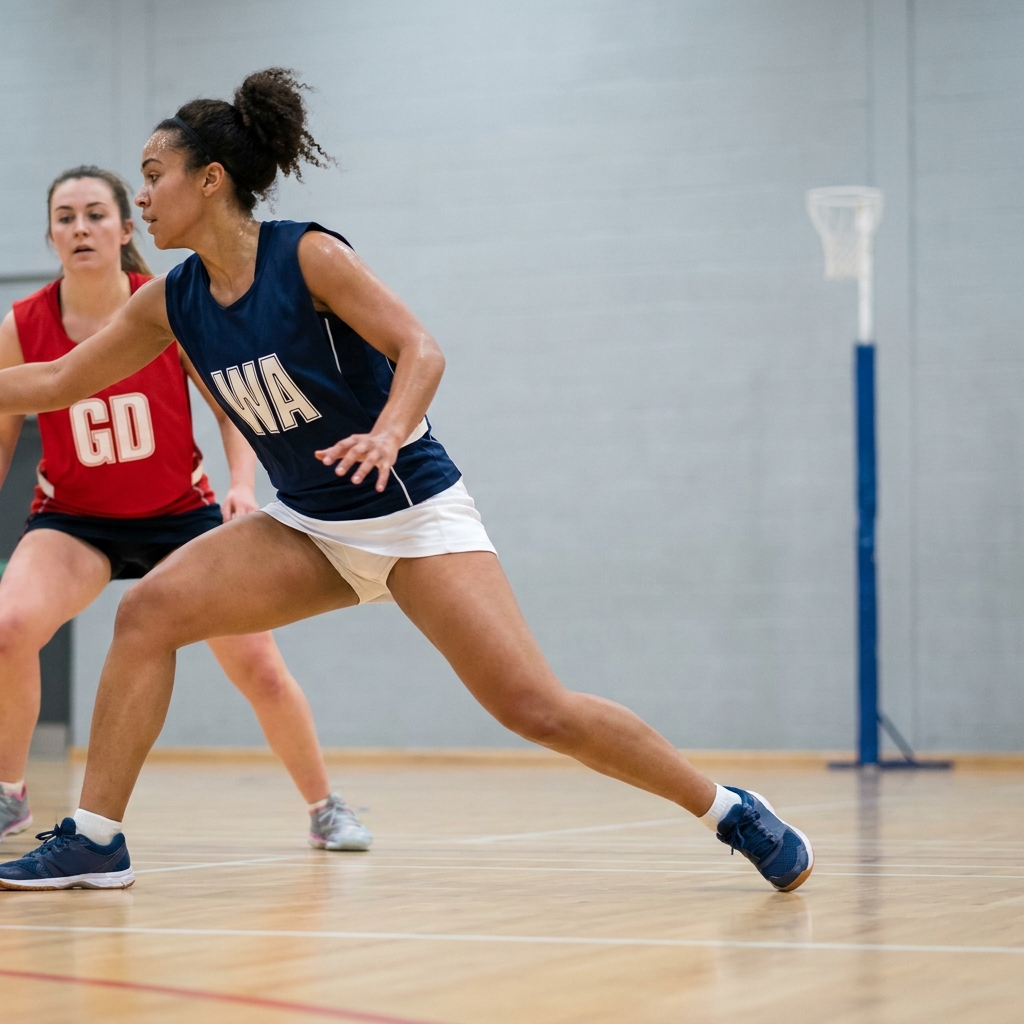
Tight markers win when attackers run in straight lines. Teach your players to dodge, change pace and time their drive so they get free when the ball is ready.
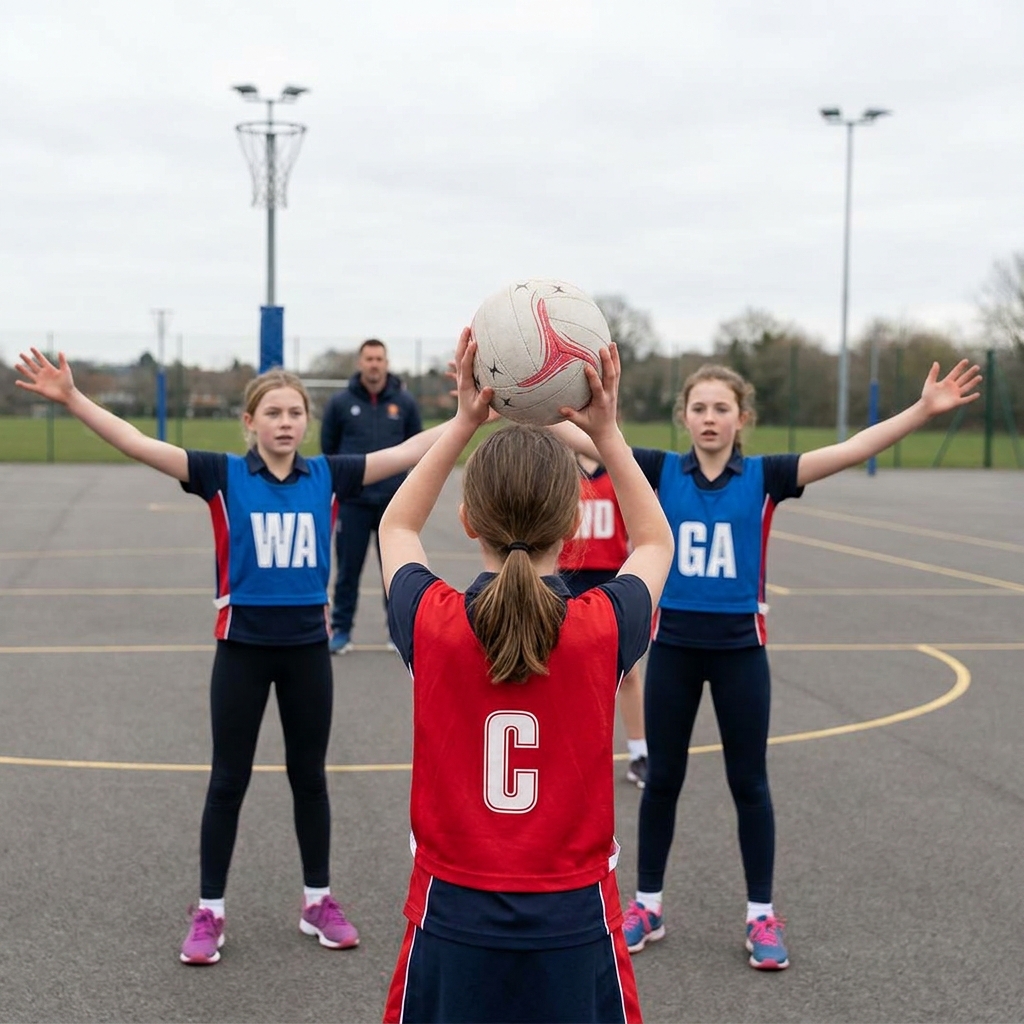
When everyone chases the ball, nobody is free. Teach your team to spread out, offer two options and clear space so the ball moves cleanly down court.
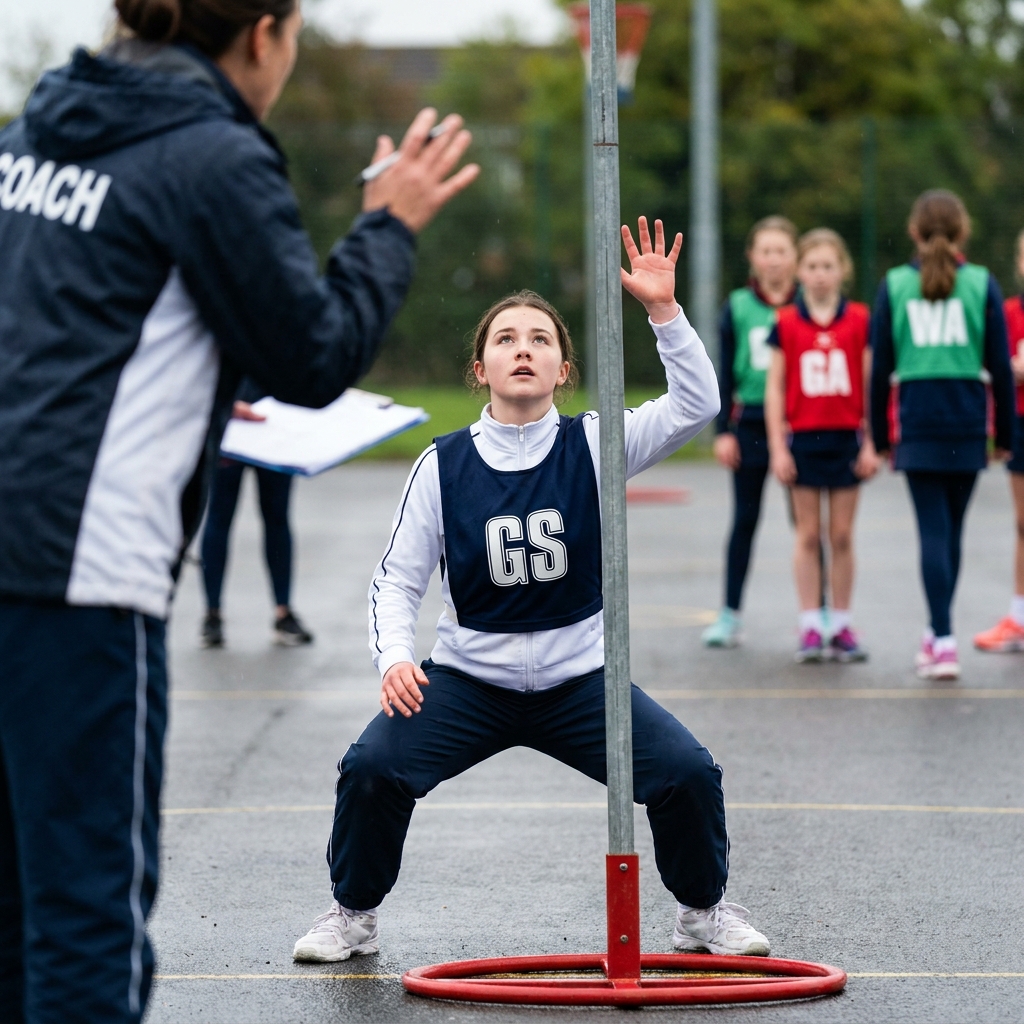
A shooter who can hold a strong position under the post is worth more than one who runs all over the circle. Here is how to coach body shape, a legal hold and a well-timed release, and how feeders make the most of it.