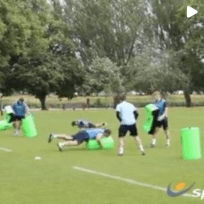
Small sided ruck game. Touch rugby with progression.
The attacker (red) carries the ball and makes contact with the defender (blue). The attacker immediately goes to ground and presents the ball.
A second attacker picks up the ball and immediately passes to a third attacker. This attacker makes contact with a next defender et.
Progression:
No opposition. No driving.
Present the ball.
Incoming attacker be close and pick up and pass quickly.
On progression 1:
Tackle low. Tackle sideways.
On progression 2:
Drive low. Supporting attacker be low to
You can split this exercise into a game 1 after warming up to introduce the ruck.
After ie. a tackle drill I then go to progression 1 and 2.
My approach to a training is almost always, Warming up related to whether or nog there will be contact.
Then: Game 1 - Drill 1 - Game 2- Drill 2 - End game

in more ways than one
 sportplan_netball

in more ways than one
sportplan_rugby

Your players can pass beautifully in a warm-up grid. Then a defender closes, their lungs are burning, and the ball goes to ground. Here is how to build catch-pass skills that hold up when it matters.
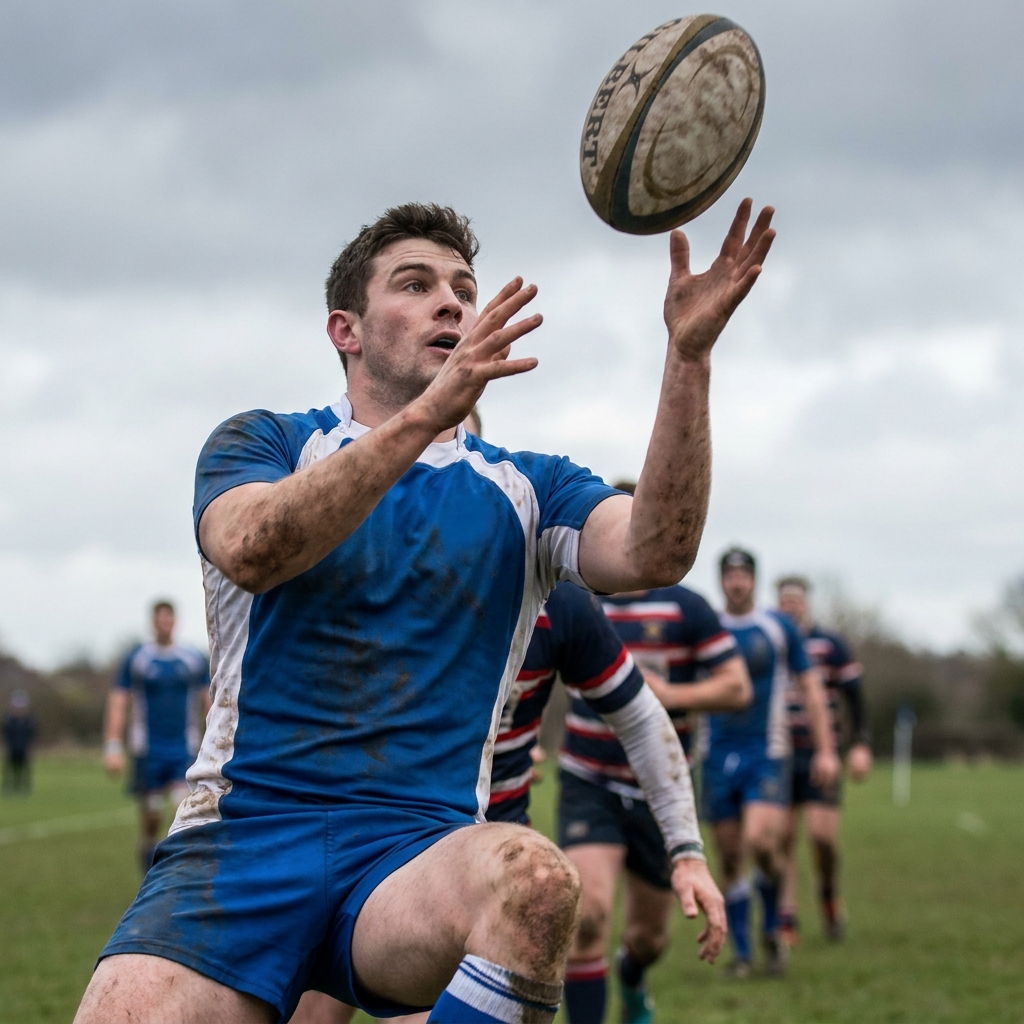
A box kick or up-and-under is only as good as the chase behind it. Here is how to organise your chase line, compete in the air safely, and make sure your own catchers are ready for what comes next.
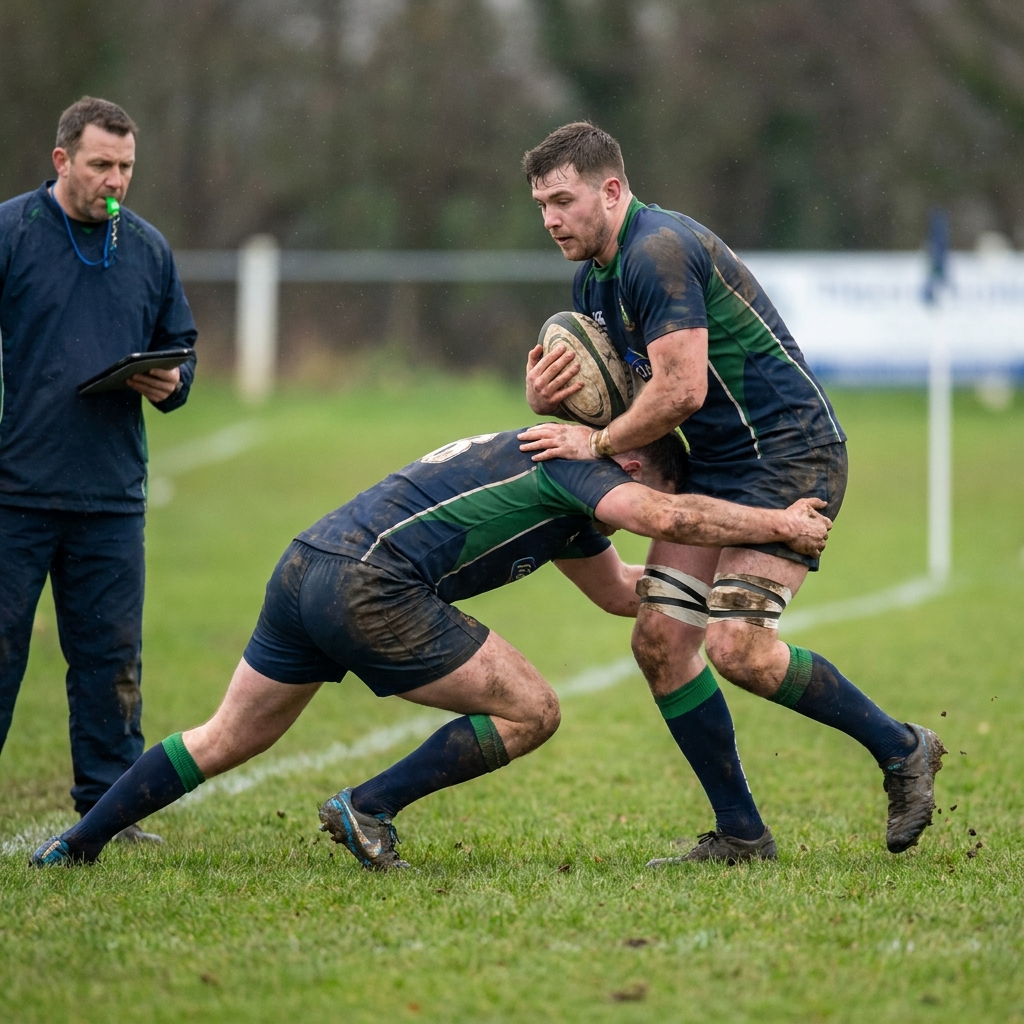
World Rugby's lower tackle height is no longer a trial. It is law in community rugby from this season, and unions choose waist or base of the sternum. Here is how to retrain your defence.