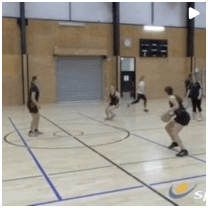
Set up in a square ~5x5m. 2 lines of feeders, with a receiver positioned in front of one line and a defender in front of the other.
In the diagram, the blue feeder passes diagonally to the receiver, who remains stationary, while the defender attempts the intercept. If they are successful, they gather the ball with strict footwork rules applied, and deliver it to the red feeder. If the receiver gets the ball, they too pass it to the red feeder. The defender then joins the back of the red feeding line.
Once the blue feeder has made their pass, they move to the spot vacated by the defender and they then become the receiver, while the previous receiver becomes the defender. So the red feeder now passes to the blue receiver, while the red defender attempts to intercept, then joins the blue feed line. The flow continues until every player has run through several times.
Start with a small box and chest passes only.
To increase difficulty, change to overhead passes or widen the square.
If an interception is tipped, ask both receiver and defender to chase the ball, still maintaining strict footwork. Wait for the receiver to rejoin the square before making the next pass, to give them a chance of interception.
in more ways than one
 sportplan_netball

in more ways than one
sportplan_netball
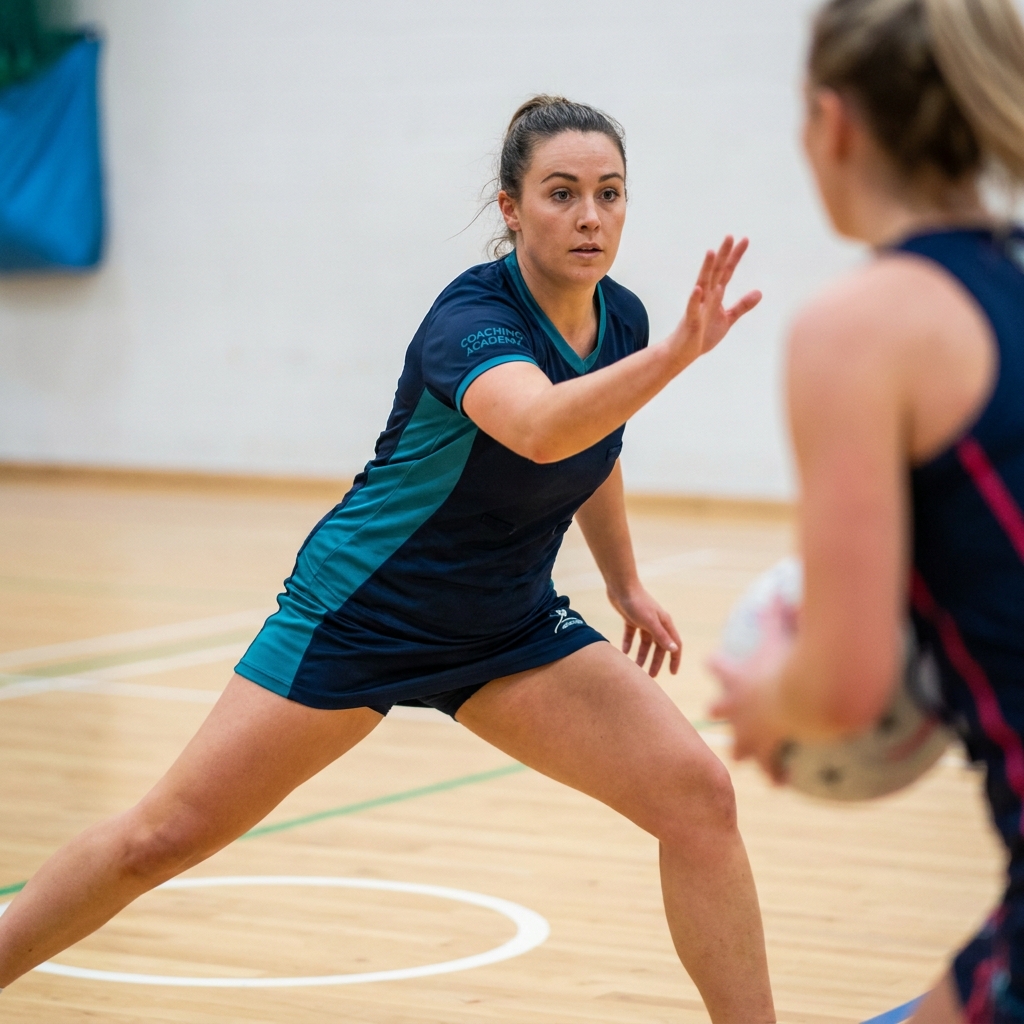
Split circle defence is the system the top three NSL teams have built their identity around in 2026. The Goal Keeper and Goal Defence divide the circle into zones, switch in synchrony, and make every passing option look risky. Here is how to coach it.
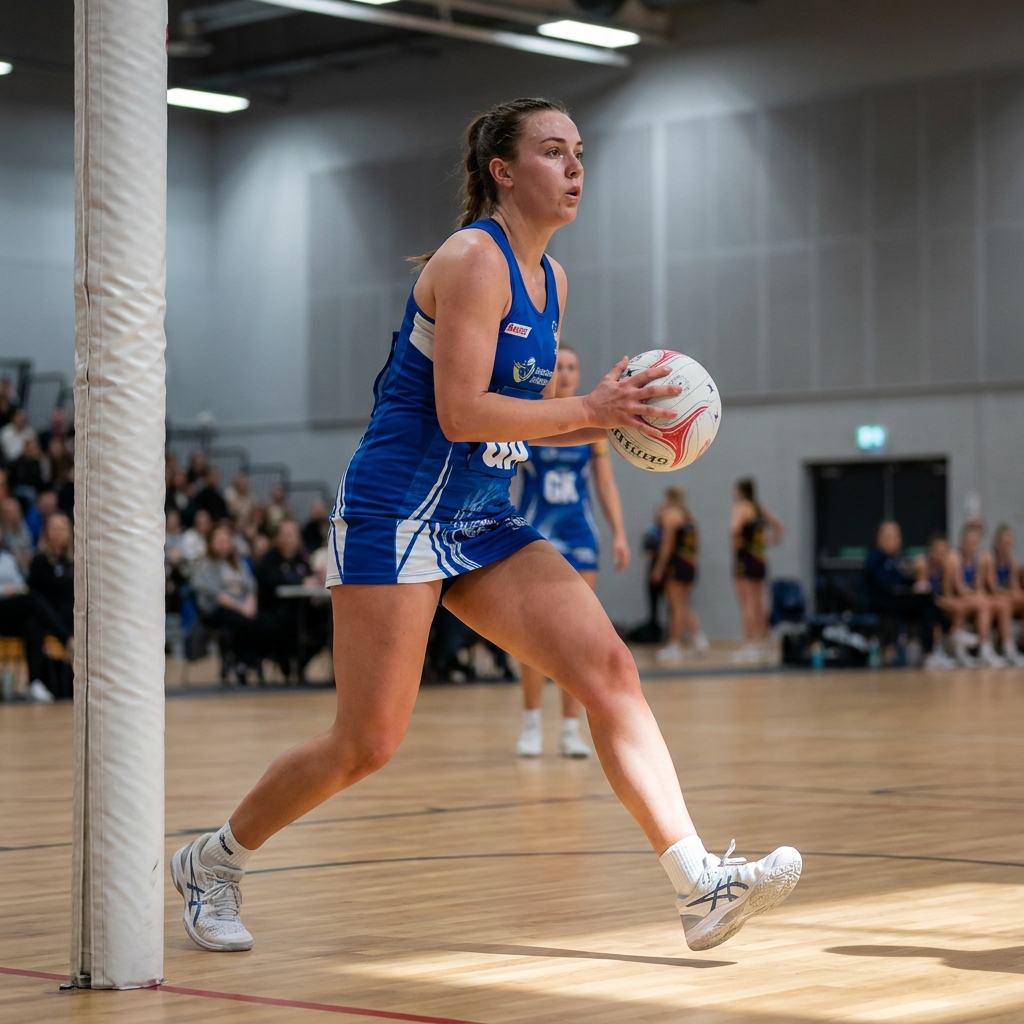
Most netball shooters know how to shoot. The difference at the top is who can shoot when it counts. A structured 10-minute pre-game mental routine is the most under-used performance tool in club netball - and it is the simplest to teach.
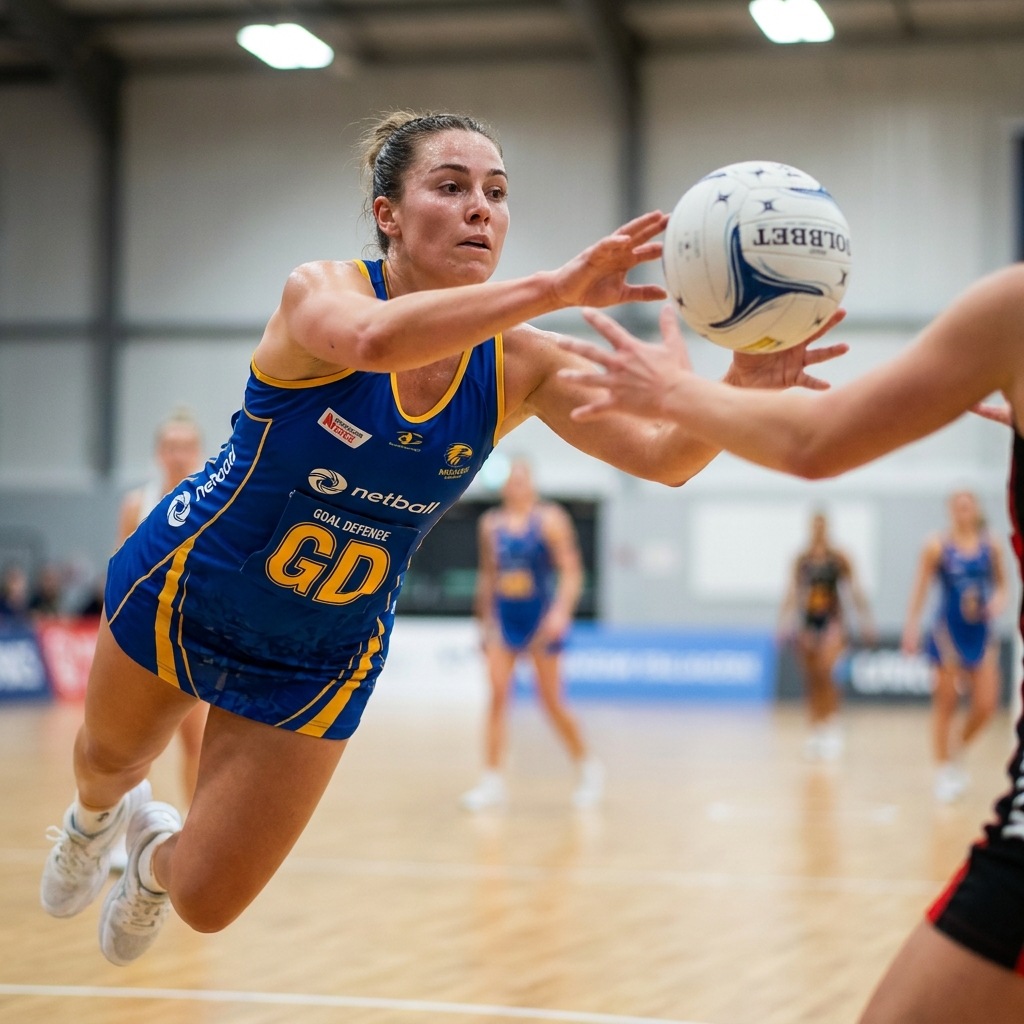
The best Goal Defences in the 2026 NSL season are intercepting more than ever. The reason is not raw athleticism. It is a deliberate shift from chasing the attacker to driving into the flight path of the ball. Here is how to coach it.