The Five-Second Window That Wins Matches
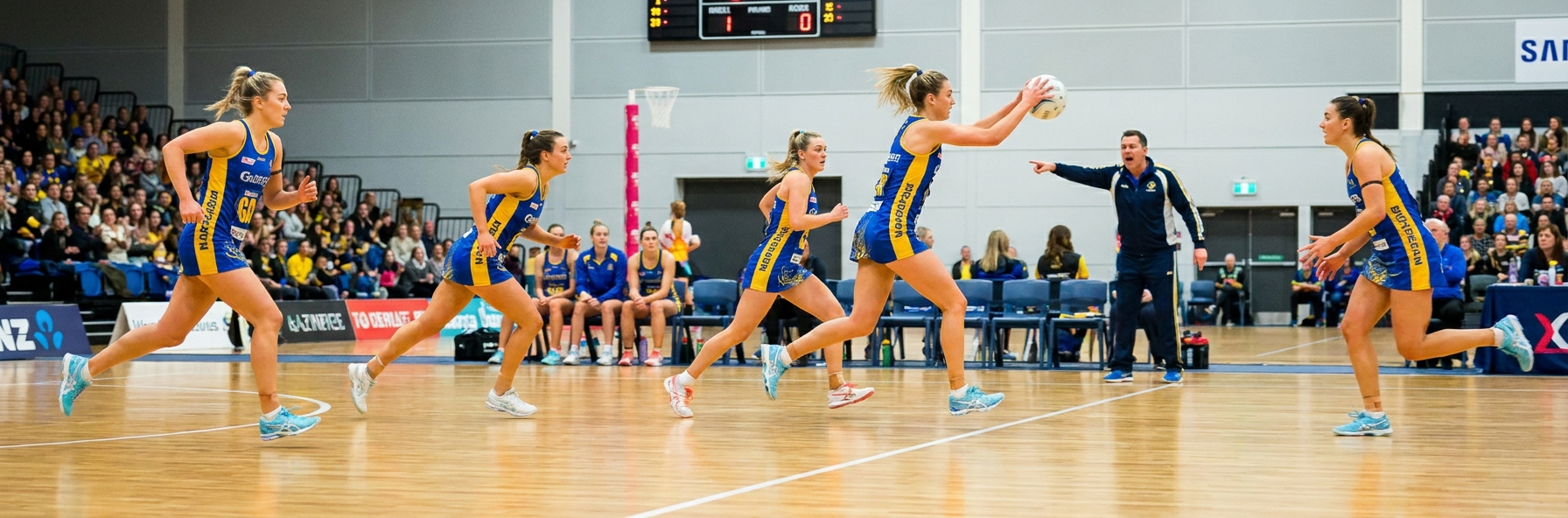
Watch any modern professional netball match and count the seconds between turnover and shot. The teams winning consistently get a clean attempt at goal within five seconds of regaining possession. The teams losing take eight, ten or twelve. That gap is where matches are decided, and it has very little to do with shooting accuracy and everything to do with how a team transitions from defending to attacking.
The reason is simple. The moment you win the ball, the opposition is at its most disorganised. Their attackers have committed to receiving positions. Their midcourt has pushed forward. Their defensive shape is gone. If you can get the ball down court before they recover, you are attacking against a scrambled defence rather than a set one. That is the easiest scoring chance you will ever get. And it disappears in the time it takes the opposition to reset.
The Four Phases of a Fast Break
A successful transition is not chaos. It is a structured sequence with four distinct phases, each with its own coaching points. Teams that practise the sequence in isolation and then chain it together will see the time between turnover and shot drop significantly.
Phase 1: The Capture
The defender who wins the ball must do two things in the same instant - secure the catch and protect the body. Bobbled intercepts kill fast breaks before they start. Coaches should drill the clean two-handed grab and immediate landing, not just the reach. A player who pulls down a tip onto the floor has not won anything yet.
Phase 2: The First Pass
This is the most coached and most under-rated moment in netball. The first pass after a turnover sets the tempo for the entire break. A safe, short pass to a static teammate kills the momentum. A confident, longer pass to a moving teammate launches the break. Train your defenders to look up before they catch - the first option should already be identified.
Phase 3: The Drive
Once the ball is in the midcourt, every receiver must be moving forward, not standing. A static receiver gives the defence time to recover. A driving receiver forces the defence to chase. The simplest coaching cue here is "catch on the move, pass on the move". If the ball spends more than half a second in any one pair of hands, the break has slowed.
Phase 4: The Finish
The shooters' role on the fast break is to be ready. The Goal Shooter should be holding strong inside the circle the moment the ball is won, ready to receive on the move. The Goal Attack should be looking for the gap into the circle. The worst outcome is a fast break that arrives at the circle edge with no shooting option set up.
The Mental Switch: Defender to Attacker in One Step
The biggest blocker to fast-break netball is not fitness or skill. It is mindset. Defenders who have spent the previous twenty seconds tracking, contesting and resetting often need a moment to mentally reorganise themselves as attackers. That moment is the five seconds the opposition needs to recover. The teams that close this gap have trained the switch deliberately.
Coach the language. Stop calling it "winning the ball" and start calling it "starting the attack". Stop celebrating the intercept on its own and start celebrating the goal that came from it. Stop separating defensive drills from attacking drills - chain them together. A defensive drill should never end with the whistle. It should end with the ball in the circle.
This re-framing matters because it changes what players notice and prepare for. A defender who is thinking "intercept, then what" plays slower than a defender who is thinking "intercept, then drive, then feed, then shoot". The mental sequence rehearses the physical one. The fastest teams have the longest mental rehearsal.
Court Width: The Hidden Key to Transition
One of the most consistent patterns in modern netball is that the best transition teams use the full width of the court. Slow transitions tend to be narrow - the ball travels in a straight line through the centre, easy for the defence to track and easy to slow down. Fast transitions use the wings. The ball crosses the court diagonally, forces defenders to turn their hips, and arrives at the attacking circle before the defence has set its line.
This is a coaching pattern, not an instinct. Wing Attacks and Wing Defences in transition mode must hold their width even when the ball is on the other side of the court. The temptation is to drift toward the ball, but that compresses the team and makes the break easier to stop. Hold the width, force the defence to cover ground, and the gaps will open.
The Set-Play Trap
Many coaches teach transition by drawing diagrams. The defender wins the ball here, the Centre drives to this spot, the Wing Attack peels to that line. The play looks beautiful on a whiteboard. It rarely works in a match. The reason is that real turnovers do not happen at scheduled times. They happen mid-rally, in unpredictable parts of the court, and the team that has rehearsed a single set-piece transition will be the team that hesitates when the turnover does not match the diagram.
The better approach is to train principles, not plays. Three principles cover almost every transition scenario - look up before passing, run forward on every receive, and hold the width. A team that internalises these principles can respond to any turnover in any part of the court. A team that has memorised one play will only execute it in the scenario it was designed for.
Sample Session Plan: Building the Fast Break (60 Minutes)
Session Structure
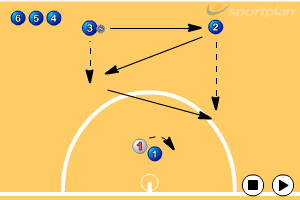
- Warm-Up (10 min): Continuous figure-of-eight passing through the centre third. Three players, all moving forward, no static catches. The ball must always be travelling and the receiver must always be approaching. Builds the catch-on-the-move habit before any contest is introduced.
- Technique Block (15 min): Capture and first pass. Pairs work in the goal third. Player A throws a deliberately tippable pass. Player B intercepts cleanly and immediately delivers a long pass to a moving target. Focus on the look-up before the catch. Score success only if the second pass is delivered within one second of the intercept.
- Development Block (15 min): 4v4 in the centre third. Defending team must win possession and deliver into the attacking circle within five seconds. Restart on every turnover. Track the team's average time across ten transitions and try to lower it.
- Game Scenario (15 min): Full court 5v5. Live play with one rule - any transition that takes longer than seven seconds is reset and the defending team starts again. Forces the team to keep moving the ball forward rather than settle into safe passing patterns.
- Cool-Down (5 min): Walkthrough discussion. Which moments slowed the transition down? Where did the team default to a safe short pass when a longer one was on? Identify the habits to break.
Common Mistakes to Avoid
Stopping to celebrate the intercept: A defender who pauses to acknowledge the moment, even for half a second, has burned the fast break. The reward is the goal at the other end, not the intercept itself. Coach players to keep their eyes up and their feet moving the instant they touch the ball.
The safe short pass: The first instinct after a turnover is often to find the nearest teammate and play a short, comfortable pass. This kills the break because it gives the defence time to recover. Coach the willingness to throw the longer, more ambitious pass when it is on. Sometimes the right ball is fifteen metres, not three.
Shooters who do not reset early: If the GS is still recovering from the previous attacking phase when the turnover happens, the fast break has nowhere to arrive. Train shooters to reset into a strong holding position immediately after losing possession. The break starts at the shooters' end as much as the defenders' end.
Frequently Asked Questions
How fast should a transition actually be?
At elite level, the time between turnover and shot is consistently under five seconds. At club level, eight to ten seconds is realistic. The exact number matters less than the trend - if your team is taking longer this month than it did last month, something is wrong. Track it in training and matches. What gets measured gets improved.
Should we always go fast on transition?
No. There are moments when slowing down is the right call - when the defence is already set, when your shooters are not in position, or when you have a numerical disadvantage running down court. The skill is reading the moment. The default should always be fast, but the team must have the maturity to choose a controlled rebuild when the fast break is not on.
How do I stop my players defaulting to short, safe passes after a turnover?
This is a cultural problem more than a technical one. Players play safe because they fear being blamed for an ambitious pass that does not come off. Change the culture - publicly celebrate the brave pass even when it misses, and quietly query the safe pass even when it works. The team will learn what is valued and play accordingly.
What is the most important position in a fast break?
The Centre. The Centre is the player most often in the right place to receive the first pass out of defence and the player whose ball-carrying decisions set the tempo for the rest of the break. A Centre who looks up early, plays the longer pass when it is on, and keeps moving forward will single-handedly raise the team's transition speed.
 sportplan_netball