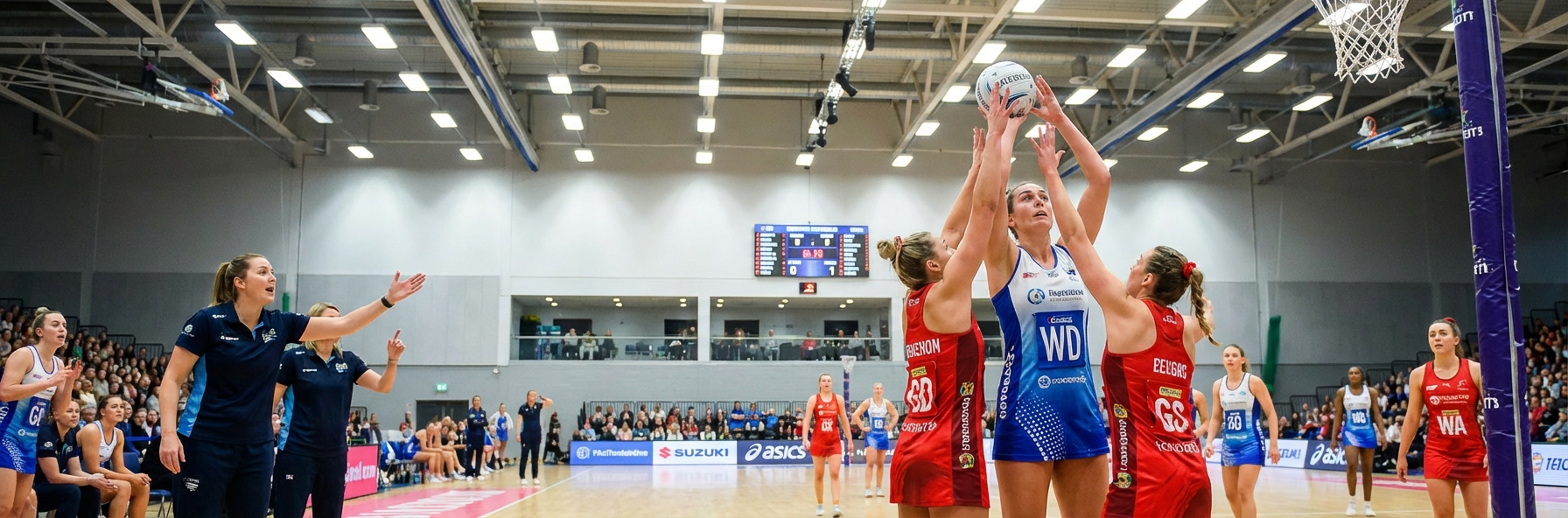
The score is level. Ten seconds remain. Your Goal Shooter has the ball inside the circle. This is the moment that defines games, seasons, and careers. Does she back herself? Or do the doubts creep in?
Confidence under pressure isn't a personality trait. It's a skill that can be developed through deliberate practice. The question is whether your training creates the conditions for that development.
Why Shooters Lose Confidence
Pressure triggers a physiological response. Heart rate increases. Muscles tighten. Fine motor control diminishes. The smooth shooting action that works perfectly in training becomes jerky and uncertain.
This isn't weakness. It's biology. The solution isn't to tell your shooters to "relax" - that rarely works. The solution is to train in conditions that replicate and exceed match pressure.
The Confidence Framework
1. Technical Foundation
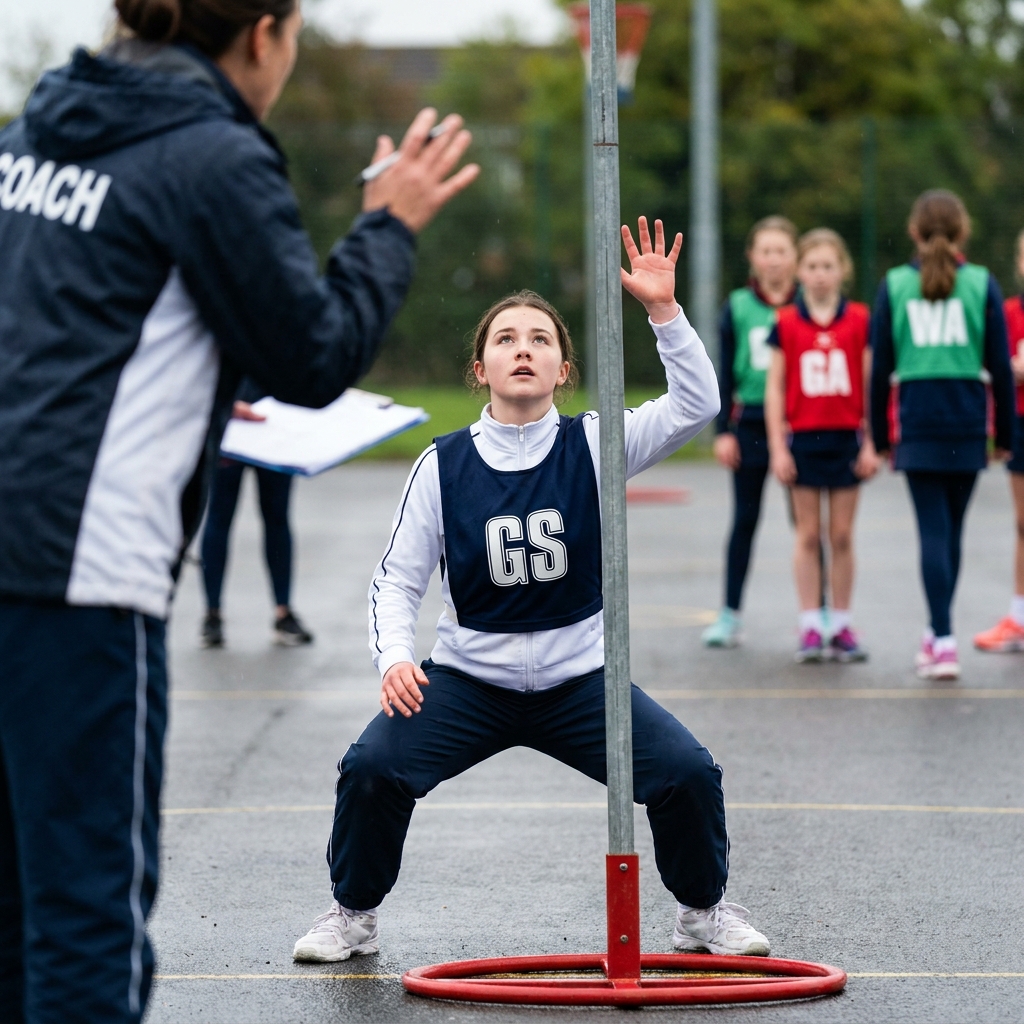
Confidence starts with competence. A shooter who trusts her technique has something solid to fall back on when pressure mounts. If the technique is flawed, pressure will expose it.
Spend time on the basics. Foot positioning. Balance. Release point. Follow-through. These elements must be automatic before you can layer pressure on top.
2. Progressive Pressure
Training should gradually increase the pressure on shooters. Start with open shooting, then add a passive defender, then an active defender, then time pressure, then score consequences.
The goal is controlled stress. Enough pressure to trigger the physiological response, but not so much that technique breaks down completely. Find the edge and work there.
3. Process Focus
Teach your shooters to focus on the process, not the outcome. The mantra is simple: "See the ring, trust the shot." Outcome focus ("I must score") creates tension. Process focus ("Balance, release, follow-through") creates flow.
4. Recovery Routines
Every shooter misses. The best shooters recover quickly. Develop a reset routine: a breath, a physical reset (bouncing the ball, adjusting hair), and a refocus. This routine becomes an anchor in high-pressure moments.
Pressure Training Drills
Tired Shooting: Shooters complete a fitness circuit, then immediately take 10 shots. This replicates the physical fatigue of match situations and trains technique under stress.
Consequence Shooting: For every miss, the shooter must complete a penalty (burpees, sprints). For every goal, the team earns a reward. This creates real stakes and forces composure.
Crowd Simulation: Have teammates create noise and distraction during shooting practice. Clapping, counting, calling out - anything that tests concentration.
Sudden Death: Two shooters compete. First to 5 goals wins. The loser does fitness. This competitive pressure reveals who thrives and who freezes.
The Mental Game
Visualisation is underused in netball. Have your shooters spend time mentally rehearsing successful shots. The brain doesn't fully distinguish between vivid imagination and real experience. Mental reps build confidence.
Positive self-talk matters too. The internal dialogue before a shot influences the outcome. "I've made this shot a thousand times" is more useful than "Don't miss."
Building Back After a Miss
A missed shot is just that - a missed shot. It doesn't predict the next one. Teach your shooters to treat each attempt as independent. The previous miss is irrelevant. Only this shot matters.
This is easier said than done. The practical tool is the reset routine. After a miss, the routine kicks in automatically. Breath. Reset. Refocus. Ready for the next opportunity.
The Coach's Role
Your reaction to misses shapes your shooter's confidence. If you show frustration, they learn that missing is catastrophic. If you show calm acceptance and move on, they learn that misses are temporary setbacks.
Praise effort and process, not just outcomes. "Good balance on that shot" is more useful than "Great goal." This reinforces the controllable elements.
Game Day Preparation
Pre-game shooting should be about rhythm, not perfection. Short, sharp shooting circuits that get the body moving and the technique flowing. Avoid marathon shooting sessions that create fatigue before the game starts.
Most importantly, arrive at the first whistle with the belief that the shot will fall. Confidence is a choice, and it's made before the game begins.
 sportplan_netball