Why the Best Intercepters Stop Marking the Player
Watch the highest-tally defenders in the 2026 Netball Super League and one habit jumps out. When a feeder lifts the ball to release, the Goal Defence is no longer fixated on their attacker. Their eyes, hips and weight have all transferred to the line the ball is about to travel. They are reading the pass, not minding the player. That single mental shift is the biggest reason gain-line statistics have climbed across the league this season.
This is not a new idea, but it is being coached far more deliberately than it was even two seasons ago. The new generation of clean-contest rules introduced in 2025 punishes defenders who lunge across the attacker's body or grab simultaneously. The reward for the defender who waits, reads and drives into the ball is a clean turnover with no whistle. The reward for the defender who chases the body is a free pass against and, increasingly, possession to the attacking team under the simultaneous infringement rule.
The Three Cues a GD Must Read
Elite intercepters are not guessing. They are processing three layers of information in the half-second before a pass is released. Junior defenders rarely look past the first one. The job of the coach is to teach all three and to drill them in the same order every time.
1. The Feeder's Hips and Eyes
Before the ball leaves the feeder's hands, their body has already told you where it is going. A slight rotation of the hips opens the shoulder toward the intended receiver. The eyes flick to the target a fraction before the release. Train your defenders to watch the feeder's hips, not the ball. The hips do not lie, and they reveal the pass earlier than the ball ever will.
2. The Receiver's Preliminary Move
Shooters and feeders work in synchronised pairs. A holding shooter who lifts onto the balls of their feet is preparing to drive. A goal attack who plants their back foot is about to push off. These preliminary moves happen one to two seconds before the pass and give a sharp defender a head start. Coach your GDs to read the second-phase movement as much as the ball.
3. The Passing Lane
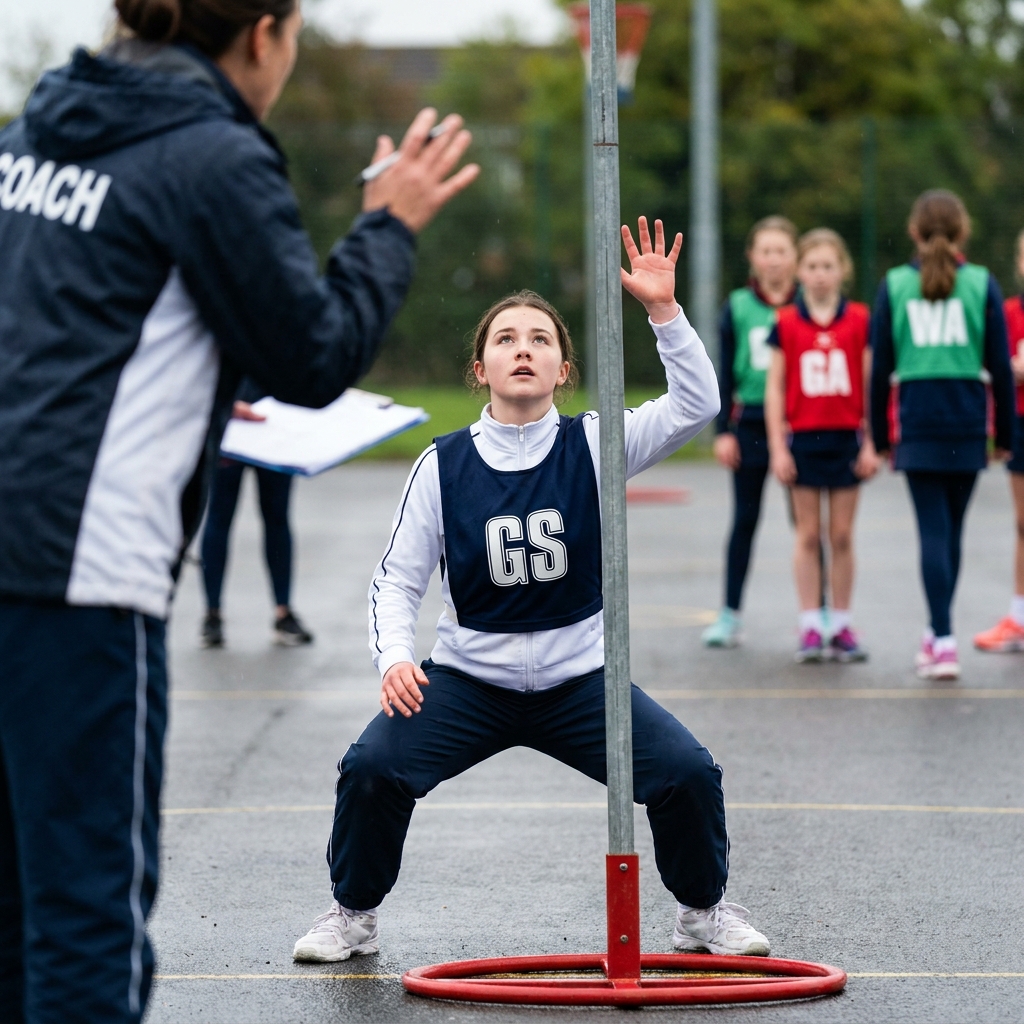
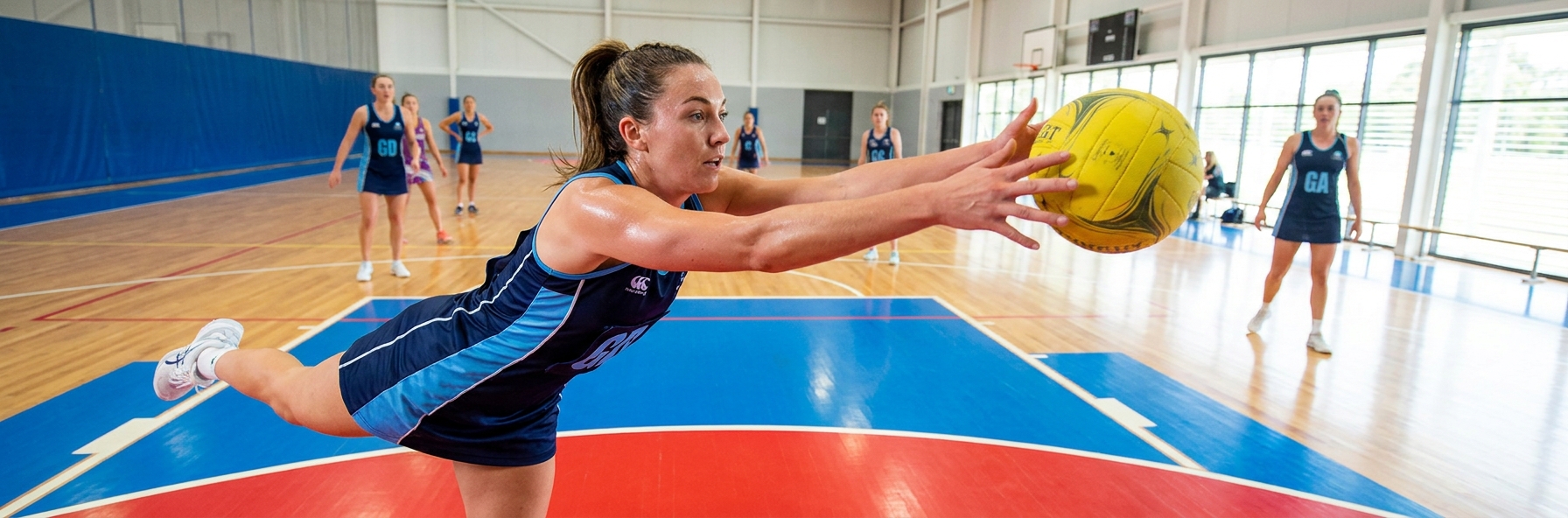
Once the pass is on its way, the defender must commit to the flight path, not the body. The classic mistake is to swipe across the shooter and miss the ball entirely. The correct line is straight into the lane, hands extended, eyes on the ball. Even if the intercept is not taken cleanly, a hand in the lane forces a deflection and turns a clean possession into a contested one.
The Footwork Behind the Intercept
Reading the pass is only half the job. The defender's feet have to deliver the body into the lane at the right moment, and that movement is technically demanding. There are three intercept types and each one needs a different footwork pattern. Drill them separately before you ever combine them.
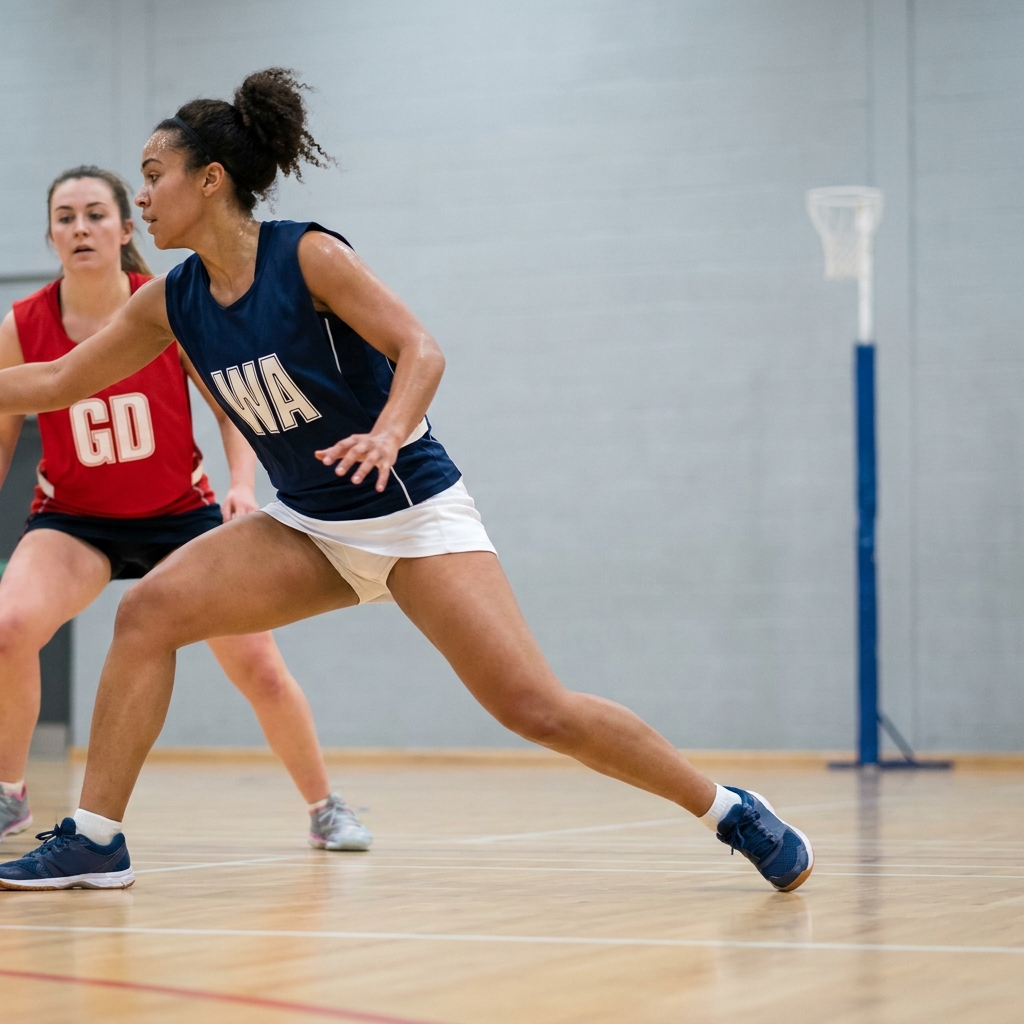
The flat intercept: Used when the pass is at chest height across a short distance. The defender pushes off the back foot with a low, explosive first step into the lane, hands punching forward at ball height. The body must stay low because rising too early lifts the hands out of the line of flight.
The high-tip intercept: Used against lob passes and high feeds. The defender plants and jumps off two feet, reaching at full extension. The key coaching point is timing the jump so that the peak of the leap meets the peak of the pass. Players who jump too early have already started descending when the ball arrives.
The drop-back intercept: Used when the defender has been beaten to the front but reads a pass behind. A quick retreat-step opens the body to the ball and turns a lost contest into a turnover. This is the hardest of the three because it asks the defender to recover and read at the same time.
The Mental Switch: From Marking to Hunting
Coaches often describe Goal Defence in possessive language - "your player", "stick to her", "stay tight". That language quietly trains the wrong habit. It locks the defender into a player-marking mindset where success is measured by how close they stay to the body. The intercepting defender thinks differently. They are not minding a player. They are hunting a ball.
This sounds like a small thing but it changes everything about how the position is played. A hunter is patient. A hunter watches for the moment, and when it comes they commit fully. They do not chase every flicker of movement. They wait for the pass that they can take and they take it cleanly. The defender who fusses around the attacker is reactive. The hunter is proactive.
Build this mindset by talking about it in every session. Set targets that reward gains, not denials. Reward the half-court intercept that starts a fast break. Celebrate the deflection that forces a turnover. Stop praising the close-marking moment that achieved nothing. Players learn what coaches notice.
Reading the Pass Under the Clean-Contest Rules
The simultaneous infringement rule, which awards possession to the team that last had the ball when defenders and attackers grab together, has changed how Goal Defences approach the contest. The reward for a clean intercept has gone up. The penalty for a messy one has gone up even more. Defenders who used to settle for "getting a hand in" are being asked to either win the ball cleanly or stay out of it entirely.
This puts a premium on the read. A GD who guesses wrong and lunges across the shooter under the old rules might get a deflection. Under the new rules they will probably give away a clean turnover. The training implication is clear - we must coach intercepting as a decision, not a reflex. Sometimes the right answer is "do not go" because the read is not clean.
Sample Session Plan: Driving Into the Ball (60 Minutes)
Session Structure
- Warm-Up (10 min): Mirror work in pairs. Defender shadows attacker through the centre third, focused on staying side-on with eyes split between attacker and a coach holding a ball. Coach calls "ball" at random moments and defender must drive a step toward the coach. Builds the eyes-on-ball habit.
- Technique Block (15 min): Three intercept types drilled in isolation. Flat intercepts at 4m, high-tip intercepts at 5m, drop-back intercepts at 3m. Static feeders, static defender. Focus is on clean technique, not contest intensity.
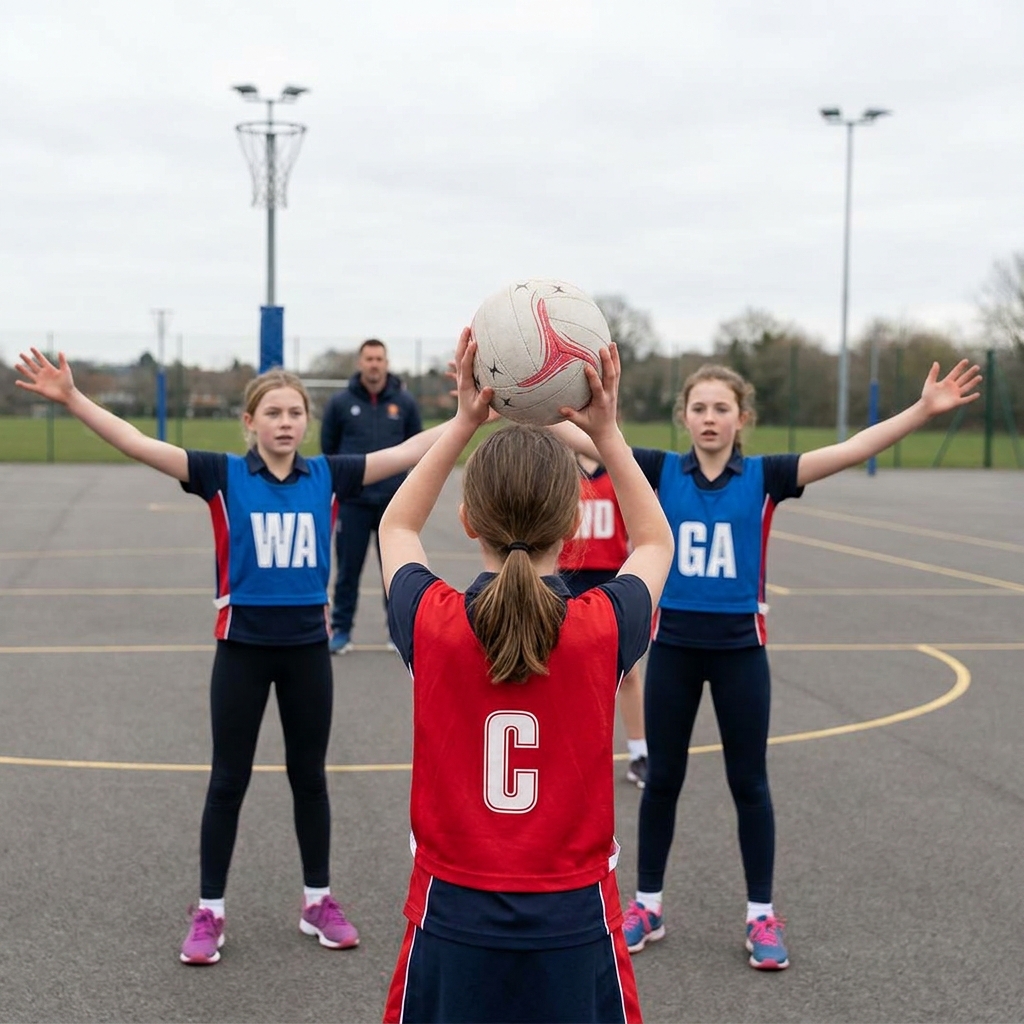
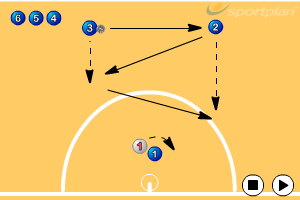
- Development Block (15 min): 1v1 in the goal circle. Feeder outside the circle delivers to GS holding inside. GD must read the feed and intercept. Track success rate. Switch sides every five repetitions to work both shooting partners.
- Game Scenario (15 min): 3v3 in the attacking third. GA, GS and feeder versus GD, GK and WD. Live ten-second possessions. Award two points for a clean intercept that leads to a goal at the other end, one point for a deflection, minus one for a contact penalty inside the circle.
- Cool-Down (5 min): Walkthrough discussion. Which feeder cues were easiest to read? Which intercept type felt most natural? Where did the temptation to chase the body show up?
Common Mistakes to Avoid
Watching the ball, not the feeder: Defenders who lock onto the ball are reacting half a second too late. The pass is already away. Train the eyes onto the feeder's hips and shoulders first, then onto the ball as it is released.
Going for everything: The hunter is patient. A GD who lunges at every flicker of a pass will be stepped through, drawn out of position and beaten on the second phase. Pick your moment. Some passes are not yours to take.
Standing too close: A defender who is body-on-body has no time and no space to react. The half-step principle gives the GD the room to read, drive and commit. Tight defence has its place, but in the circle it costs more intercepts than it creates.
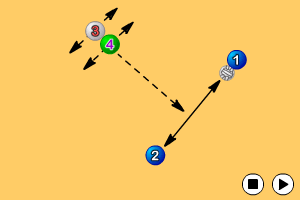
1 vs 1 with Ball Transfer Defence
Coaching drill from Sportplan's Netball catalogue.
View This DrillFrequently Asked Questions
How close should a Goal Defence stand to their shooter?
Closer is not always better. A half-step of distance, with the body angled side-on, allows the defender to see both the ball and the attacker at the same time. Standing body-on-body locks the defender into reacting to the shooter's first move and removes the ability to read the pass. The exception is when the shooter is in a clear shooting position close to the post - then tight, on-the-body coverage with arms over makes sense to contest the shot itself.
How do I stop my GD from giving away contact penalties when intercepting?
The contact almost always comes from going for the player instead of the ball. If the defender's first movement is into the attacker's body, contact is inevitable. If the first movement is into the flight line of the ball, the body comes second and contact is much less likely. Drill the "ball first" principle in every intercepting session - hands and feet move into the lane, the body follows.
Should a GD always go for every intercept?
No, and this is one of the most important pieces of decision-making in the position. A GD who commits to every flicker of a pass will be drawn out of position, beaten on the second phase and punished under the simultaneous infringement rule. The best intercepters are selective. They go when the read is clean and they hold their position when it is not. Coaches should reward the smart "do not go" as much as the spectacular intercept.
What is the difference between intercepting and deflecting?
An intercept wins the ball cleanly and gives your team immediate possession. A deflection disrupts the pass but does not necessarily win the ball. Both have value, but intercepts are more valuable under the current rules because they bypass the contested possession battle entirely. Train your GDs to aim for clean catches, not slap-downs. The hands should be open and ready to receive, not closed into a fist.
 sportplan_netball