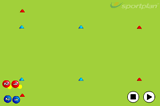
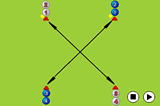
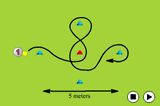
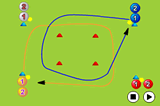
Players have a ball each and work in two small groups. Each group begins in a crowded areas (30 MPH speed limit) and dribble around slowly.
When the coach raises their hand players move from one crowded area to the other one.
Purpose :
To avoid bumping into other players
When dribbling in the crowded area there's a lot of traffic so players drive slowly and dribble at 30MPH.
When moving between crowded zones the athlete can run at pace - hence the 50mph speed limit.
30 MPH :
Posture
• Knees bent 90 degress
• Ball a stick length in front of the feet
• Arms almost straight
• Back straight “hollow the back”
Scanning
• Tell the players to “see the ball through the bottom of the eyes and the action through the top”
50 MPH:
Posture:
• Ball a stick length in front of the feet
• Hands 15cm apart (higher than when pushing) this allows a full stride
• Carry the ball directly in front using the base of the stick
• Arms almost straight
• Back straight “hollow the back”
Scanning
• Tell the players to "see the ball through the bottom of the eyes and the action through the top"

in more ways than one
 sportplan_netball



in more ways than one
sportplan_hockey

A few weeks into the league season, poor first touches are costing teams the ball. Coach body shape, scanning and receiving on the move to keep possession.

Pre-season fitness fades fast once the league starts. Build conditioning into ball work and use rolling subs well to keep your squad sharp all season.

The first weeks of the season decide whether a junior or new player sticks with adult hockey. Here is how to keep them safe, give them a clear job and build their confidence from the very first bully.