Rugby: referee

June 2026

If you watch the data, restart kicks happen more often than any other set-piece in a modern rugby match. A Six Nations game produces around twelve to sixteen restarts, more than the average lineout count and far more than scrums. Yet most teams - especially below elite level - still treat them as an afterthought. That is the gap top coaches are now closing.

The phrase "restart is the third set-piece" has become a coaching slogan in 2026 for good reason. The team that wins the restart battle controls field position, momentum and the opening sixty seconds of every passage of play. Conceding a try and then conceding the restart immediately afterwards is one of the most common ways to lose a match.

Why Restarts Are Suddenly Critical

Two things have changed. First, kickers have become more accurate. Restarts now land precisely on the 10-metre line and in the 15-metre channel, contested by tall, athletic chasers who jump for the ball. The days of a 22-metre dollop into the middle of the pitch are gone.

Second, the reward for retention has grown. With modern attacking shapes, a team that retains its own restart is straight into structured phase play in the opposition half. A team that loses the restart is defending in their own 22 with a disorganised line. The swing between those two outcomes is enormous.

Building a Reception Pod

Top teams now train a dedicated restart reception pod, exactly as they train a lineout pod. The pod typically has four roles, and every player must know which role they have before the kick is taken.

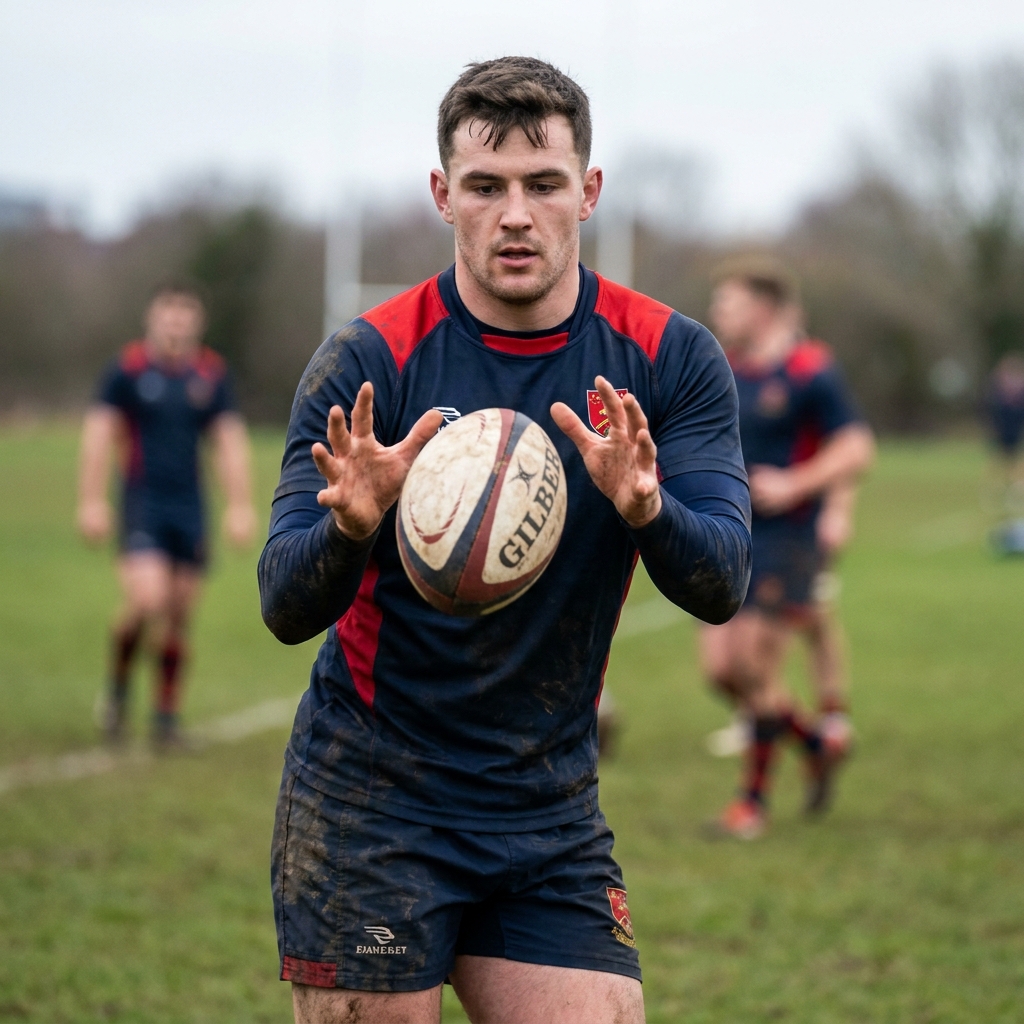
The catcher: Usually a lock or back-rower, chosen for height and timing. They call early - "mine" or the channel number - and commit to the catch.

The lifter: A prop or hooker who arrives at the catcher's side, hands ready, to give a lift on the contested ball. Lifting is legal at restarts and dramatically improves your win rate against good chasers.

The protector: A second forward who stands between the catcher and the chase, taking the contact if it comes and forming the first ruck cleanly.

The exit option: A back, usually the fly-half or full-back, in position to receive the next pass and either kick to touch or launch a counter.

How to Coach Restart Reception

Restart skills are perishable. Train them every week, even if only for ten minutes. Build the session in three blocks.

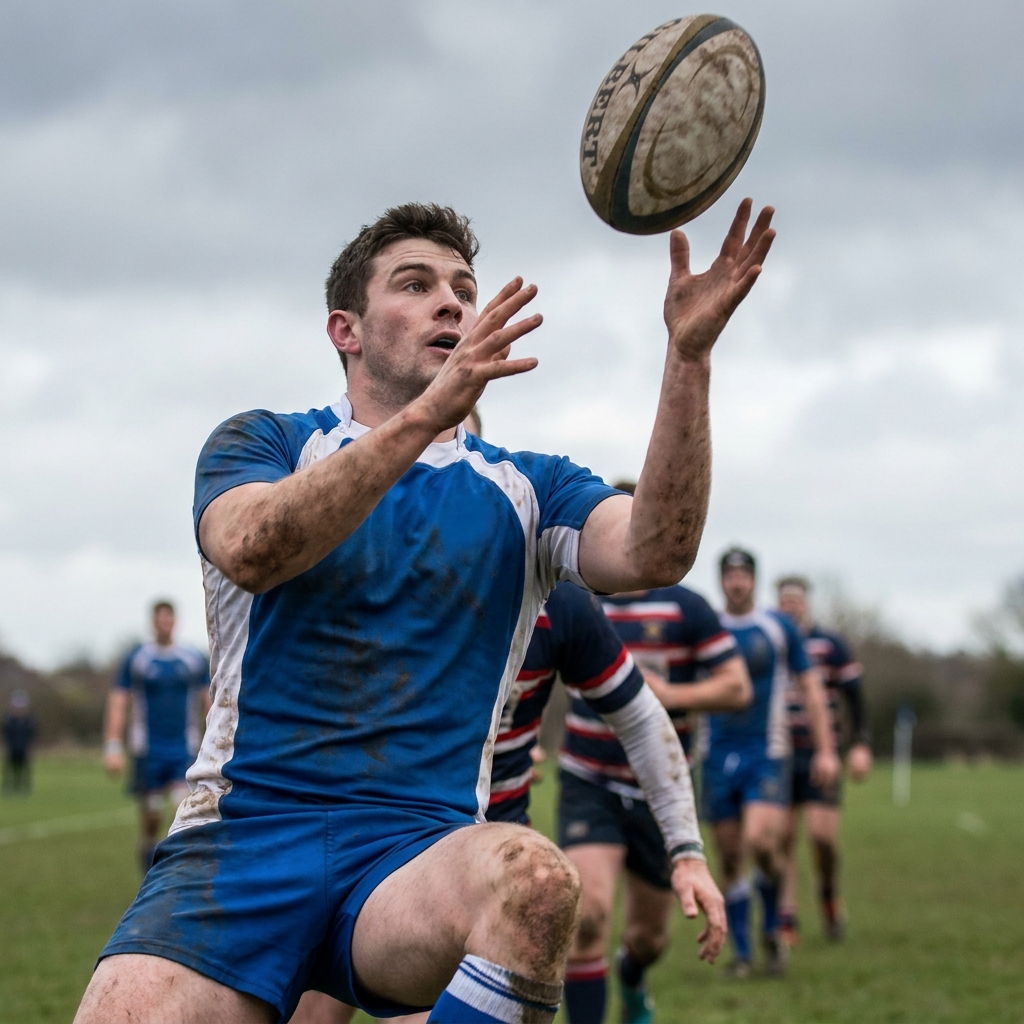
Block 1 - Catching under contest (5 minutes): One coach kicks high balls from the halfway line. Your designated catchers work in pairs - one catches, one acts as a chaser jumping to contest. Rotate every two reps. The focus is timing the jump, not winning every ball.

Block 2 - Receiving as a unit (10 minutes): Full pod of four sets up. Coach kicks restarts. Pod must catch, secure, ruck and recycle clean ball to a back. Add an opposition chase line of three after five reps.

Block 3 - Restart-to-exit scenarios (10 minutes): 12v12 or 10v10 game starting from a restart. After receiving, the team in possession has one rule: get out of their own half within three phases. This trains the link between reception and territorial exit.

Attacking Restarts - The Other Half

Receiving is half the picture. The other half is recovering your own restart. Modern restart kicks are aimed at one of three landing zones: short on the 10 (5-7 metres beyond the kick mark), mid-deep at the 15-metre line, or long into the far corner. Each option requires a different chase pattern.

The short restart is the highest-percentage recovery option but the hardest to execute accurately. Reserve it for moments when you genuinely need the ball back - after conceding a try, with time running out, or to disrupt a stronger opponent. Drill the kicker until they can land a restart in a one-metre window on demand.

Key Coaching Points

  • Restarts are the most frequent set-piece - train them weekly
  • Build a named reception pod with four clear roles: catcher, lifter, protector, exit
  • Lifting is legal at restarts - use it
  • The exit kick after a clean catch is as important as the catch itself
  • Reserve the short restart for moments when winning it really matters

Recommended Drills

VIEW ALL KICKING DRILLS

referee DRILLS
View All

Mistakes Cost ? Touch Variatio...

<p class=&quot;&quot;&quot;&quot;&quot;&quot;MsoNormal&quot;&quot;&quot;&quot;&quot;&quot;>Split your players into two teams, giving one group of players a set of coloured bibs to set them apart, and quickly tell your players the following laws: <ul type=&quot;&quot;&quot;&quot;&quot;&quot;disc&quot;&quot;&quot;&quot;&quot;&quot;> <li class=&quot;&quot;&quot;&quot;&quot;&quot;MsoNormal&quot;&quot;&quot;&quot;&quot;&quot;>Keep the law briefing, brief! Get your players moving as quickly as you can. <li class=&quot;&quot;&quot;&quot;&quot;&quot;MsoNormal&quot;&quot;&quot;&quot;&quot;&quot;>Start this game with a rugby league style touch game - when touched a player can set the ball down, standing over the ball, another player moves the ball from the ground; restarting the attack. Make it a two touch turnover game to start with.<br /> <li class=&quot;&quot;&quot;&quot;&quot;&quot;MsoNormal&quot;&quot;&quot;&quot;&quot;&quot;>Punish every mistake; forward passes, off sides, everything; be harsh. Each mistake results in a turn over. <li class=&quot;&quot;&quot;&quot;&quot;&quot;MsoNormal&quot;&quot;&quot;&quot;&quot;&quot;>When the players get going; tell them that every touch will result in a turn over. <li class=&quot;&quot;&quot;&quot;&quot;&quot;MsoNormal&quot;&quot;&quot;&quot;&quot;&quot;>On a turn over ball the defence must retreat 10 Meters. <li class=&quot;&quot;&quot;&quot;&quot;&quot;MsoNormal&quot;&quot;&quot;&quot;&quot;&quot;>Be harsh; any touch and the attack lose the ball. Any law infringements; and the attack lose the ball. <li class=&quot;&quot;&quot;&quot;&quot;&quot;MsoNormal&quot;&quot;&quot;&quot;&quot;&quot;>Referee the defense equally harshly; if they infringe; force them back 10 meters and allow the attack to continue. <li class=&quot;&quot;&quot;&quot;&quot;&quot;MsoNormal&quot;&quot;&quot;&quot;&quot;&quot;>Change the laws as you see fit, and let us know the variations that work for you.

General

Unfortunately there were no results for your search! Please try again
referee ANSWERS
View All

(U11 Rugby) - How to referee t...

I'm coaching and reffing U11 rugby and one of my players is the definitive 'big lad'. His 'strength' is his size and his power, but last weekend he didn't seem to get reffed fairly. The opposition couldn't tackle him down, one on one and when another two joined in to make a mini maul, that didn't slow him down much either. The ref then let other people join in the (one sided) struggle to tackle him down, which seemed very unfair as A) it's outside the laws of U11 rugby,, B) it makes it nigh on impossible for him to offload, C) when he is brought to ground, he has 4-5 players all over him and he got pinged for 'holding on'. He is a recent arrival to rugby and it was our first game for a couple of months, so the situation hadn't reared his head before. We are keen that he learns all of the core skills of rugby and doesn't get used as a battering ram, but after seeing a pack of hyenas trying to pull down the big fella, something just didn't seem right to me.I'd be grateful for any thoughts and opinions.

Archived User Coach

Refereeeing an U10 ruck - Spor...

As well as coaching U10 rugby, I also get to referee U10 games, under the New Rules Of Play. I feel that my refereeing of the ruck isn't as good as it could/should be. Has anyone got an easy to follow system to help them referee U10 rucks ?

Archived User Coach

Successive quick tap penalties...

During a recent U17's league game, the opposing side took two consecutive quick tap penalties. During a break in play shortly after, as the coach attending an injured player, I questioned the referee on the legality of this passage of play, as my understanding was that two consecutive quick taps, used to catch the opposition in an offside position and therefore gain terratorial advantage, was not allowed under current law. The referee responded that this law is at his discretion and when we discussed after the game, he stated there is no such aw and that it is a "gentlemens agreement". I have since reviewed the laws on penalties and there is no specific law preventing a side taking two quick tap penalties. Has anyone else come across this interpretation and how can this be managed consistantly if when watching elite games, such a move is not allowed yet can be allowed at junior level ?

Archived User Coach

What can the referee do when i...

An in-goal player catches the ball from an opponent's kick and touches it down. That player is then late tackled. What actions are available to the referee?

Archived User Coach

. What actions are available t...

An in-goal player catches the ball from an opponent's kick and touches it down. That player is then late tackled. What actions are available to the referee?

Archived User Coach

does a ruck end when defending...

Rucking - does a ruck end when defending players back off from contact? The "successful/unsuccessful end to a ruck" seems to infer that there are still players in contact. If they are not, does the offside line change?

Archived User Coach

what are the rules of tag rugb...

what are the rules of tag rugby?

Chris Mason Coach, England

Lineout | Sportplan

If a player at a lineout moves inside the 5 metre line and prevents the ball from travelling 5 metres, the referee should: ;

Samwel Omae Coach, Kenya

My U18s were refused a quick l...

My under 18 team tried to take a quick lineout with one attacker in the lineout and 2 defenders in the lineout. When he threw the ball to another attacker who was about 10metres behind the lineout he was told by the referee that the lineout had formed and could not take a quick penalty. What is the clarification of this as I always thought you had to have at least 2 players from each team in the lineout to say that the lineout had formed?

Archived User Coach

Unsuccessful end to a maul whe...

Following the TV explanation of a referee's decision on an unsuccessful maul from a kick-off, I looked up the following rule (the latest version on the IRB site).----------------------------------------------------------------------------17.6 UNSUCCESSFUL END TO A MAUL (h) Scrum after a maul when catcher is held. If a player catches the ball direct from an opponent’s kick, except from a kick-off or a drop-out, and the player is immediately held by an opponent, a maul may form. Then if the maul remains stationary, stops moving forward for longer than 5 seconds, or if the ball becomes unplayable, and a scrum is ordered, the team of the ball catcher throws in the ball.---------------------------------------------------------------------------- It states "except from a kick-off or a drop-out", but then nowhere can I find what happens IN the case of a kick-off or a drop-out. Does anyone know the answer?  The referee's decision and the explanation given on Sky was as though the exception above were not there.

Philip Ratcliffe Coach, Italy

Likely outcome of scrum fed fr...

What would be the likely outcome of a scrum fed from the thrower's tighthead side? Who would more likely win possession and what quality of possession could be expected? What if the law was that most scrums were required to be fed from the thrower's tighthead with the non offender determining who was to feed? The remainder, such as penalty scrums, would stay as is. Could this encourage a more constructive approach to scrummaging?

Archived User Coach

foul play - Sportplan

An in-goal player catches the ball from an opponent's kick and touches it down. That player is then late tackled. What actions are available to the referee?;

Luwatlyne Coach, South Africa

Offside | Sportplan

What are the Offside Laws pertaining to Scrum Half at Scrum Time?

Archived User Coach

switch pass in rugby union

switch pass in rugby union

maria Coach, England

Law 12 - the forward pass or throw forward

The law says that a forward pass is one "thrown forward" "in the direction of the opponents' goal line" Does that mean that, if the ball is passed and the receiver catches it NEARER to the opponents goal line than from where the ball was passed that the pass was forward? (Leaving to one side any other touches of the ball that might have taken place.) Maybe an example is better. Player 1 passes the ball sideways - releasing it on the 22 metre line. Player 2 (with no other player having touched the ball), running from well behind the 22 metre line, catches the ball when it has travelled sideways but the ball is now 20 metres from the opponents goal line (2 metres further forward from the place that the ball was passed). Is that a forward pass or throw forward? And if not, why not?

Archived User Coach

How do i become a real certified rugby referee?

How do i become a real certified rugby referee?

Archived User Coach

At a recent u12's match, the home ref, who is also?

At a recent u12's match, the home ref, who is also a L2 coach penalized the hooker for foul play. At the end of the match at the debrief, the ref said to the hooker in front of his peers that he would have sent him off if there had been any subs. Is this against the guidelines of the child protection and did he dip out of his duties as a ref. What are your thoughts? Gary SWales

Gary Grant Coach, Wales

Hi, I'm required to coach the tight 5 to right wheel?

Hi, I'm required to coach the tight 5 to right wheel a scrum - yes, it's for an exam. I have researched it - including talking to forwards - and all of the sparse info out there describes unlawful techniques. I can make a stab at almost anything apart from this 'black art' as I have no references to use. Help!

Archived User Coach

Continuity of the game

I am a referee coach. I want to explain the way players play with the expectation of continuity so I can coach the concept of refereeing for contuinuity

Stan WRIGHT Coach, New Zealand

lower limbs being targeted in ruck

is anyone else experiencing referee issues with the new not targeting lower limbs in the ruck or opposition not being taught the new laws correctly

Nige Hinkin Coach, Netherlands

JOIN SPORTPLAN FOR FREE

  • search our library of 1100+ rugby drills
  • create your own professional coaching plans
  • or access our tried and tested plans

Sportplan App

Give it a try - it's better in the app

YOUR SESSION IS STARTING SOON... Join the growing community of rugby coaches plus 1100+ drills and pro tools to make coaching easy.
LET'S DO IT