Start With the Ball, the Court and the Child
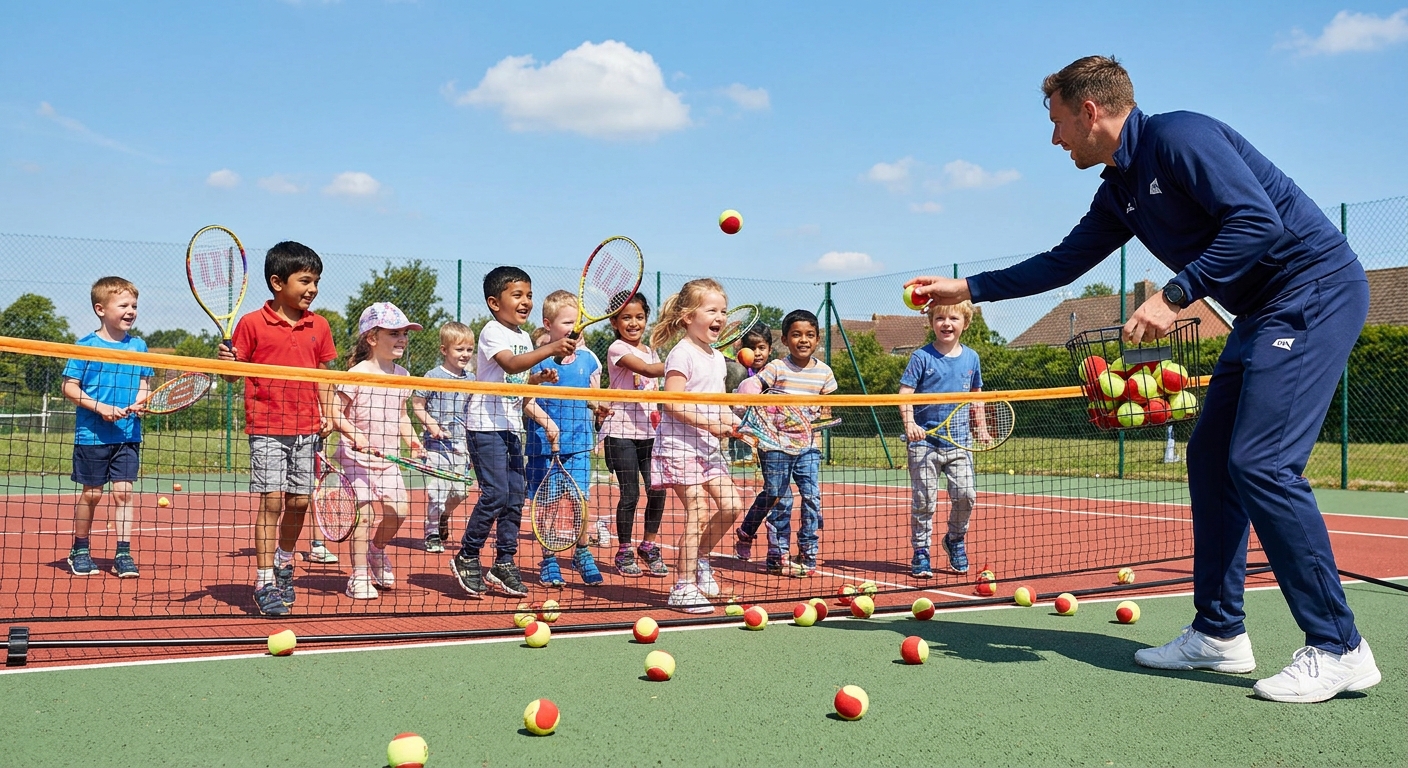
The single biggest mistake in junior tennis is handing a small child an adult racket and a fast yellow ball on a full-size court. The ball bounces over their head, the court is a marathon, and within ten minutes they are chasing rather than rallying. The LTA Youth pathway - the modern name for what most parents still call mini tennis - exists to fix exactly that, and it should shape every session you run.
LTA Youth uses four colour-coded stages that grow with the player. Red (roughly ages four to eight) uses the smallest court, the lowest net, a short racket and a large, slow, low-bounce ball that a small child can actually track and hit. Orange (around eight to nine) moves up to a three-quarter court with a slightly livelier ball. Green (about nine to ten) plays on a full-size court but with a low-compression green ball that still bounces at a sensible height. From green, players graduate to the standard yellow ball on a full court. At every stage you are matching the court size, net height, ball and racket to the child - never the other way round.
Hold that principle in mind as you read the drills below. Almost all of them work across the colour stages - you simply change the ball, shrink or grow the court, and adjust the feed. A red-ball six-year-old and a green-ball ten-year-old can do the same rally game; the difference is the equipment, not the idea. The other golden rule is hitting time: small children should never queue. Run drills in pairs or small stations, keep the feeds quick, and you will get three or four times the contacts you would from a single line waiting for a turn.
Section 1: Fun Warm-Up & Coordination Games
Every junior session should open with movement, laughter and lots of ball contacts. Warm-up games raise the heart rate, sharpen hand-eye coordination and - just as importantly - tell the children that the next hour is going to be fun. Keep these fast, loud and inclusive.

Section 2: Forehand Drills
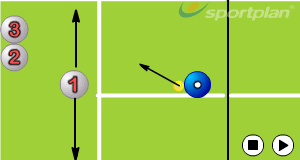
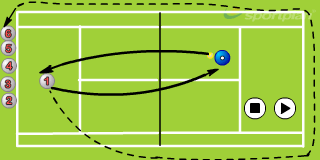
The forehand is most children's first real shot and their most natural weapon, so it is worth getting the basics grooved early: a relaxed grip, a unit turn, and swinging low to high to lift the ball over the net with margin. These two drills build a repeatable, confident forehand.

Section 3: Backhand Drills
The backhand is where many juniors lose confidence, so make it routine early. Whether a child plays one or two hands, the aim is the same: turn the shoulders, prepare early, and meet the ball out in front. These drills make the backhand feel as natural as the forehand.

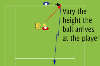
Section 4: Serve & Return Drills
The serve is the one shot every point starts with, yet it is often rushed in junior coaching. Build it from the ground up - a relaxed throwing action, a steady ball toss, and the legs driving up - and pair it with returns so children practise both halves of the opening exchange.
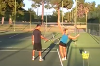

Section 5: Volleys & Net Play
Children love coming to the net, and net play teaches the punch volley, the short reaction time and the bravery that make tennis exciting. Keep volleys short and firm - a small block, not a swing - and reward every junior who finishes a point at the net.
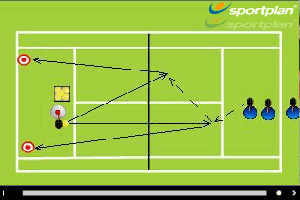
Section 6: Rally & Match-Play Games
This is where the skills come alive. The goal of junior tennis is the rally - the longer children can keep the ball going, the more they enjoy it and the faster they improve. Use co-operative targets first, then add light competition. Adjust the ball and court to the LTA Youth stage so even beginners get long, satisfying exchanges.
Section 7: Doubles & Movement
Doubles is the social heart of club tennis and a brilliant way to teach teamwork, communication and net positioning. Pair it with movement work - the recovery, the split-step and the side-to-side footwork that underpins every shot - and you give juniors the athletic base the whole game stands on.

Running a High-Energy LTA Youth Session
Fifteen good drills are only as effective as the session you build around them. The aim with juniors is maximum hitting time and maximum fun - children improve through repetition, not through standing in a queue waiting for one feed. Structure the hour so every child is busy, the energy stays high, and you finish on a game they will talk about on the way home.
A Sample 60-Minute Junior Session
- 0-10 min - Fun warm-up: open with a coordination or reaction game (Section 1) to raise the heart rate, switch on hand-eye skills and set a fun tone before any technique.
- 10-25 min - Skill of the day: focus on one shot - forehand, backhand, serve or volley - in pairs or small stations so every child gets dozens of contacts. Match the ball and court to their LTA Youth stage.
- 25-40 min - Rally and apply: move into co-operative rally targets, then add light scoring (Section 6) so children use the new skill in a rally rather than in isolation.
- 40-55 min - Games and doubles: run match-play or doubles games (Sections 6 and 7) that reward the skill of the day. Keep courts small enough that rallies actually happen.
- 55-60 min - Cool-down and a win: finish on a fun group challenge so every child leaves on a high and a small success, whatever their level.
Two habits make any junior session better. First, never let children queue - split a court into red and orange grids, run several small games at once, and you will multiply the contacts. Second, scale every drill to the child in front of you: drop to a red ball and a shorter court for a struggling beginner, step up to green or yellow for a confident player, and keep everyone rallying. For a ready-made structure you can drop these drills into, use our free tennis session plan template.
Take It Further
Once your juniors are rallying and playing points, the natural next step is to teach them how the game is actually scored - especially the doubles format that dominates club play. Our guide to scoring in doubles breaks it down in plain English, perfect for a junior moving from rallying into real matches. And when you want fresh practices for any shot or stage, browse the full Tennis drills library for hundreds more, sorted by skill and ability.
Above all, remember why children play: it should be fun. Match the ball and court to the child, keep them hitting and laughing, and the technique will follow. Get the LTA Youth progression right and you will not just produce better players - you will produce children who stay in the game for life.
Frequently Asked Questions
What age can children start tennis?
Children can pick up a racket from around three or four years old, and most LTA Youth programmes welcome players from age four or five on the smallest red-ball court. At that age it is all about coordination, fun games and learning to track and hit a slow, low-bouncing ball - not technique or scoring. Use a short, light racket and a foam or red ball so the child can actually make contact and enjoy a rally, because early success is what keeps them coming back.
What are the LTA Youth red, orange, green and yellow stages?
LTA Youth (formerly mini tennis) uses four colour-coded stages that grow with the child. Red is for roughly ages four to eight on the smallest court with a large, slow, low-bounce ball and a short racket. Orange suits around eight to nine on a three-quarter court with a slightly faster ball. Green is for about nine to ten on a full-size court with a low-compression green ball. From there players move to the standard yellow ball on a full court. Each stage matches the court size, net height, ball and racket to the child so they can rally, learn tactics and have fun rather than struggle with adult equipment.
How long should a junior tennis session be?
For the youngest red-ball players, 45 minutes to an hour is plenty before concentration fades. Orange and green players cope well with an hour to 75 minutes, and older green and yellow-ball juniors can train for 90 minutes. Whatever the length, keep every child moving and hitting - break the group into small stations or pairs rather than queueing one behind another, build in short games and water breaks, and finish on a fun, high-energy point game so they leave smiling.
How do I keep beginners rallying?
The biggest barrier to rallying is the ball moving too fast, so start with a slower red or orange ball, a smaller court and a softer feed. Coach children to recover to the middle after every shot, to watch the ball onto the strings, and to aim for height and depth over the middle rather than going for winners. Co-operative targets work brilliantly - count how many shots the pair can keep going and challenge them to beat it - because a shared score turns rallying into a game instead of a test.
Do juniors need a full-size tennis court to learn?
No - and they should not start on one. A full court is too big for a small child, who ends up chasing the ball rather than rallying. The LTA Youth red and orange stages use shorter courts, lower nets and slower balls precisely so beginners get more contacts, longer rallies and more fun. You can mark out red and orange courts across a single full court with throw-down lines, which lets several small games run at once and keeps everyone hitting.