A Session Plan You Can Reuse Every Week
Most coaches do not need a different plan for every session - they need a reliable structure they can drop this week's theme into. That is exactly what this template gives you: a proven five-phase shape for a 60-minute club or group session that you can reuse week after week, simply swapping in a new technical theme and a fresh set of drills.
The plan below is built for the reality of club tennis: a group of four to eight players, one or two courts, and 60 minutes that disappear fast. The whole design is aimed at one thing - keeping everybody busy. Court time is precious and standing in line is the enemy of improvement, so every phase is set up to feed efficiently, use stations and rotate players quickly. Get the structure right and players hit far more balls, learn more and have more fun.
The Five-Phase Session Structure
Here is the skeleton. Each phase has a clear job, and the times are a guide for a 60-minute session - shift them to suit your group, but keep the order, because each phase prepares players for the next.
60-Minute Club Session: The Five Phases
- 1. Warm-up & movement / coordination (10 min): Raise the heart rate and switch on footwork, balance and hand-eye coordination. Get players moving and tracking the ball before they swing a racket in anger.
- 2. Technical theme - one stroke or skill (15 min): Pick a single focus for the session - forehand, backhand, serve, volley - and build it with feeding drills and clear, simple cues. One theme, done well.
- 3. Tactical / situational practice (15 min): Put the new technique under a little pressure in a realistic situation - approach and volley, return and rally, attack the short ball. Bridge the gap between drilling and playing.
- 4. Match-play / games-based (15 min): Let players compete. Points, mini-games and conditioned matches that reward the theme you have worked on. This is where learning sticks and motivation lives.
- 5. Cool-down & review (5 min): Gentle movement, light stretching and a 60-second recap: what we worked on, what to practise, one thing to remember. Send them away clear and keen.
Why Each Phase Earns Its Place
The warm-up is not a token jog. Tennis is a sport of explosive movement and fine coordination, and cold players move badly and miss balls, which kills confidence in the first five minutes. A proper warm-up reduces the injury risk and, just as importantly, gets eyes and feet working so the technical block actually lands.
The technical theme keeps the session honest. The temptation is to coach everything at once; the discipline is to coach one thing. A single stroke or skill per session means you can give clear cues, players get genuine repetition, and you can actually see improvement by the end of the hour. Next week, pick a different theme.
The tactical or situational block answers the question every player secretly asks: "when do I use this?" A clean forehand in a feeding drill means little until the player has to hit it on the move, under pressure, in a rally. This phase joins the technique to the game.
The match-play block is where it all comes together - and frankly, it is why most players turn up. Competition turns practice into play, exposes what still needs work, and sends everyone home having enjoyed themselves. Condition the games to reward your theme and you get the best of both worlds: fun and focus.
The cool-down and review takes five minutes and is worth far more. A quick recap helps the session stick, and a single "go and practise this" gives players something to own before next week.
Keeping a Whole Group Busy on Limited Courts
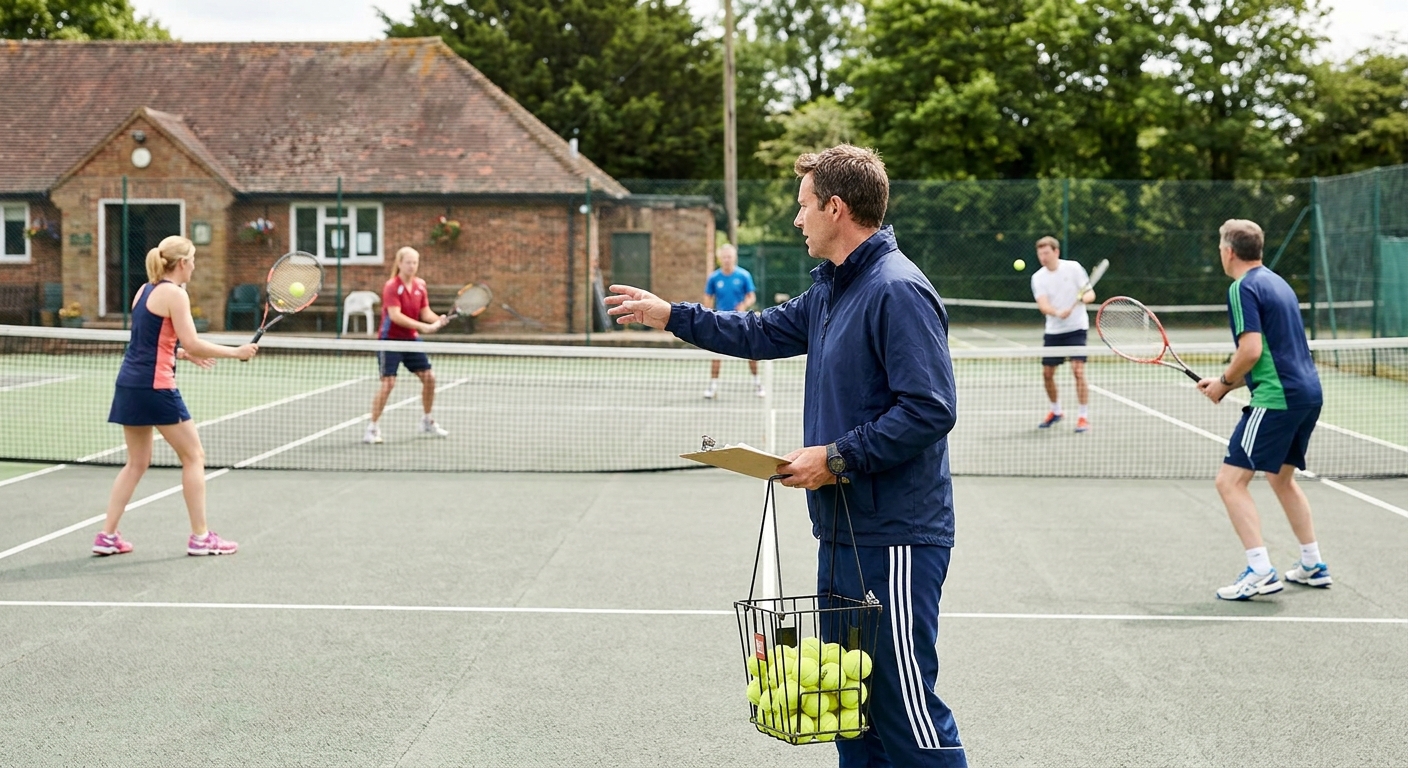
This is the part that separates a good club session from a frustrating one. With four to eight players and only one or two courts, your real skill is logistics - making sure nobody stands idle. A few simple rules do most of the work.
The "No Long Lines" Toolkit
- The no-long-lines rule: Never let more than two players queue for a turn. If a line is forming, you have too many players doing one thing - split them.
- Feed from a basket: A basket of balls and a steady hand-feed or racket-feed means you control the tempo. No waiting for the last ball to trickle back - the next one is already on its way.
- Use stations: Split the court (or both courts) into two or three stations - a feeding drill at one, a rally task at another, a serving box at a third - and rotate small groups round them.
- Rotate fast: Change players every 60 to 90 seconds in feeding drills. Short, sharp turns keep intensity high and queues short.
- Pair up to feed: Players feed and collect for each other while you circulate and coach. One hits, one feeds, then swap - everybody is active.
- Go cross-court: Two pairs can rally cross-court on a single court at the same time without clashing, doubling your hitting capacity instantly.
Put a couple of these together and a single court comfortably keeps six players working hard. Stations plus pair-feeding is the workhorse combination - while you coach one small group at the net, the others are rallying or serving with a clear task, not waiting their turn.
Adapting the Plan for Different Ages and Stages
The beauty of this template is that the five-phase shape never changes - only the demand does. The LTA Youth pathway makes this easy by giving you the right ball and court size for each stage.
Red and orange ball (younger LTA Youth players): use the slower, lower-bouncing balls on smaller courts. Keep tasks short, game-like and varied - attention spans are shorter, so rotate even faster and lean on fun coordination games. Cut the technical block a little and add more games-based play; at this stage, the game is the teacher.
Green ball (transitioning players): move towards the full court with the slightly faster green ball. Players can now handle more structured rallying and a clearer technical focus, so the 15-minute technical block comes into its own.
Older improvers and squads (yellow ball): work on the full court with longer rallies and real tactical detail. You can extend the session to 75 or 90 minutes, lengthen the tactical and match-play blocks, and add scoring formats. The warm-up matters more here, not less.
For ready-made practices aimed at the younger end of the pathway, our tennis drills for juniors guide is full of activities that slot straight into the warm-up and technical phases.
A Worked Example: "Building a Reliable Forehand"
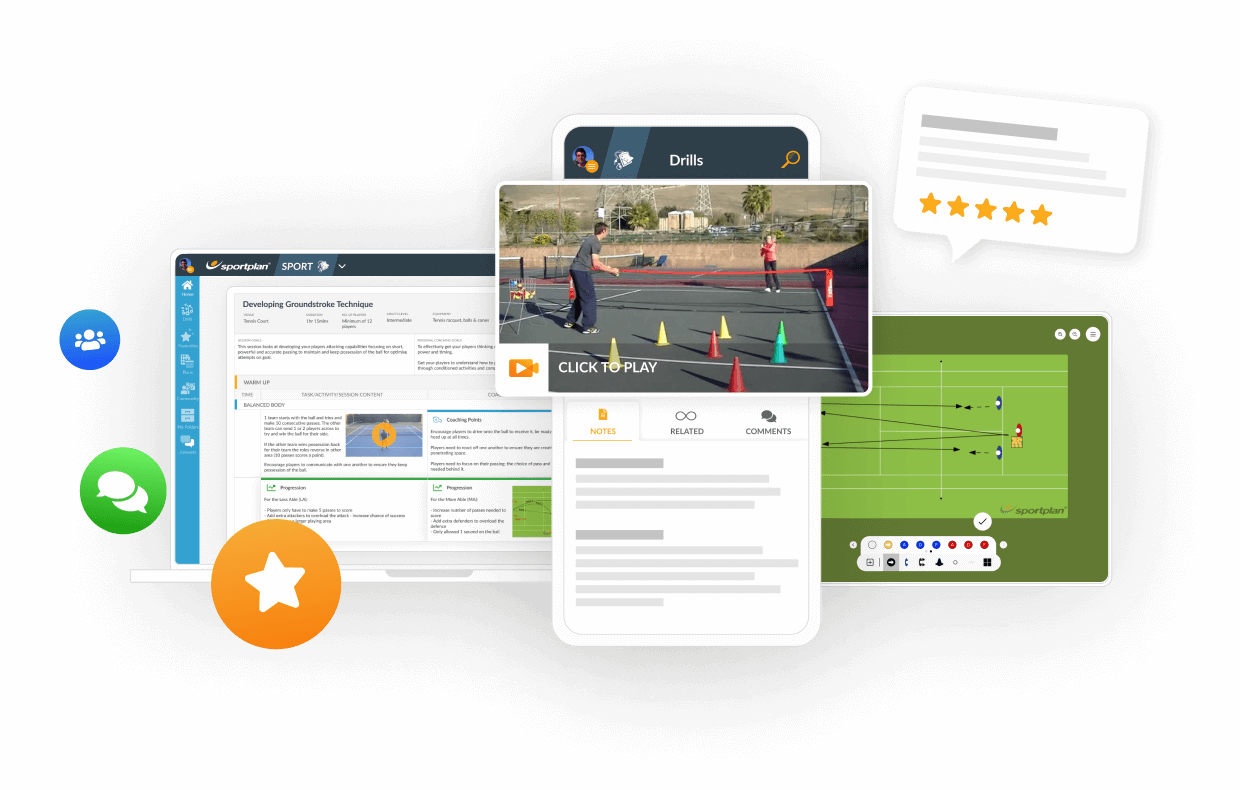
Theory is fine, but here is the template in action. This is a complete 60-minute session for a group of six improvers on one court, themed around developing a dependable forehand. Each phase below uses a real drill from the Sportplan library - tap any drill to see the full setup, coaching points and animation.
Phase 1 - Warm-up & Coordination (10 min)
Start with two minutes of dynamic movement - jogging, side-steps and arm swings - then go straight into a coordination game to wake up reactions and footwork. Run it as a whole group so everyone is active from the first whistle.

Phase 2 - Technical Theme: The Forehand (15 min)
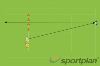
Now to the heart of the session. Feed from a basket to build a grooved, repeatable forehand, asking players to recover after every shot. Run it as a pair-feeding station so nobody queues - one hits a set of ten, then swaps. The "1 High 1 Low" drill is ideal because it forces players to adjust to different contact heights, which is exactly where club forehands break down.
Phase 3 - Tactical / Situational Practice (15 min)
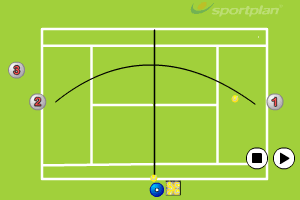
Take the forehand off the feed and into a rally. This phase asks players to use the stroke under realistic pressure - hitting on the move, recovering and keeping the ball in play. Run two pairs cross-court so all six are working, rotating one player in after each rally.
Phase 4 - Match-play / Games-based (15 min)
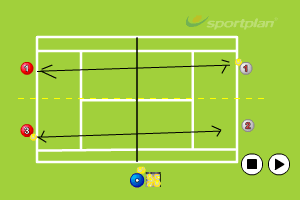
Now let them compete. A points-based game that rewards the theme turns the forehand work into a contest. Condition it so a forehand winner counts double, or so players must hit a forehand to start the point - whatever nudges them to use what they have practised. Rotate players in and out so everyone gets points.
Phase 5 - Cool-down & Review (5 min)
Finish with a gentle round of light movement and stretching while you run a 60-second recap. Ask the group what made a forehand reliable today - balance, recovery, adjusting to height - and send everyone away with one thing to practise. Job done, and the same template is ready for next week's theme, whether that is the backhand, the serve or the volley.
Take the Template Further
Once the five-phase shape becomes second nature, you can plan a whole term in minutes - just choose a theme each week and pull the drills to match. To build out a session around competition and scoring, our guide to tennis and doubles scoring helps you set up conditioned games and box-league formats your players will understand.
And when you need fresh practices for any phase - warm-ups, forehands, serves, volleys or match-play games - browse the full Tennis drills library. Every drill comes with a clear setup, coaching points and an animation, so dropping the right one into your template takes seconds.
Frequently Asked Questions
How long should a tennis session be?
For most club and group sessions, 60 minutes is the standard and works well: long enough to warm up, work on a theme and play points, short enough to stay sharp. Younger LTA Youth red and orange players often do better with 45 to 60 minutes because concentration fades, while older improvers and squads can happily run 75 to 90 minutes. Whatever the length, plan it in phases so court time is never wasted standing in line.
How do I coach a group on one court?
The golden rule is no long lines. Split the court into stations, use both halves at once, and keep a basket of balls so you can feed continuously rather than waiting for one ball to come back. Have players rotate every 60 to 90 seconds, pair them up to feed for each other, and run cross-court so two pairs can rally on the same court without clashing. With four to eight players and a bit of planning, nobody should be standing still for more than a few seconds at a time.
What should a tennis warm-up include?
A good tennis warm-up does two jobs: it raises the heart rate and it switches on the movement and hand-eye coordination the sport demands. Start with light dynamic movement - jogging, side-steps, arm circles, lunges - then add ball-familiarity and reaction work such as bounce-and-catch, partner feeds or a coordination game. By the end of ten minutes players should be warm, moving their feet and tracking the ball, not stiff and standing still.
How many drills should I put in one session?
Three to five well-chosen drills is plenty for a 60-minute session. Try one warm-up activity, one or two drills on your technical theme, one tactical or situational practice, and a games-based or match-play block to finish. Fewer drills done properly beats a long list rushed through - players improve through repetition, so give each practice enough time to actually land before you move on.
How do I adapt a session for different ages and stages?
Keep the same five-phase structure but change the ball, the court size and the target. LTA Youth red and orange players use slower, lower-bouncing balls on smaller courts with simple, game-like tasks and lots of variety. Green-ball players move towards the full court and can handle more structured rallying. Older improvers can work on the full court with the yellow ball, longer rallies and tactical detail. The shape of the session stays the same; only the demand changes.