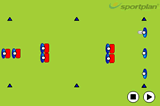
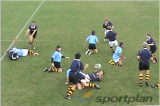
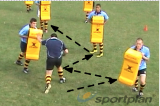
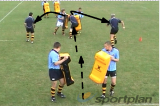
Once the coach has kicked the ball in to start players play a normal rules game of touch rugby.
The only difference is with the scoring:
1 point for a try - plus 1 x bonus point for an offload within 10 metres and 2 x bonus points for offload with 5 metres of the try line.
If no passes within 15 metres of the try line then the score does not count.
Importance of support runners getting behind the defence and committing to the ball carrier. Defence covering each other and not giving in.
The added rules to this game promotes the importance of support all the way to the score.
This also promotes the importance of a committed defence, encouraging players to work hard, right until the whistle stops the game!

in more ways than one
 sportplan_netball



in more ways than one
sportplan_rugby

Tacklers are aiming lower, so carriers who dip late put heads at risk. Teach footwork, a strong early body height and leg drive to win the collision safely.

The hooker's brake foot moved from trial into full law in July 2026. Here is how to coach it so your front row stays stable, legal and safe.

Your players can pass beautifully in a warm-up grid. Then a defender closes, their lungs are burning, and the ball goes to ground. Here is how to build catch-pass skills that hold up when it matters.