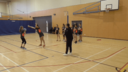
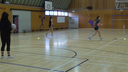
Set up: Full court space, 4 x mini hurdles, 8x short ladders, 10x cones.
Players are divided into 2 groups.
Players start at baseline.
Two players, from the front of each line begin by jumping over the mini hurdles (set up at right angles to each other).
They then run to ladders set up in a cross formation.
Action 1: Forward steps into each square.
Action 3: Left turn: Forward steps into each square and backwards to return to the middle.
Action 3: Right turn. Steps in and out of squares both directions to the middle.
Action 4: Stright weave with both feet in each square.
Players run towards cones set out in a zig zag formation across the middle third space. Players run from cone to cone in a zig zag direction.
The focus is on taking off the outside foot.
Players sprint to the end baseline then turn and sprint back to where they came from.
Keep players rotating through at even spaces.
Challenge players to keep in time with each other by communicating verbally and non-verbally.
Players should aim to keep eyes and head up as much as they can throughout the circuit.
in more ways than one
 sportplan_netball

in more ways than one
sportplan_netball
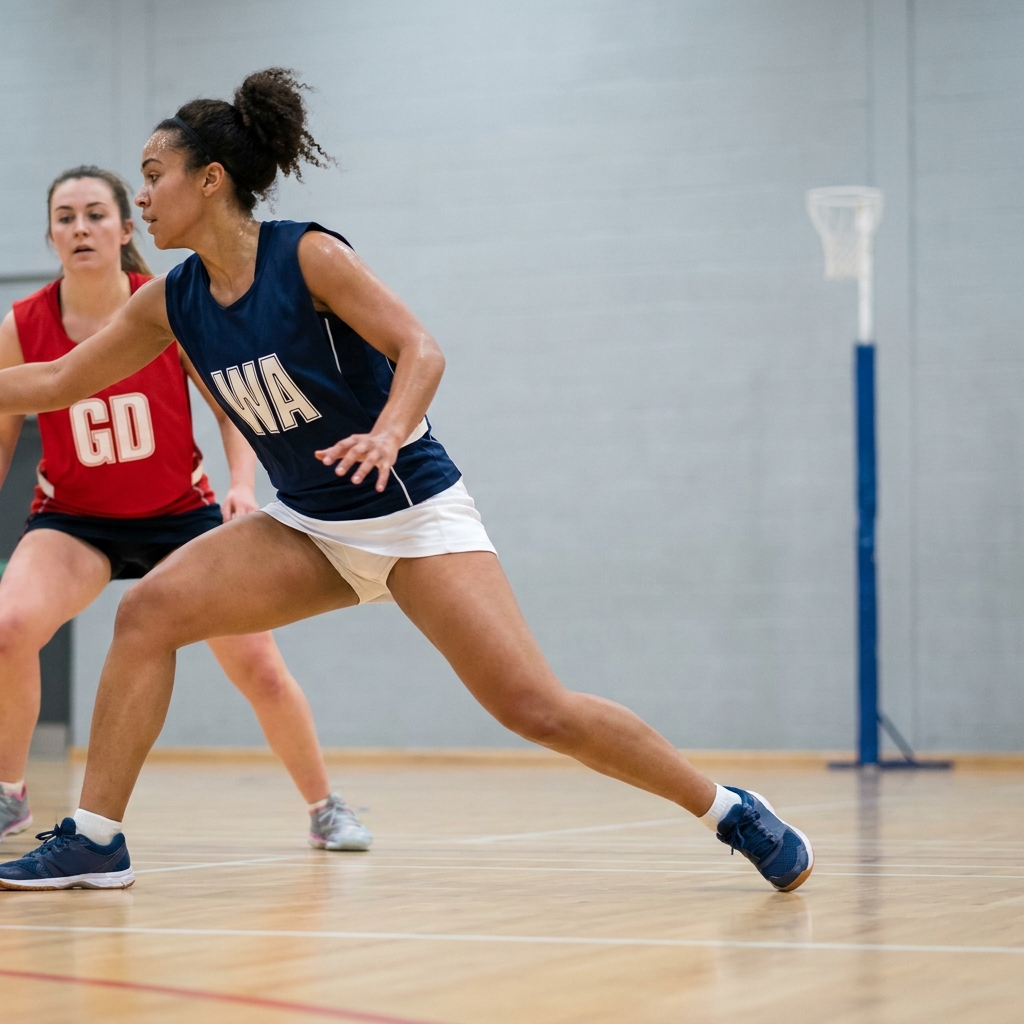
Tight markers win when attackers run in straight lines. Teach your players to dodge, change pace and time their drive so they get free when the ball is ready.
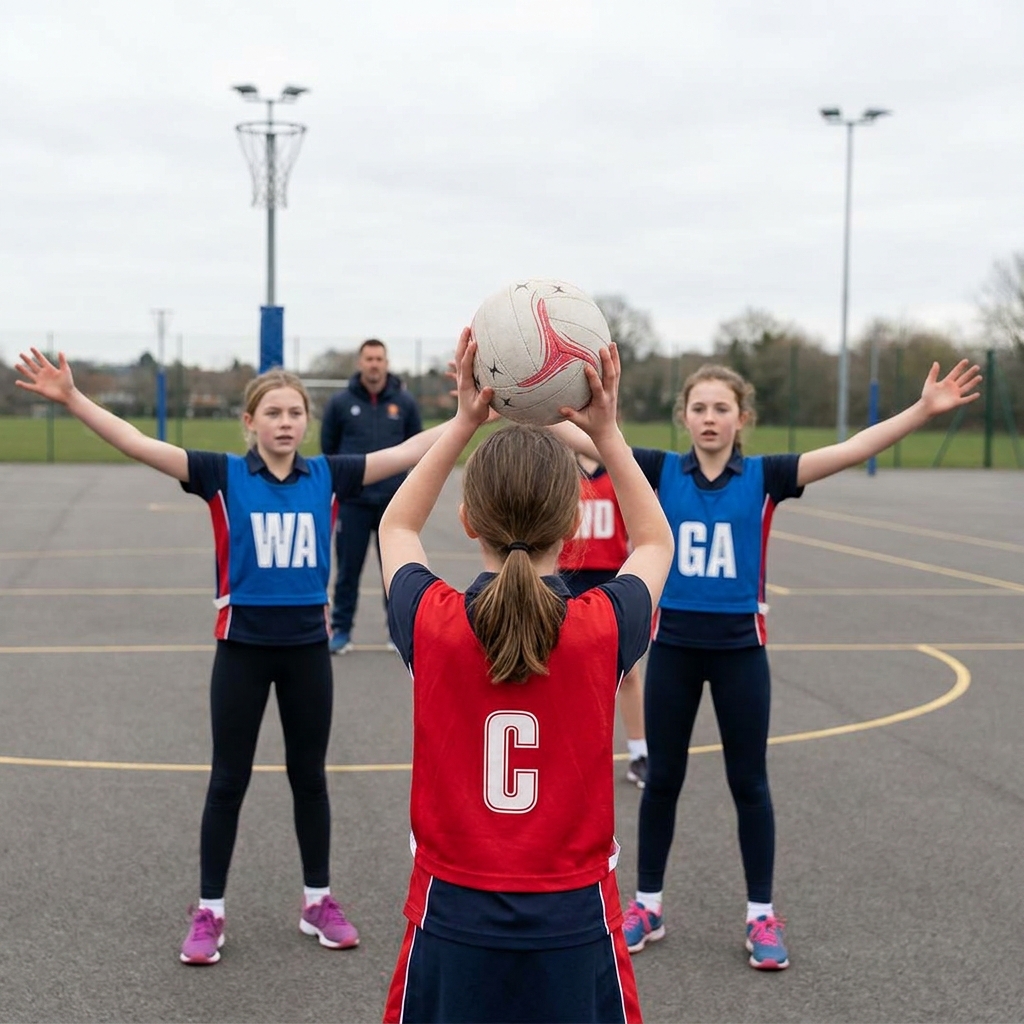
When everyone chases the ball, nobody is free. Teach your team to spread out, offer two options and clear space so the ball moves cleanly down court.
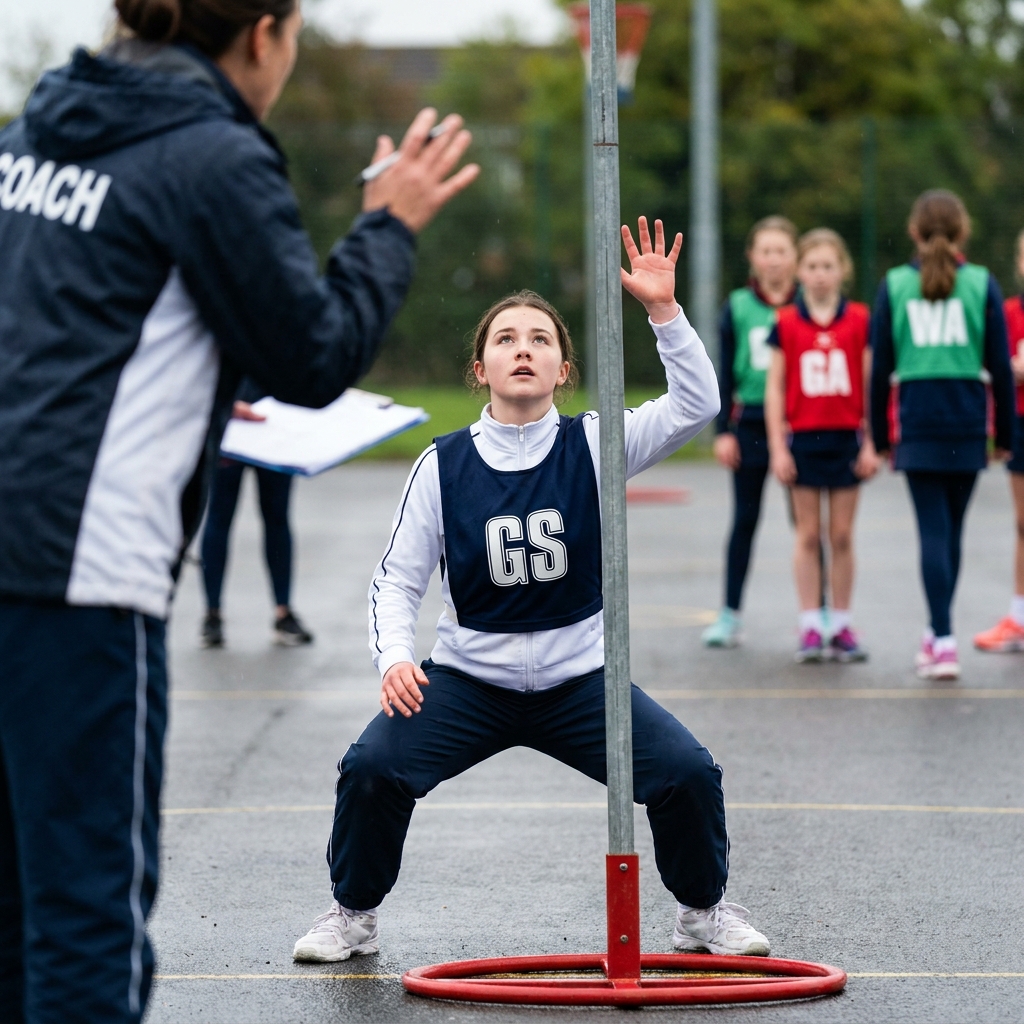
A shooter who can hold a strong position under the post is worth more than one who runs all over the circle. Here is how to coach body shape, a legal hold and a well-timed release, and how feeders make the most of it.