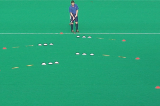
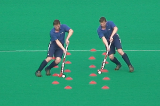
Line up four sets of cones at staggered intervals going forward in a left, right, left, right pattern - preferably with a different colour cone to mark the end of each line.
Players take it in turns to dribble along the lines of cones. When they reach the final cone (red) they perform a pull back around all the cones before then progressing to the next set of cones on the other side.
Repeat this for all sets of cones.
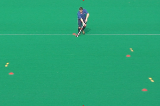
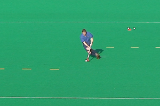
Stop the ball with the left foot forward to pull ball back transfer weight from left foot to right foot.
Pull the ball all the way back to beyond the right foot before running off with the ball into the changed direction (because the ball should be run slightly outside and in front of the right foot).

in more ways than one
 sportplan_netball



in more ways than one
sportplan_hockey

A few weeks into the league season, poor first touches are costing teams the ball. Coach body shape, scanning and receiving on the move to keep possession.

Pre-season fitness fades fast once the league starts. Build conditioning into ball work and use rolling subs well to keep your squad sharp all season.

The first weeks of the season decide whether a junior or new player sticks with adult hockey. Here is how to keep them safe, give them a clear job and build their confidence from the very first bully.