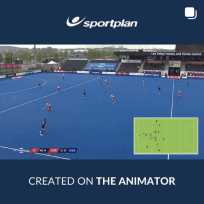
The red players are the defenders, the blue players are the attacks. The white players are used to pivot the ball, but are not used in the remainder of the drill. As shown in the diagram, the white players pivot the ball, and pass to the bottom attacker. The white players do not attack the goal. The blue players attempt to attack the goal, aiming for a goal. Defenders must stop the goal, and can also score by driving the ball over the half way line. The attackers must pass between themselves, being aware of the space and surrounding players. It can be difficult to get in the D from the corner position, so this drill utilizes training so players can get out of this situation in a game. When the ball is lost, or the drill has been completed, players should switch around. Defenders can remain for a few turns before switching.
This drill gives players the chance to attack and defend. Attackers must be aware of spaces and surrounding players, alike in a game. To decrease the intensity, defnders can be removed. To oppose this, increasing intensity can be accomplished by removing attackers, or adding defenders. This drill can be altered to stand a varying amount of players. Players can also be given a short rest period if there is an abundance of players, as they wait for their next turn.
This practice has no coaching points
This practice has no progressions

in more ways than one
 sportplan_hockey


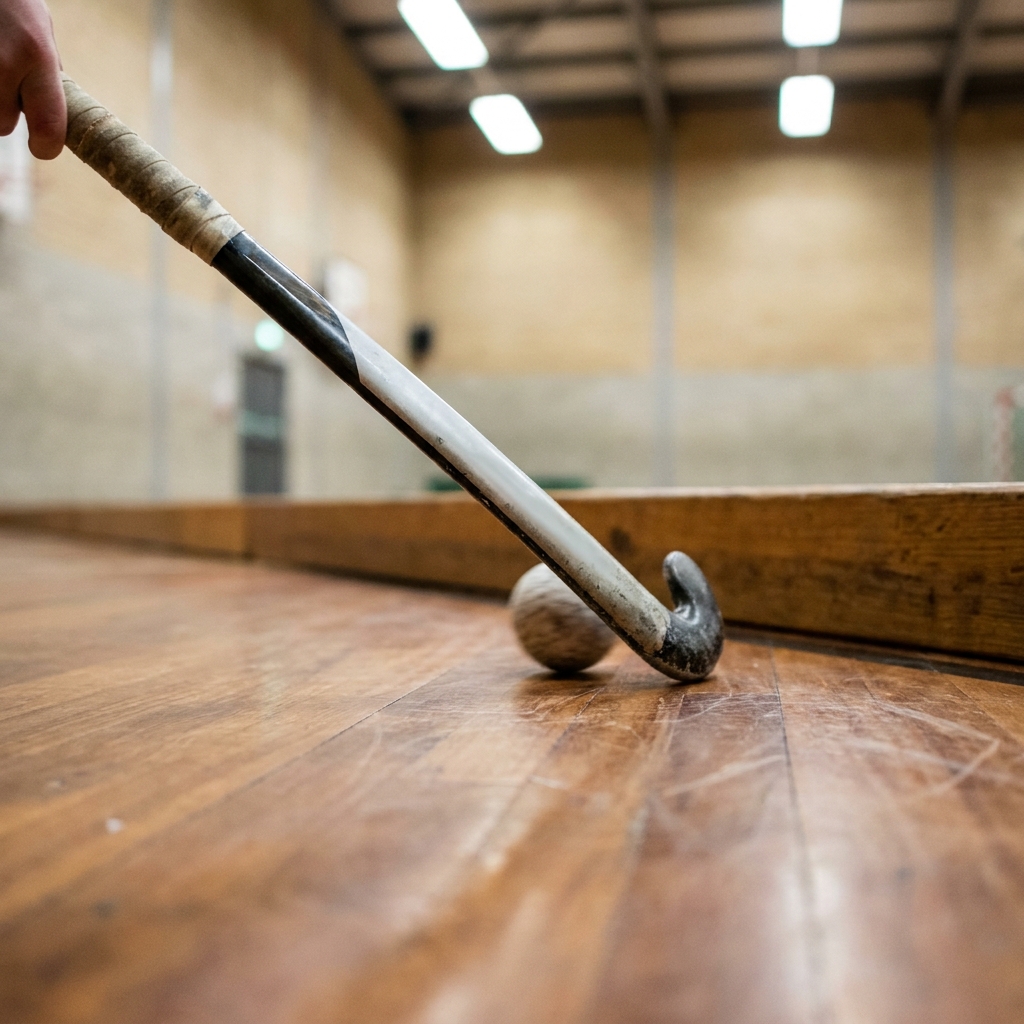
As clubs start their indoor fixtures, outdoor habits get punished fast. Here is how to retrain the skills that actually change indoors.
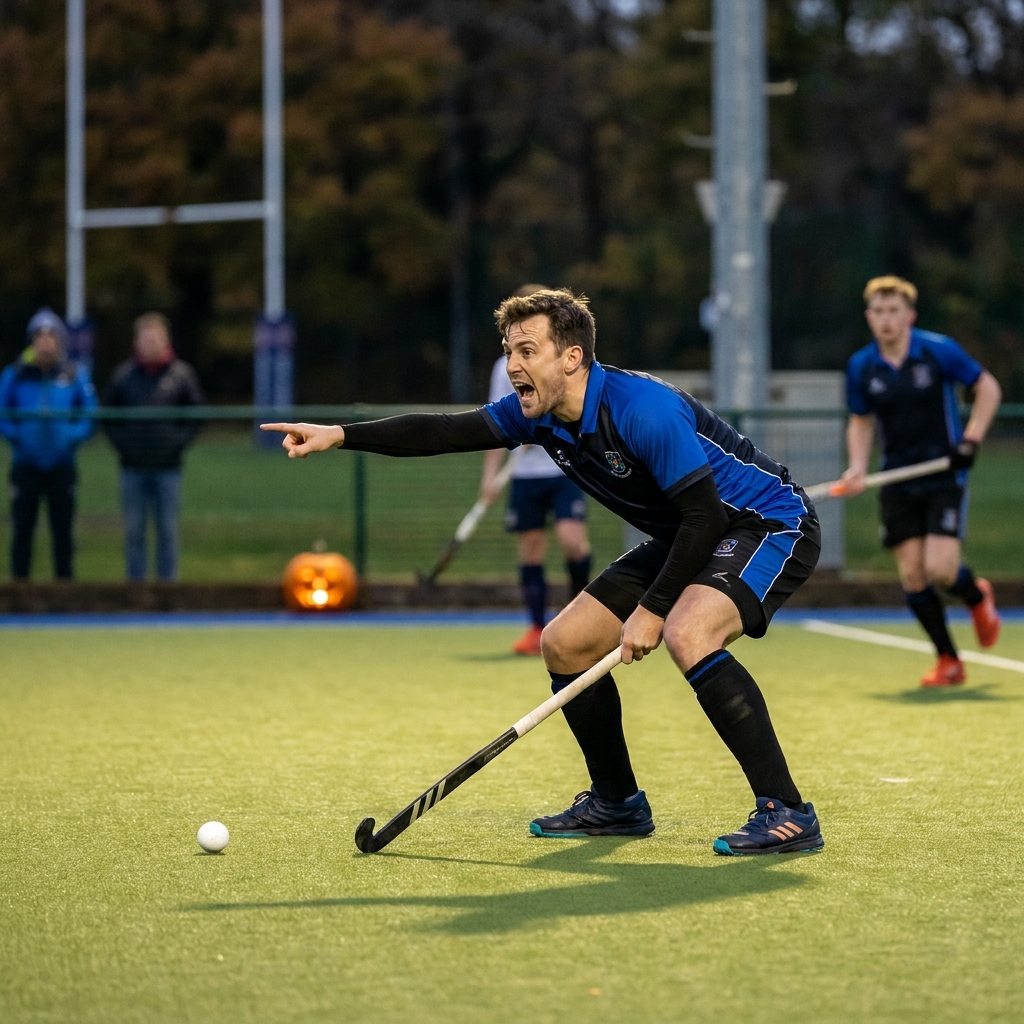
Two defenders chase the ball, nobody covers the runner, and a soft goal goes in. Here is the five-step treat for the mix-up haunting hockey defences this October.
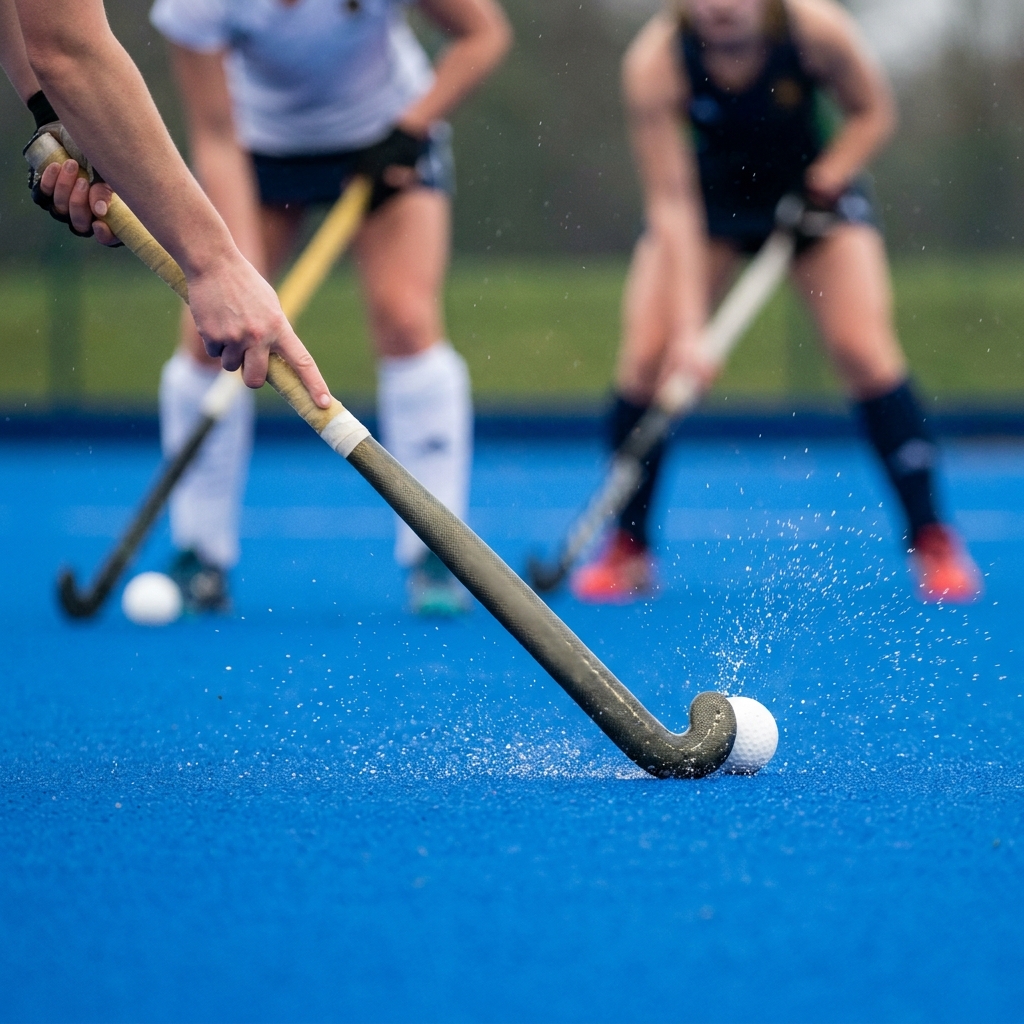
A few weeks into the league season, poor first touches are costing teams the ball. Coach body shape, scanning and receiving on the move to keep possession.