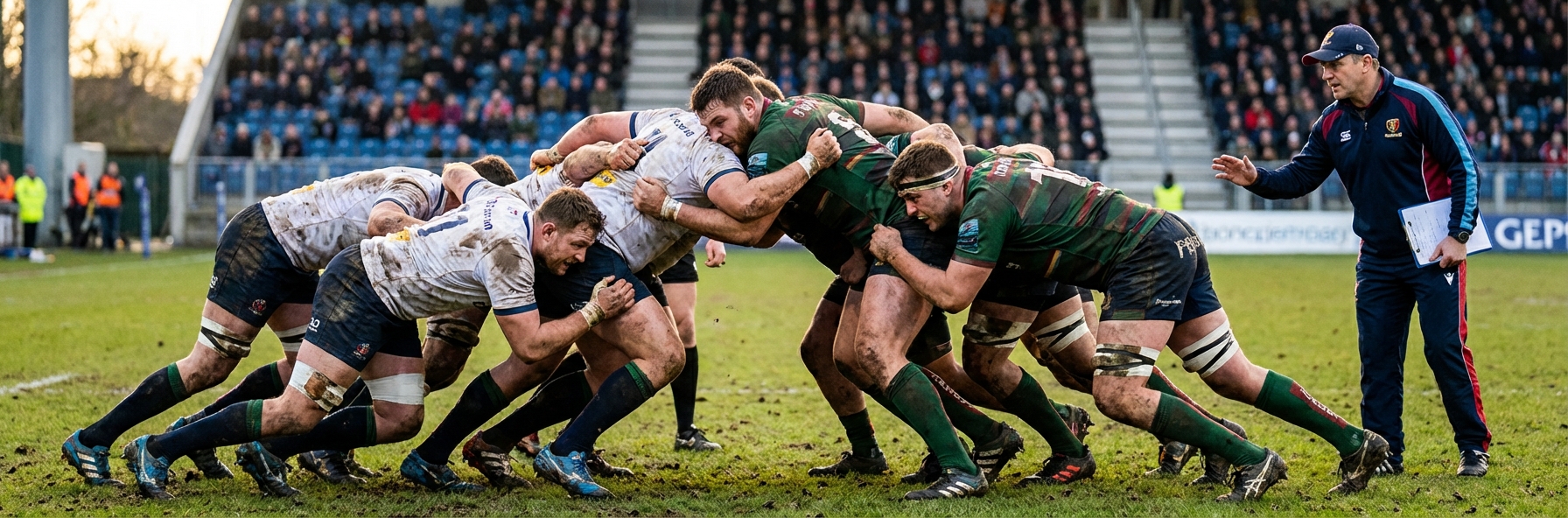
The scrum is where rugby's physicality meets technical precision. Raw power means nothing without the technique to transfer it. A smaller pack with better body position will often dominate a bigger pack with poor shape.
World Rugby continues to evolve scrum laws with player safety in mind, but the fundamentals remain unchanged: body position, binding, and coordinated power delivery.
The Foundation: Body Position
Everything in scrummaging starts with body position. A flat back, with hips slightly higher than shoulders, creates the strongest platform for power transfer. Think of the spine as a straight rod - any bend creates a weak point.
Key body position checkpoints:
- Feet shoulder-width apart, weight on the balls of feet
- Back flat, not rounded or over-extended
- Head in neutral position, eyes up
- Hips above knees, shoulders above hips
The most common error is the rounded back. It feels powerful initially but collapses under sustained pressure. Coaches should constantly reinforce the "straight spine" concept in training.
The Engage: Winning the Hit
The modern sequence - crouch, bind, set - gives referees control while maintaining the contest. But the first engagement still matters. A pack that wins the hit establishes psychological and physical dominance.
Winning the hit requires:
- Synchronised movement on "set" - all eight forwards move as one
- Short, explosive steps into contact
- Maintaining body position through the collision
- Immediate drive with inside legs after contact
Training the hit: Practice the first two seconds repeatedly. Set up, engage, drive for two seconds, reset. The muscle memory for a strong engagement comes from repetition, not from scrummaging for extended periods.
The Drive: Inside Leg Principle
The inside leg - the leg closest to the scrum's midline - generates the drive. This applies to every position in the scrum. Props drive with their inside leg to maintain their bind and prevent wheeling. Locks drive straight to transfer power through the props.
Common driving errors:
- Driving with the outside leg, causing the scrum to wheel
- Taking steps that are too long, losing power connection
- Driving up rather than forward, losing height advantage
Short, powerful steps maintain pressure. Long steps create moments where connection breaks and the opposition can reset.
Binding: Where Power Transfers
The bind is how power moves from one player to another. A loose bind means power leaks away. A good bind creates a solid unit where eight players push as one.
Front row binding:
Props must maintain their bind throughout the scrum. The loosehead binds on the tighthead's jersey at chest height. The tighthead binds around the loosehead's back. Both must hold through the drive.
Lock binding:
Locks bind around the hips of their prop, not too high (loses power) and not too low (loses control). The inside arm goes between the prop's legs to grip the waistband.
Back row binding:
Flankers bind on locks, number 8 binds on both locks. The back row provides the final push that transfers through the entire pack.
Safety First
World Rugby's scrum laws prioritise safety. As coaches, we must reinforce:
- Never engage before the referee's call
- Head position must remain neutral - never tucked
- Release immediately if the scrum collapses
- Front row players must be properly trained and conditioned
A collapsed scrum with untrained players risks serious injury. Never allow players to play in the front row without specific training for that position.
Session Structure
A good scrum session follows a progression:
1. Individual body position (5 mins)
Each player works on their personal shape against a pad or machine.
2. Unit binding (5 mins)
Front row binds together, then locks join, then back row. Check each bind before progressing.
3. Engagement practice (10 mins)
Full pack engages against machine or opposition. Focus on synchronisation.
4. Live scrummaging (10 mins)
Graduated pressure - start at 50% and build. Never scrum at maximum intensity for extended periods in training.
Key Coaching Points
- Body position before power - flat back, hips above knees
- Drive with the inside leg
- Short steps maintain pressure, long steps lose connection
- Binding transfers power - check every bind
- Safety is non-negotiable - head position, proper training, release on collapse
 sportplan_rugby